Modular homes California homeowners choose today are built off-site in a climate-controlled factory, then transported and assembled on a permanent foundation, offering a faster alternative to traditional stick-built construction. As housing costs continue to climb across Los Angeles, Orange, and Riverside counties, more families are turning to modular construction to build primary residences and backyard units alike. In fact, this shift is closely tied to the broader boom in accessory dwelling units, or ADUs, across Southern California.
Quick Answer: Modular homes California builders construct are factory-built structures assembled on-site to meet the same local and state building codes as traditional homes. They typically cost 10 to 20 percent less than comparable site-built homes and can be completed months faster, though site work, permitting, and foundation costs still apply.
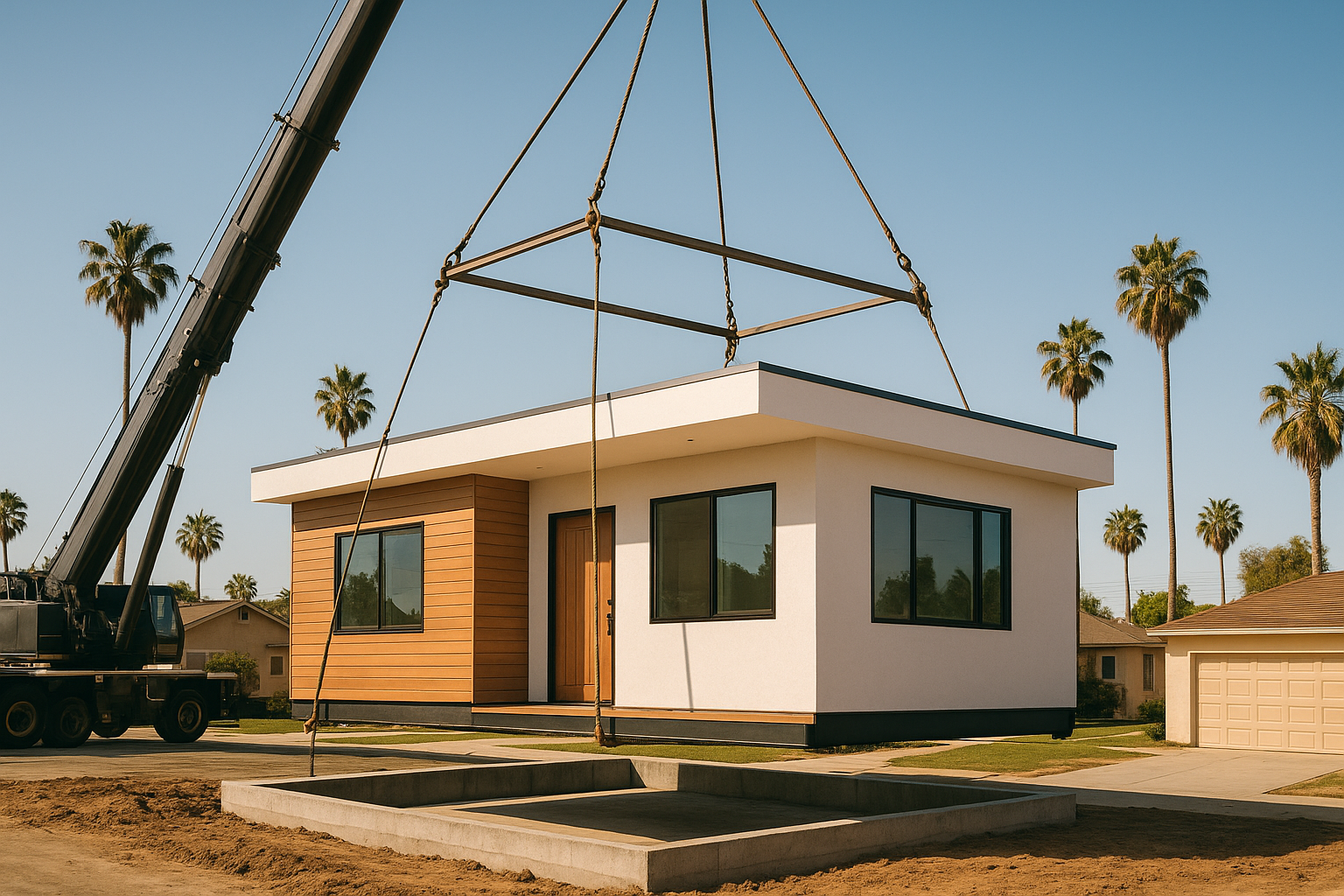
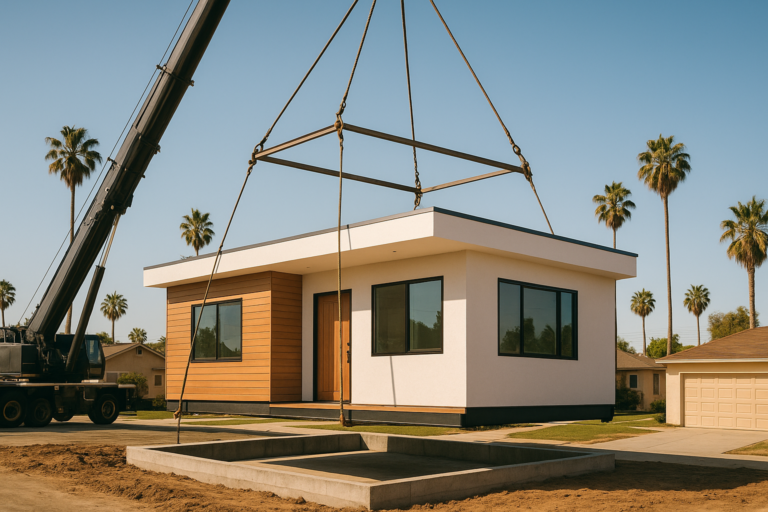
Modular homes California crews assemble on-site after factory fabrication, cutting weeks off traditional build timelines.
Modular Homes California: What Homeowners Need to Know
Before comparing costs or codes, it helps to understand what actually makes a home “modular.” Specifically, modular construction refers to a building method, not a style, and it can apply to full houses, additions, or accessory dwelling units.
Unlike a mobile home, a modular structure is engineered to meet the exact same seismic, structural, and energy codes as a home built entirely on-site. Therefore, once installed, a modular home is legally and functionally identical to a traditional house in the eyes of local building departments.
What Are Modular Homes in California?
Modular homes in California are prefabricated sections, or “modules,” built inside a factory and then shipped to a home site for final assembly on a permanent foundation. Each module includes framing, insulation, wiring, and plumbing completed before it ever leaves the plant.
As a result, weather delays and on-site labor shortages have far less impact on the schedule compared to traditional construction. According to the Modular Building Institute, an industry trade group, modular projects can shorten overall construction timelines by 20 to 50 percent compared to conventional site-built methods.
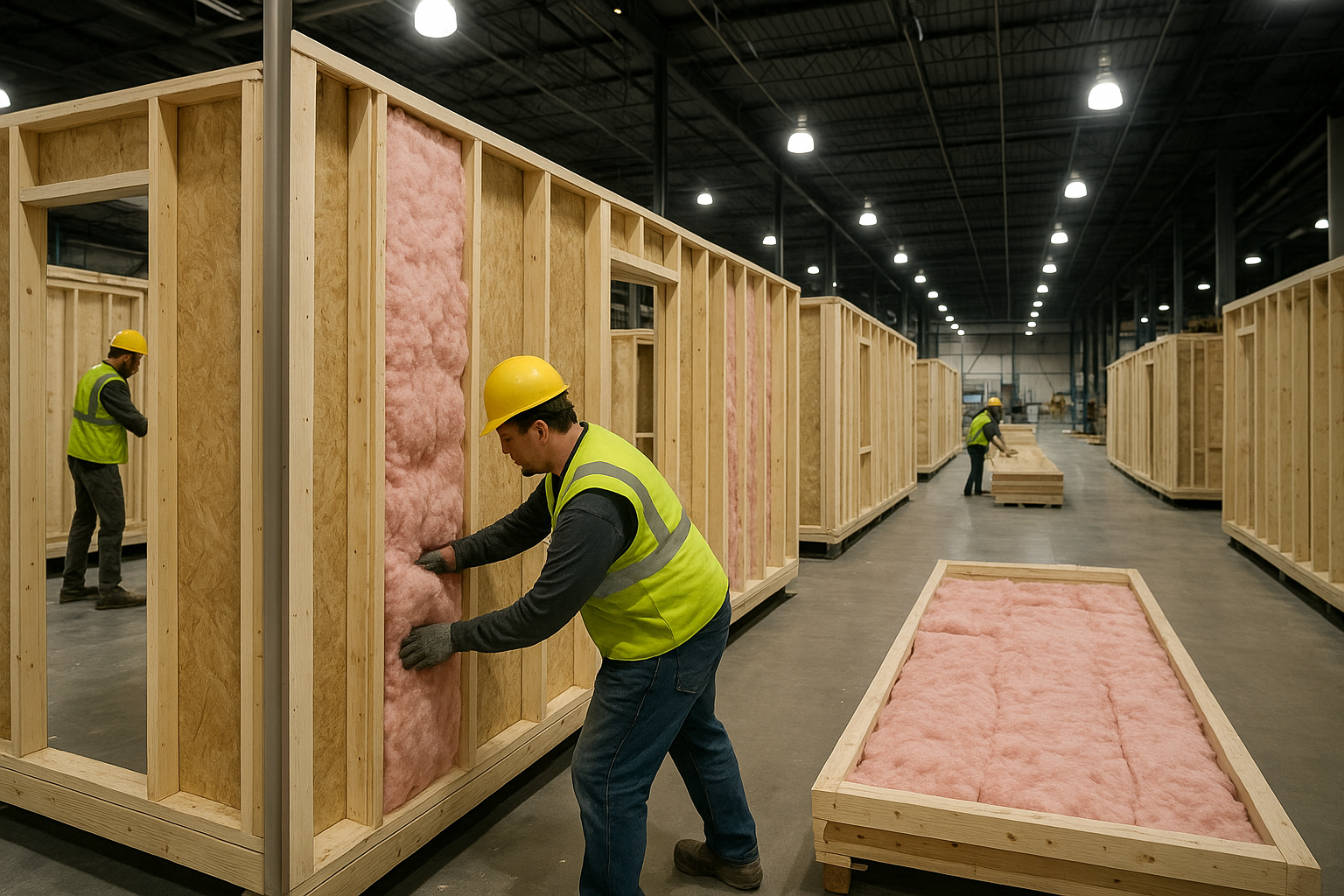
Factory production allows modular home components to be built with consistent quality control before shipment.
Modular vs. Manufactured vs. Site-Built Homes in California
Confusion often arises between modular, manufactured, and traditional homes, so a side-by-side comparison helps clarify the differences homeowners should know before choosing a builder.
| Feature | Modular | Manufactured | Site-Built |
|---|---|---|---|
| Building Code | Local & state code | Federal HUD code | Local & state code |
| Foundation | Permanent | Often on chassis | Permanent |
| Typical Timeline | 4-8 months | 2-4 months | 8-14 months |
Notably, this distinction matters for financing and resale value. Because modular homes meet the same code as site-built homes, most lenders treat them identically for mortgage purposes, while manufactured homes under the federal HUD manufactured housing standards often face different financing rules.
How Much Do Prefab Homes Cost in California?
Cost is usually the first question homeowners ask, and understandably so. On average, modular construction in California ranges from $150 to $350 per square foot for the base structure, though final pricing depends heavily on finishes and site conditions.
In addition to the module price, homeowners should budget for foundation work, utility connections, permitting fees, and transportation of the modules to the site. For a deeper breakdown of pricing tiers and prefab types, this guide to prefab ADU options, costs, and types covers many of the same cost factors that apply to larger modular projects.
Meanwhile, land prices, seismic retrofitting needs, and local labor rates cause costs to vary significantly between Orange County, Los Angeles County, and the Inland Empire. For that reason, getting a site-specific estimate from a local contractor is far more reliable than relying on national averages.
California Building Codes and Permitting Rules for Modular Construction
Modular homes must comply with the California Building Code, Title 24 energy standards, and local seismic requirements, just like any traditionally built home. Before installation, the factory-built modules are inspected and certified by the California Department of Housing and Community Development (HCD), which oversees factory-built housing statewide.
Once the modules arrive on-site, local building departments still handle permits for the foundation, utility connections, and final assembly inspection. Consequently, homeowners work with two layers of oversight: state certification for the factory-built portion, and local permitting for everything connected on-site.
Because permitting timelines vary widely between jurisdictions, above all, homeowners should confirm local requirements early. A contractor experienced with your specific county’s process, such as one already familiar with detailed ADU design and permitting in Mission Viejo, can help avoid costly delays.
Modular ADUs: A Smart Option for Southern California Homeowners
While modular homes California builders produce are often full-size residences, the same construction method applies beautifully to accessory dwelling units. A modular ADU is built off-site in sections, then craned into place in a backyard or alongside an existing home.
For homeowners across Los Angeles, Orange, and Riverside counties, a modular ADU offers a faster path to rental income, multigenerational housing, or a private guest space. Similarly, these units still require thoughtful design choices, from layout efficiency to finishes; this collection of functional ADU designs that maximize space and value shows how smart planning affects both cost and livability.
Kitchens and storage often make or break a small ADU floor plan. In particular, these ADU kitchen design ideas and trends illustrate how compact modular layouts can still feel spacious and functional.
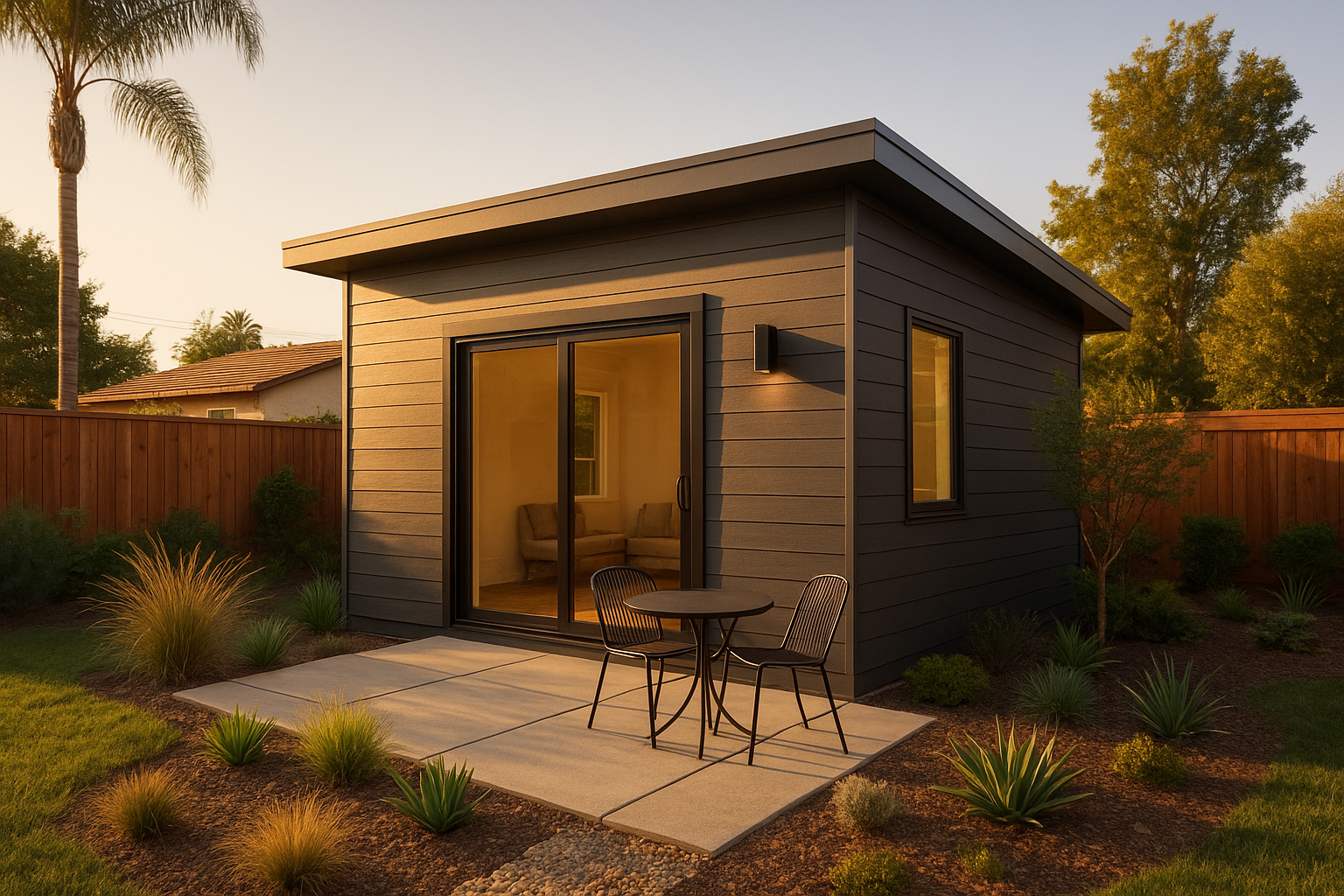
A modular ADU brings the same building code compliance as modular homes California residents build for full-size houses.
How the Modular Home Building Process Works
Understanding the sequence of steps helps set realistic expectations for timeline and budget. Below is the typical process homeowners follow when building a modular home or modular ADU in California.
- Initial consultation and site evaluation: A licensed contractor reviews your lot, zoning, and goals for the project.
- Design and engineering: Architects and structural engineers finalize floor plans and seismic details that meet code.
- Permitting and plan check: Plans go to the local building department and state module certification review.
- Factory fabrication: Modules are built indoors with framing, wiring, plumbing, and finishes installed.
- Site preparation and foundation: Crews grade the lot, pour footings, and run utility lines while modules are produced.
- Delivery, assembly, and inspection: Modules are craned into place, joined, and inspected before final occupancy approval.
Benefits of Choosing Modular Construction in California
Beyond speed, modular construction offers several practical advantages for Southern California homeowners weighing their options.
First, factory conditions reduce material waste and weather-related delays, which often keeps budgets more predictable. Second, quality control tends to be more consistent since each module is inspected repeatedly before it ever leaves the plant.
Third, because modular homes meet the same code as site-built construction, they typically hold value similarly at resale. Finally, this method pairs well with smaller projects too, including garage conversions and attached additions, where efficient use of space matters most; see this overview of what makes a great ADU design for related planning tips.
Selecting a Trusted Builder for Your Project
Not every contractor has direct experience with modular systems, seismic connections between modules, or California’s dual-layer permitting process. Therefore, it pays to ask specific questions before signing a contract.
Above all, request examples of completed local projects, verify active licensing, and confirm the builder understands your specific county’s permitting quirks. Homeowners focused on ADUs specifically can start by exploring the services and local project experience available through The ADU Pro, which works across Orange County, Los Angeles County, and Riverside County.
For additional background on structural terminology, the Wikipedia overview of modular building offers a useful plain-language reference for first-time buyers.
Frequently Asked Questions About Modular Homes California
What are modular homes in California?
Modular homes California builders produce are structures built in sections inside a factory, then transported to the home site for final assembly on a permanent foundation. Because they are built indoors, weather delays are minimal and quality control is consistent.
How much do modular homes cost in California?
Modular home construction in California typically runs between $150 and $350 per square foot depending on finishes, site work, and location. Site preparation, utility hookups, and permitting fees can add significantly to the base module price.
Are modular homes cheaper than site-built homes?
Modular homes are often 10 to 20 percent less expensive than comparable site-built homes because factory production reduces labor time and material waste. However, savings vary based on design complexity and local site conditions.
How long does it take to build a modular home?
Factory construction of the modules usually takes 4 to 8 weeks, while total project time including permitting, foundation work, and final assembly often ranges from 4 to 8 months. Timelines depend heavily on local permitting speed.
Do modular homes hold their value in California?
Yes, modular homes built to California code standards appreciate similarly to site-built homes because they are permanently affixed to a foundation and classified as real property. This differs from manufactured homes on non-permanent chassis.
What is the difference between modular and manufactured homes?
Modular homes are built to the same local and state building codes as site-built homes, while manufactured homes follow a separate federal HUD code. In practice, this means modular homes must meet identical seismic and structural standards as traditional construction in California.
Can you build a modular ADU in California?
Yes, modular accessory dwelling units are increasingly popular across Los Angeles, Orange, and Riverside counties because they combine faster build times with full compliance with California ADU law. Many homeowners pair a modular ADU with a detached guest house or garage conversion project.
What permits are needed for modular homes in California?
Modular homes require the same permits as site-built homes, including building, electrical, plumbing, and mechanical permits from the local jurisdiction. The California Department of Housing and Community Development also reviews and certifies the factory-built modules before installation.
Are modular homes earthquake safe in California?
Modular homes must meet the same seismic requirements found in the California Building Code as any other new construction. Consequently, engineers design the structural connections between modules specifically to withstand regional seismic activity.
What is the biggest mistake homeowners make when choosing modular homes?
The most common mistake is underestimating site work costs, such as grading, foundation, and utility connections, which are not included in the factory module price. Working with a local contractor familiar with California site conditions helps avoid budget surprises.
How do I finance a modular home in California?
Modular homes on permanent foundations typically qualify for standard mortgages, construction loans, and renovation financing, similar to site-built homes. Lenders generally require the home to be permanently affixed and classified as real property.
Can modular homes be customized?
Yes, modern modular homes offer extensive customization for layouts, finishes, and exterior styles, often rivaling fully custom site-built designs. Many manufacturers also allow module combinations to create larger or multi-story homes.
How do I choose the right modular home builder in California?
Look for a builder with direct experience navigating California permitting, seismic engineering, and local zoning rules in your specific county. Checking references, license status, and completed local projects is essential before signing a contract.
Do modular homes meet California Title 24 energy requirements?
Yes, modular homes built for California must comply with Title 24 energy efficiency standards just like site-built homes. Many manufacturers exceed these requirements with upgraded insulation and high-efficiency systems.
Are modular homes a good investment for rental income in California?
Modular construction can be an efficient way to add rental units, particularly as a modular ADU on an existing property, because faster build times mean quicker rental income. Local rental demand and permitting timelines still play a major role in overall return.
Final Thoughts
Ultimately, modular homes California homeowners are building today offer a compelling mix of speed, cost efficiency, and code-compliant quality that rivals traditional construction. Whether the goal is a full residence, a garage conversion, or a modular ADU tucked into a backyard, the process rewards careful planning around permitting and site work.
As a result, working with a local team that understands both modular systems and California’s regulatory landscape makes a measurable difference in outcome and timeline. For homeowners across Orange County, Los Angeles County, and Riverside County exploring these options, connecting with an experienced local resource like The ADU Pro is a practical next step toward turning a modular or ADU project into reality.