
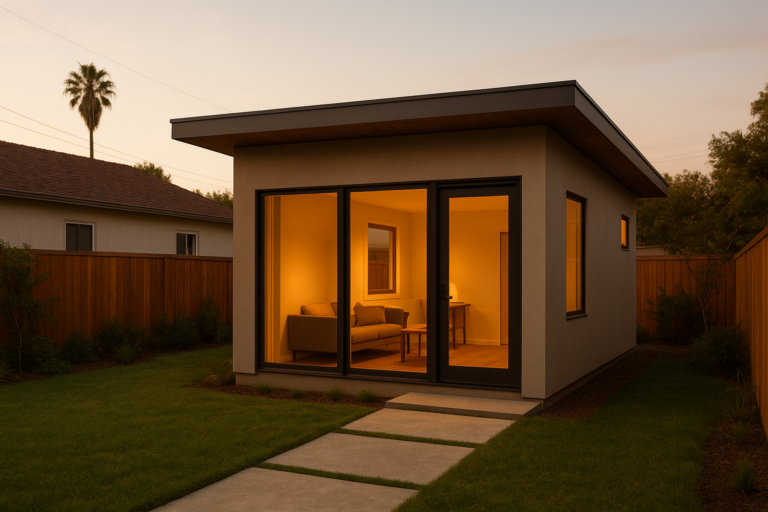
Finding a reliable ADU contractor Los Angeles County homeowners can trust starts long before a shovel touches the ground. It begins with license verification, permit-history checks, and honest conversations about cost, timeline, and design. Because an accessory dwelling unit (ADU), a secondary living structure built on a single-family lot, involves permits, structural engineering, and inspections, hiring the wrong contractor can turn a simple backyard project into a stalled construction site.
Quick Answer: A reliable ADU contractor in Los Angeles County holds an active CSLB license, manages permits and inspections in-house, and can show a verifiable project history through platforms like BuildZoom. Homeowners should confirm licensing, review completed builds, and compare design-build capabilities before signing any contract.
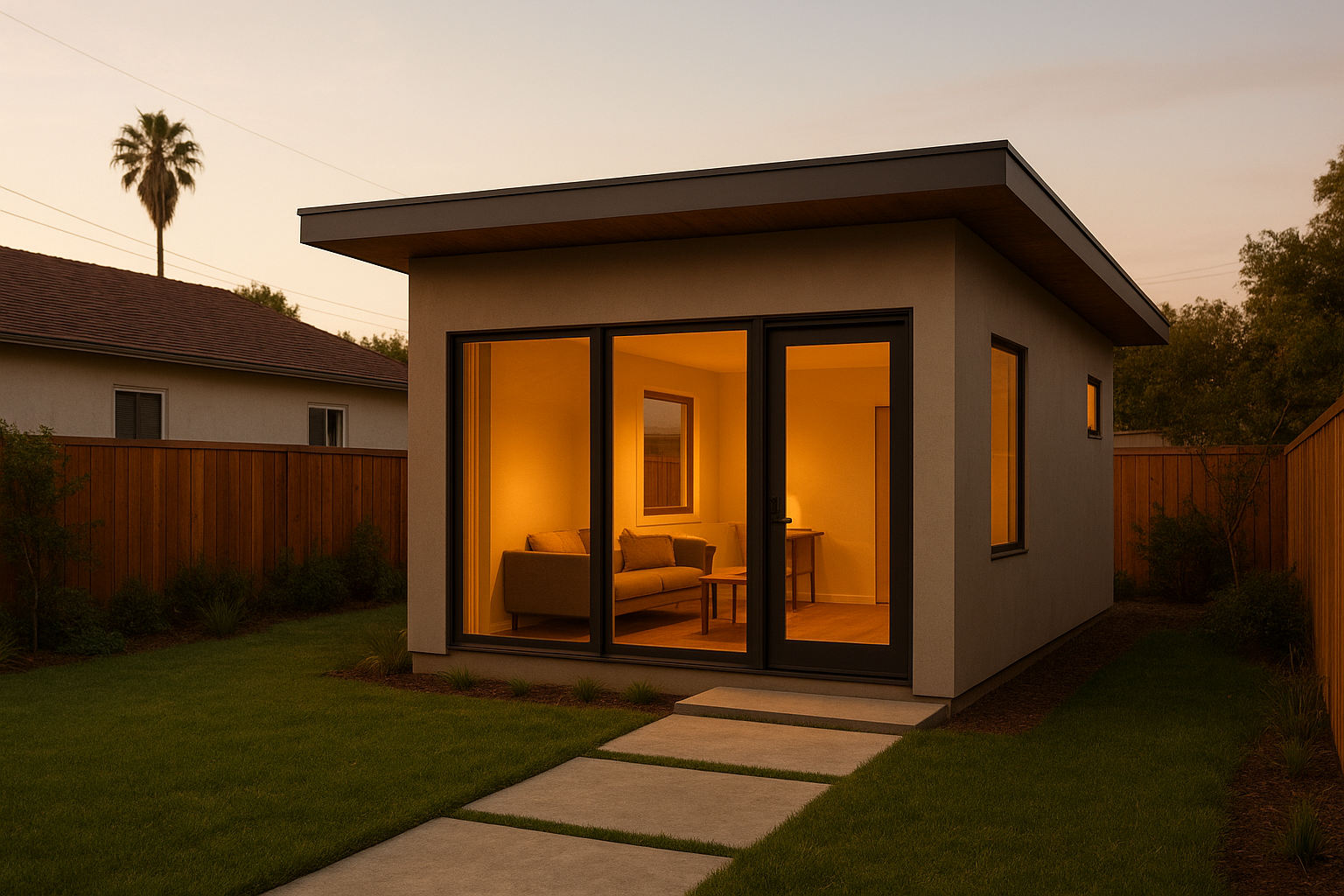
A reliable ADU contractor Los Angeles County homeowners hire should manage design, permits, and construction as one accountable process.
What Is a Reliable ADU Contractor in Los Angeles County?
A reliable ADU contractor Los Angeles County homeowners recommend is generally defined as a licensed general contractor who specializes in accessory dwelling units, manages design through construction under one team, and maintains verifiable permit and inspection records with local building departments. In other words, reliability is not just about friendly service. It is measurable through licensing status, completed projects, and how a contractor handles the paperwork side of construction.
According to the Wikipedia overview of secondary suites, ADUs have grown rapidly across California since state law simplified approval requirements. As a result, the number of contractors claiming ADU expertise has grown too, which makes verification more important than ever for homeowners in Los Angeles County.
Why LA County Homeowners Need a Trustworthy ADU Builder
Los Angeles County includes dozens of individual cities, and each one applies its own setback rules, fees, and review timelines. Consequently, a trustworthy ADU builder needs current, city-specific experience rather than general contracting knowledge alone. A contractor who built successfully in Long Beach may still hit delays in Pasadena if local zoning rules were not double-checked first.
Furthermore, ADU projects touch several regulated systems at once: structural engineering, Title 24 energy compliance (California’s building energy efficiency standard), and utility connections. Therefore, homeowners benefit most from a contractor who coordinates all of these pieces directly instead of subcontracting each phase to a separate, less accountable party.
Homeowners researching options can also review city-specific guidance, such as this breakdown of where to find ADU contractors in Los Angeles, which outlines how local licensing and permit records can be checked before signing a contract.
How to Vet a Reliable ADU Contractor Los Angeles County Homeowners Recommend
Vetting starts with the basics. Specifically, homeowners should confirm three things before any deeper conversation: an active license, a strong BuildZoom score (a public rating that aggregates permit history and reviews), and recent ADU-specific project photos. BuildZoom pulls data directly from public permit records, so its scoring is harder to manipulate than a simple review count.
In addition, a dependable contractor should be transparent about who handles structural engineering, who submits plans to the city, and who manages inspections. If those answers are vague, that is often a signal to keep looking. For a deeper look at how homeowner reviews compare across builders, this complete homeowner’s guide to ADU contractor reviews breaks down what to look for beyond star ratings.
Step-by-Step: Finding the Right ADU Contractor in LA County
The vetting process is more manageable when broken into clear steps. Below is a practical sequence homeowners can follow before signing any contract.
- Verify the CSLB license. Look up the contractor’s license number on the California Contractors State License Board website to confirm active status and check for disciplinary history.
- Check the BuildZoom score. Review permit-based scoring on BuildZoom to see completed ADU projects, not just marketing claims.
- Confirm city-specific permitting experience. Ask directly whether the contractor has recently pulled ADU permits in your specific city within Los Angeles County.
- Compare design-build capabilities. Determine if design, engineering, and construction happen under one accountable team, which typically reduces delays.
- Ask about financing coordination. Confirm whether the contractor can introduce you to lenders familiar with HELOCs or ADU-specific loan programs.
- Review completed project references. Request addresses or photos of finished ADUs and, when possible, speak with past clients about communication and timeline accuracy.

Reviewing licensing and permit history together helps homeowners choose a reliable ADU contractor Los Angeles County confidently.
ADU Costs and Financing Coordination in Los Angeles County
Cost is often the first question homeowners ask, and understandably so. Detached ADUs generally cost more per square foot than garage conversions because they require new foundations, roofing, and utility connections. However, exact pricing depends heavily on finishes, lot conditions, and local fees.
In particular, one national industry estimate places typical detached ADU construction costs well into six figures for fully custom builds, though smaller garage conversions can cost significantly less. Because of this range, a written estimate following an actual site assessment matters far more than a generic online calculator.
Financing is another area where reliability shows. A trustworthy contractor should be able to explain, in plain terms, how HELOCs, construction loans, and ADU-specific lending programs work, and should connect homeowners with licensed third-party lenders rather than issuing loans directly. If code compliance around zoning or setbacks feels unclear, this resource on contractors experienced with Southern California building codes is a useful starting point.
Detached ADU vs. Garage Conversion: Which Fits Your Lot?
Choosing between a detached ADU and a garage conversion depends largely on lot size and how the garage is currently used. For example, a rarely used detached garage is often the fastest and most cost-efficient path to a functional living unit, since much of the shell already exists.
On the other hand, a larger, open backyard may support a custom-designed detached ADU with its own separate entrance and layout, which can be preferable for rental privacy or multigenerational living. A reliable contractor should walk the property in person before recommending either option rather than guessing from photos alone.
Homeowners considering a smaller secondary unit specifically may also want to review this guide on top contractors for building junior ADUs in Los Angeles County, since JADUs (junior ADUs built within the existing home’s footprint) follow slightly different permitting rules than detached units.
Common Mistakes When Choosing an ADU Contractor
Even motivated homeowners make avoidable mistakes during the hiring process. Skipping license verification is one of the most common, since an unlicensed or improperly classified contractor can jeopardize both financing and final inspection approval.
Similarly, accepting a vague, one-page estimate without a detailed scope of work often leads to costly change orders later. As a result, homeowners should insist on itemized pricing tied to a specific floor plan before signing anything.
Finally, homeowners sometimes hire based on price alone without checking whether the contractor has actually completed ADU projects nearby. For homeowners near the South Bay area specifically, this local example of an ADU contractor serving Redondo Beach shows how location-specific experience can be verified before committing.
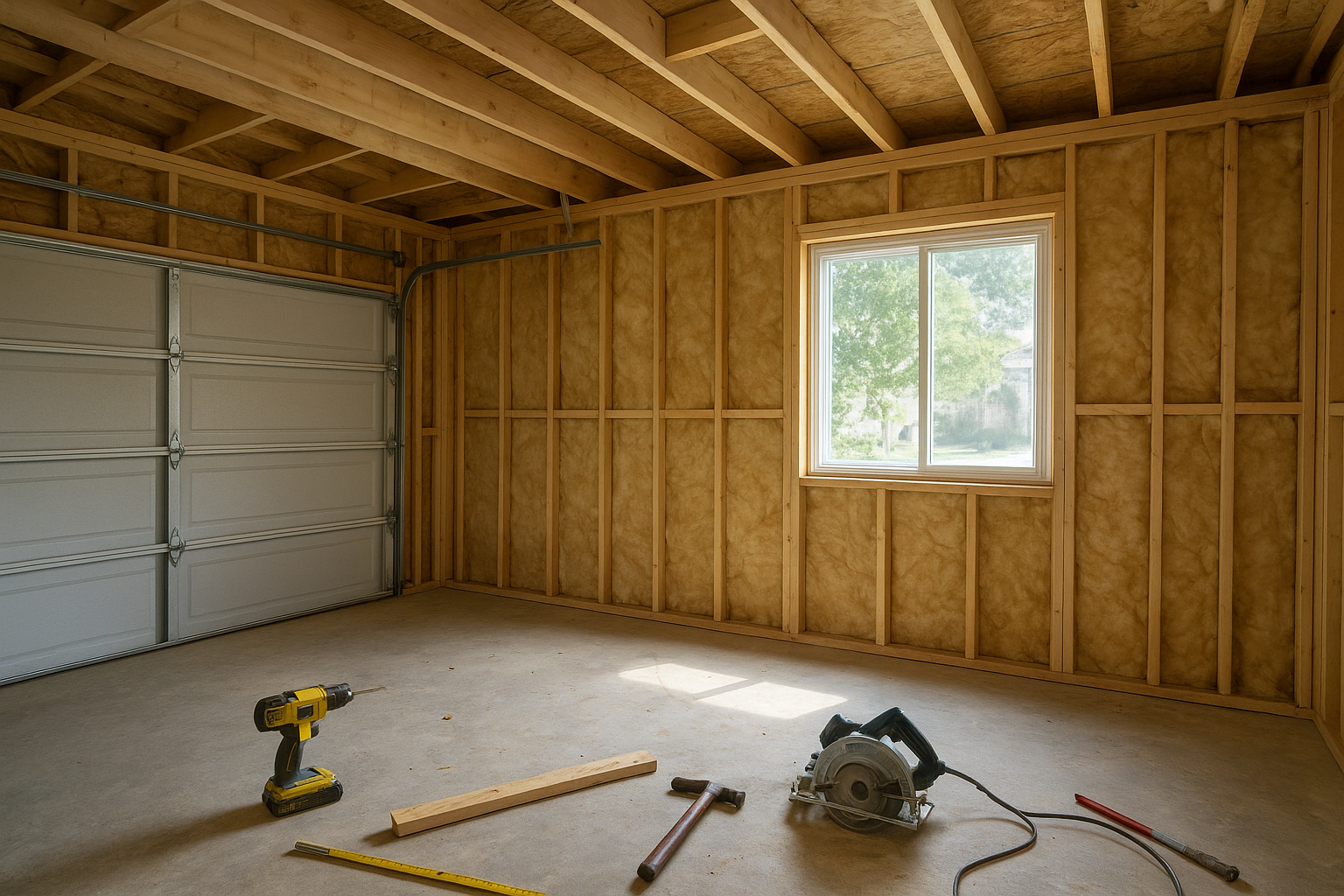
Garage conversions remain a popular, budget-conscious option among homeowners searching for a reliable ADU contractor Los Angeles County wide.
Frequently Asked Questions About Reliable ADU Contractors in Los Angeles County
What makes a reliable ADU contractor Los Angeles County homeowners can trust?
A reliable ADU contractor Los Angeles County homeowners can trust holds an active CSLB license, manages permits in-house, and has a verifiable project history through resources like BuildZoom. Consistent communication and clear written contracts are additional signs of trustworthiness.
How do I verify an ADU contractor’s license in Los Angeles County?
You can verify a contractor’s license status directly through the CSLB website using their license number. This confirms whether the license is active, bonded, and free of unresolved complaints.
How much does it cost to build an ADU in Los Angeles County?
ADU costs in Los Angeles County typically range widely depending on size, foundation type, and finishes, with detached units generally costing more than garage conversions. A reliable contractor should provide a written estimate after a site assessment rather than a generic quote.
How long does ADU permitting take in Los Angeles County?
Permit timelines vary by city within the county, but many jurisdictions aim to process complete ADU applications within about 60 days under state law. Delays are common when plans are incomplete or a city requires additional review cycles.
What is the difference between a detached ADU and a garage conversion?
A detached ADU is a standalone structure built separately from the main house, while a garage conversion repurposes an existing garage’s footprint and structure. Garage conversions are often faster and less costly since much of the shell already exists.
Can an HOA block an ADU in Los Angeles County?
Generally, HOAs cannot outright prohibit ADUs because California state law limits their ability to block state-permitted housing. However, an HOA may still apply reasonable design or aesthetic restrictions that do not conflict with state ADU law.
Will building an ADU trigger a property tax reassessment?
Adding an ADU typically results in a partial reassessment limited to the new construction’s added value, not the entire property. The existing home retains its original assessed value under California’s property tax rules.
What financing options exist for building an ADU?
Common financing routes include HELOCs, construction loans, and ADU-specific loan programs offered through third-party lenders. A design-build contractor can often coordinate introductions to lending partners, though the loan itself comes from the lender, not the contractor.
What size ADU can I build on my lot?
Most Los Angeles County jurisdictions allow ADUs up to 1,200 square feet, though lot size, setbacks, and existing structures affect the final buildable footprint. A site assessment is the most accurate way to confirm what fits your property.
How do I choose the right ADU type for my property?
Choosing the right ADU type depends on your goals, lot layout, and existing structures, such as whether you have an underused garage or open yard space. A reliable ADU contractor Los Angeles County homeowners hire for a feasibility study can help match the ADU type to the lot’s constraints.
What rental income can an ADU generate?
Rental income varies by city, unit size, and local rental demand, so figures should be based on comparable listings in your specific neighborhood. Many homeowners use projected rental income to help justify financing costs over time.
What common mistakes should I avoid when hiring an ADU contractor?
Common mistakes include skipping license verification, accepting vague estimates, and hiring a contractor without ADU-specific permitting experience in your city. Homeowners should also avoid contracts that lack clear payment milestones tied to completed work.
Final Thoughts on Choosing an ADU Builder
Ultimately, choosing a reliable ADU contractor Los Angeles County homeowners can depend on comes down to verifiable proof rather than promises. Licensing, BuildZoom history, city-specific permitting experience, and transparent financing conversations are the clearest signals of dependability. Above all, a contractor who manages design, engineering, permitting, and construction under one accountable team tends to deliver smoother, more predictable projects.
Homeowners exploring their options across Orange County, Los Angeles County, or western Riverside County can start with a straightforward site assessment through The ADU Pro to see what is realistically buildable on their lot before committing to a full design.

