
An accessory dwelling unit ADU is a secondary, self-contained residential unit built on the same lot as a primary home, complete with its own kitchen, bathroom, and entrance. Because housing shortages have intensified across the United States, ADUs have become one of the most practical and financially rewarding ways for homeowners to add living space, generate rental income, or house family members.
In this guide, you will find everything you need — from types and costs to zoning rules and step-by-step construction advice — to make a confident decision about building an ADU.
Quick Answer: An accessory dwelling unit ADU is a legally permitted, independent living unit on a residential lot. It can be detached, attached, or converted from existing space, and it qualifies for rental occupancy under local housing codes.
Types of ADUs: Which One Fits Your Property?
There are four primary ADU types, and each comes with distinct trade-offs in cost, privacy, and permitting complexity. Therefore, choosing the right type early will save you significant time and money.
Detached ADU: A fully separate structure on the same lot — often called a backyard cottage or granny flat. These offer maximum privacy for both the homeowner and tenant, but they are generally the most expensive to build.
Attached ADU: An addition connected to the main house, sharing at least one wall. Because it leverages existing structure, construction costs are typically lower than a fully detached unit.
Garage Conversion ADU: An existing garage transformed into a livable unit. This is often the most cost-effective path since the foundation and shell already exist. Additionally, many homeowners find that rental income from a converted garage far outweighs the value of extra parking.
Junior ADU (JADU): A smaller unit — typically under 500 square feet — carved from within the existing home. JADUs are subject to less stringent permitting in many states, making them an accessible entry point for first-time ADU owners.
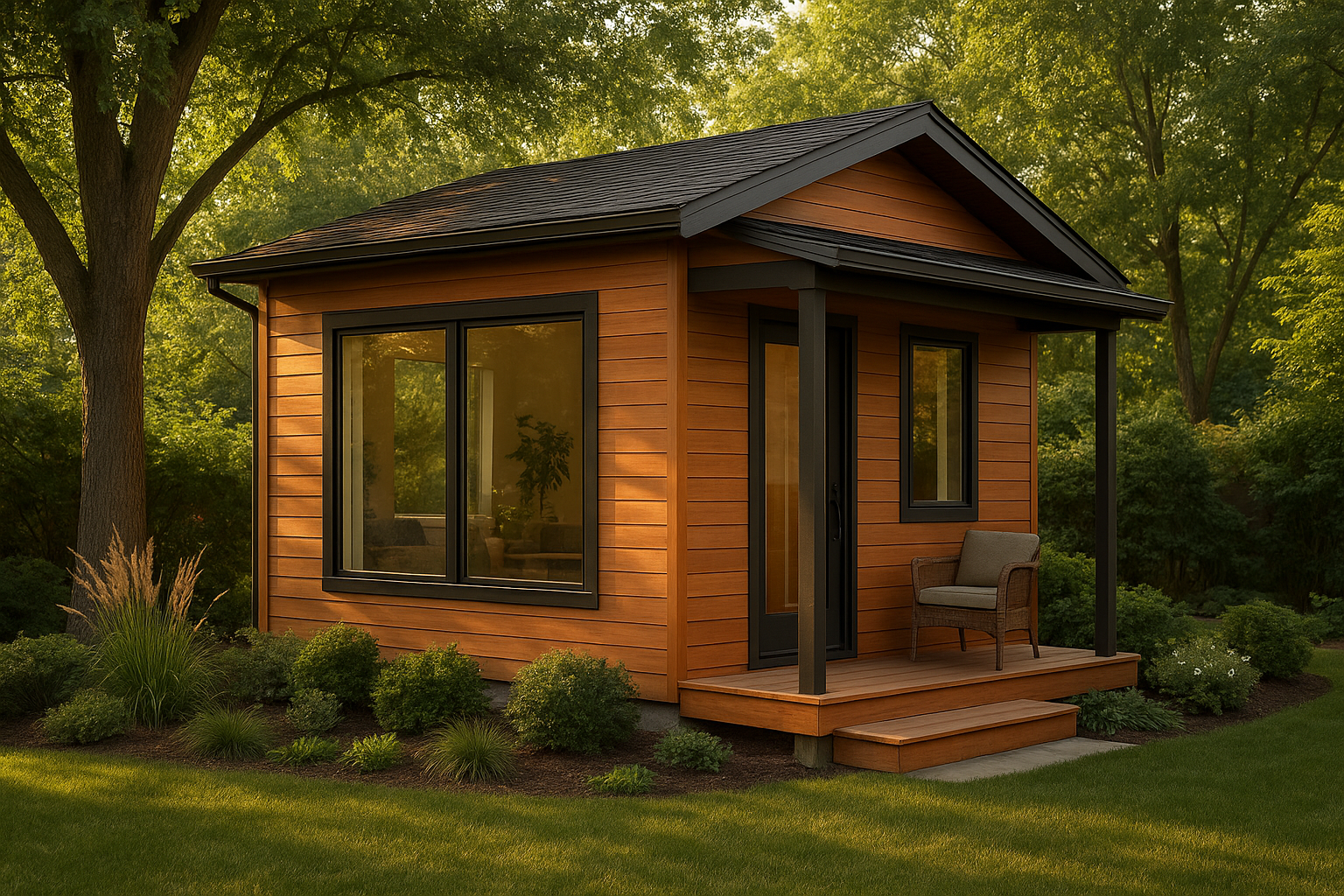
A detached accessory dwelling unit ADU offers complete privacy and typically commands the highest rental rates.
ADU Costs: What to Budget in 2025
Construction costs vary considerably by type, region, and finish level. However, understanding the general ranges helps you plan financing before hiring anyone.
Beyond construction, remember to budget for design and architecture fees (typically 8–15% of construction cost), permit fees ($1,000–$10,000+), utility connection fees, and landscaping. As a result, total project costs can run 20–30% higher than the base build figure.
Zoning Rules and Legal Requirements
ADU regulations differ significantly from state to state and even city to city. For example, California has passed some of the most permissive ADU legislation in the country, requiring cities to allow ADUs on virtually all single-family and multi-family lots. According to the California Department of Housing and Community Development, these reforms have resulted in a dramatic increase in ADU permit applications statewide.
Common zoning considerations include:
- Setbacks: Minimum distance from property lines (often 4–5 feet for detached ADUs)
- Maximum size: Many jurisdictions cap ADUs at 850–1,200 square feet
- Height limits: Typically 16–25 feet for detached units
- Owner-occupancy requirements: Some cities require the homeowner to live on-site
- Parking requirements: Often waived when the property is near transit
Because rules change frequently, always verify current requirements with your local planning department before investing in design work. Resources like The ADU Pro can help you navigate local regulations and connect with qualified ADU specialists.
How to Build an ADU: Step-by-Step Process
Building an ADU involves several sequential stages. First, skipping any step can lead to costly delays or code violations. Follow this process to keep your project on track.
Check Local Zoning and Eligibility
Research your local zoning codes to confirm your property qualifies. Verify setback requirements, lot coverage limits, and any owner-occupancy rules before spending money on design.
Choose Your ADU Type
Select the ADU type that aligns with your budget, lot size, and goals. Additionally, consider how the unit will affect your daily life — detached units offer more privacy, while JADUs minimize disruption during construction.
Hire a Designer or Architect
Work with a licensed architect or ADU design specialist to create permitted plans. Good design at this stage prevents expensive change orders later in the process.
Submit Permit Applications
Submit your plans to the local building department. Because permit timelines vary widely — from weeks to several months — apply as early as possible to avoid project delays.
Hire a Contractor and Build
Select a licensed general contractor with proven ADU experience. Finally, manage the build through required inspections and obtain your certificate of occupancy before renting or occupying the unit.
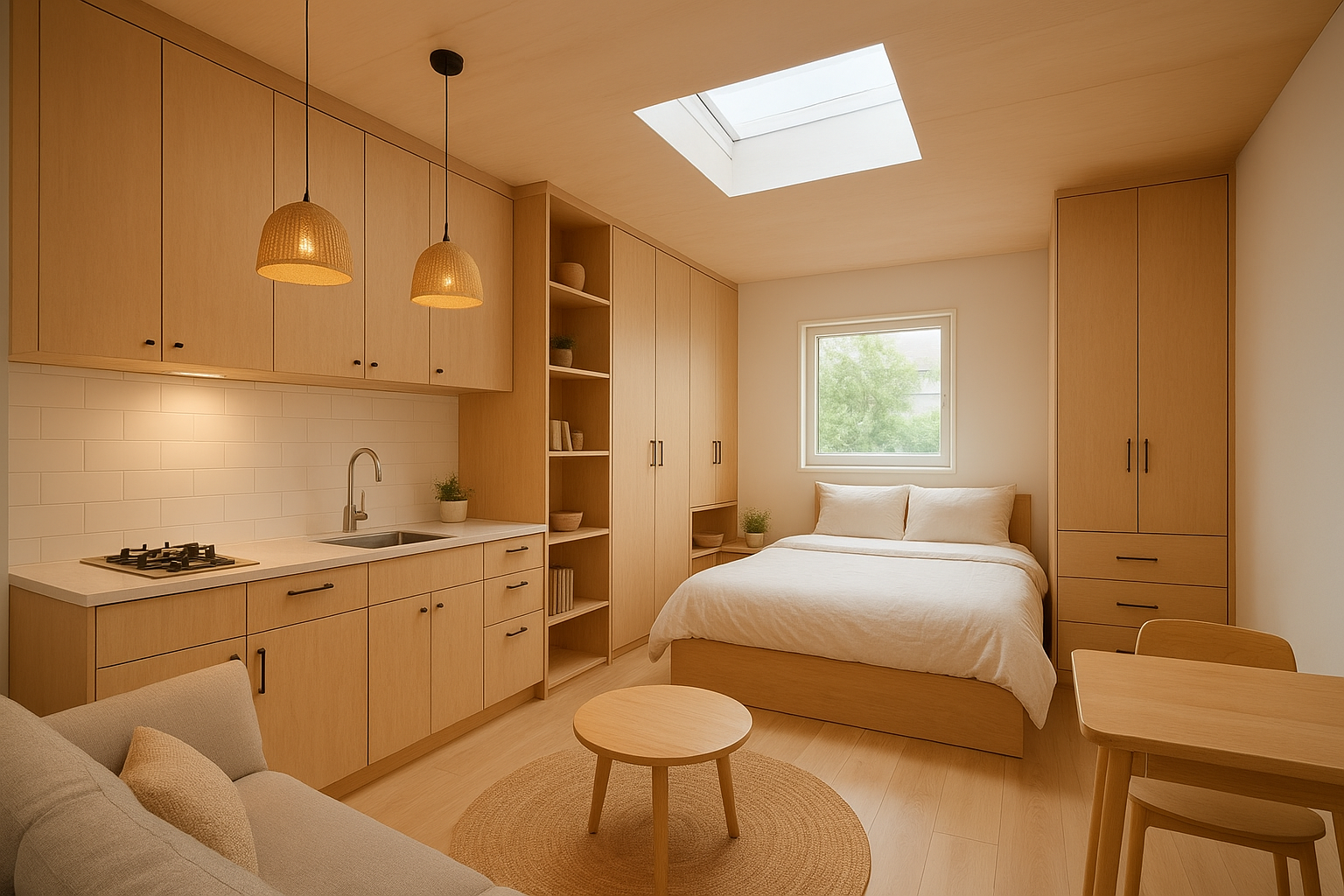
A well-designed ADU interior maximizes every square foot with smart storage and open layouts.
Financing Your ADU Project
Most homeowners finance ADU construction through one of these methods. In practice, the best option depends on your current equity, credit profile, and how quickly you need funds.
- Cash-out refinance: Replace your existing mortgage with a larger one and use the difference to fund construction. This works well when interest rates are favorable.
- Home equity line of credit (HELOC): Draw funds as needed during construction, paying interest only on what you use. However, variable rates can increase costs if the project runs long.
- Construction loan: A short-term loan that converts to a permanent mortgage upon project completion. These require more documentation but are purpose-built for new construction.
- State and local ADU programs: Several states and municipalities offer grants or subsidized loans specifically for ADU construction. Check with your local housing authority for available programs.
For detailed guidance on ADU financing strategies and local programs, The ADU Pro is a useful resource that covers financing options by state and project type.
Common Mistakes to Avoid
Even experienced homeowners make avoidable errors when building ADUs. Therefore, reviewing these pitfalls before you start can save thousands of dollars and months of frustration.
- Skipping the feasibility check: Not every property qualifies for every ADU type. Always confirm zoning eligibility before hiring a designer.
- Underestimating total costs: Many homeowners budget only for construction and overlook design fees, permits, and utility connections. As a result, projects stall mid-build due to cash shortfalls.
- Choosing the wrong contractor: ADU construction requires specific expertise. In contrast to general remodels, ADUs involve complex permitting, utility tie-ins, and habitability standards.
- Ignoring rental market research: Before investing, research local rental rates to ensure your ADU will generate meaningful income relative to its cost.

Careful planning with a qualified architect is essential before breaking ground on any ADU project.
ADU Rental Income Potential
Rental income is one of the most compelling reasons to build an ADU. Meanwhile, the housing shortage in most U.S. metros means vacancy rates for well-located ADUs remain extremely low.
In high-cost cities like San Francisco, Los Angeles, Seattle, and New York, a detached ADU can generate $2,000–$4,000 per month in long-term rental income. Even in mid-tier markets, monthly rents of $900–$1,800 are common for a well-finished one-bedroom unit.
For example, a $150,000 garage conversion renting at $1,500 per month generates $18,000 annually — a 12% gross yield before expenses. Because ADUs also increase overall property value, the financial case is strong even if you never rent the unit out.
Conclusion: Is an Accessory Dwelling Unit ADU Right for You?
An accessory dwelling unit ADU is one of the most versatile investments a homeowner can make. Whether your goal is passive rental income, multigenerational living, or simply increasing your property’s long-term value, an ADU delivers on multiple fronts. However, success depends on thorough planning — understanding your zoning rules, choosing the right ADU type, budgeting realistically, and working with experienced professionals.
Additionally, as housing demand continues to outpace supply in most U.S. markets, ADUs are increasingly recognized by policymakers and planners as a critical piece of the solution. Therefore, the regulatory environment is becoming more favorable each year, making now an excellent time to explore your options.
Ready to Start Your ADU Project?
Visit The ADU Pro for expert guidance on planning, permitting, financing, and building your ADU from start to finish. For a deeper walkthrough, see our 2-Car Garage ADU Conversion: Complete Planning Guide.