
An accessory dwelling unit Los Angeles homeowner builds in 2025 is a fully legal, self-contained second home constructed on the same lot as an existing house — and few remodeling projects deliver a better return on investment. Because state lawmakers have spent the last several years stripping away local red tape, adding a backyard cottage, garage conversion, or in-law suite in LA is now faster, cheaper, and far less risky than it was even five years ago. This guide walks through every piece of the puzzle: zoning eligibility, setback and height rules, the exact permit process, real 2025 construction costs, rental income math, financing, and the mistakes that trip up first-time builders.
Quick Answer: An accessory dwelling unit in Los Angeles is an independent, legally permitted housing unit built on a single-family or multifamily lot alongside the main home. Under current California law, most LA property owners can build one by right — meaning the city cannot hold a discretionary hearing or deny the project — as long as the design meets objective building code standards.
Accessory Dwelling Unit Los Angeles: Definition and Legal Basics
An accessory dwelling unit (ADU) is a secondary residential structure that shares a lot with a primary dwelling. In Los Angeles, you’ll also hear ADUs called granny flats, backyard homes, in-law suites, or casitas — they’re all the same legal concept under California’s Government Code Section 65852.2. An ADU can be a detached structure in the backyard, an addition attached to the main house, or a conversion of existing space like a garage, basement, or attic.
California’s landmark ADU legislation — including AB 68, SB 13, AB 671, and the newer AB 1033 — dramatically simplified the approval process statewide. As a result, Los Angeles saw ADU permit applications surge from roughly 1,900 in 2017 to more than 20,000 annually by 2022, according to city planning data. In addition, the city launched its own pre-approved ADU standard plan program, letting homeowners skip much of the custom design review that once slowed projects down for months. For a general primer on how secondary housing units work outside California, the Wikipedia overview of secondary suites is a useful starting reference.
Types of ADUs Available in Los Angeles
There are four primary ADU types recognized under LA’s municipal code, and a fifth option available to owners of multifamily properties. Understanding which type fits your lot is the essential first step before any design work begins.
🏠 Detached ADU
A standalone structure separate from the main home. Maximum 1,200 sq ft. Generally the most flexible and highest-value option for resale and rental income.
🔗 Attached ADU
Connected directly to the primary dwelling. Limited to 50% of the primary home’s square footage, up to a 1,200 sq ft cap.
🚗 Garage Conversion
Converting an existing garage into livable space. Often the most budget-friendly path, typically starting around $80,000.
🛏 Junior ADU (JADU)
Up to 500 sq ft carved from within the existing walls of the primary home. Requires owner occupancy on-site.
Owners of multifamily properties have an additional option: state law allows up to two detached ADUs on lots with existing multifamily buildings, plus conversion of up to 25% of existing non-livable space (such as storage rooms or basements) within the multifamily structure itself. Consequently, a fourplex owner in LA could realistically add two new backyard units on top of interior conversions — a substantial density gain that many owners overlook.
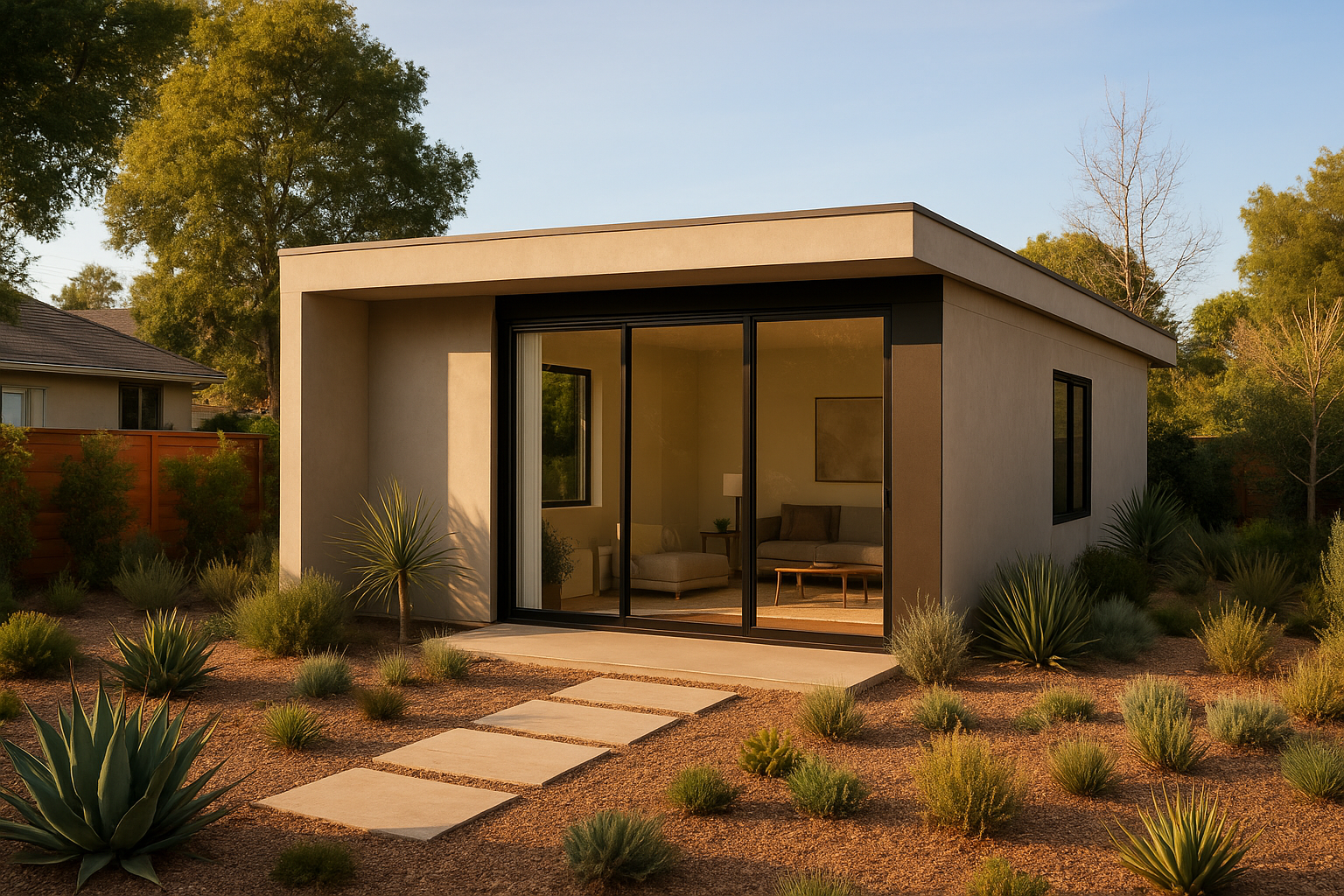
A well-designed accessory dwelling unit in Los Angeles can blend seamlessly with the existing neighborhood aesthetic while adding significant property value.
Los Angeles City ADU Regulations: Zoning, Setbacks, and Height Limits
Most residential-zoned lots in Los Angeles — including R1, R2, RD, and multifamily zones — are eligible for at least one ADU. Furthermore, multifamily properties may qualify for multiple units depending on how many dwellings already exist on-site. Before designing anything, however, verify your specific parcel’s zoning through the Los Angeles Department of Building and Safety (LADBS) or the Los Angeles City Planning Department ZIMAS parcel lookup tool.
Key setback rules for detached ADUs include a minimum 4-foot rear and side yard setback. No interior setback from the primary dwelling is required. Front yard setbacks follow the underlying zone, though ADUs are generally not permitted within the required front yard area. Height limits are typically 16 feet for detached ADUs, rising to 18 feet on lots within a half-mile of transit, and up to 25 feet in specific circumstances when the ADU sits above a garage.
Historic, Hillside, and Coastal Overlay Zones
This is where many general ADU guides fall short — and where Los Angeles gets genuinely complicated. If your property sits inside a Historic Preservation Overlay Zone (HPOZ), such as Whitley Heights or West Adams Heights, your ADU design must still comply with objective HPOZ design standards, though the city cannot use HPOZ status to deny the unit outright. Similarly, properties in the Hillside Area overlay face additional grading, drainage, and fire-access requirements, since narrow hillside streets complicate emergency vehicle access. In contrast, coastal zone properties near Venice or Pacific Palisades may require a coastal development permit in addition to the standard ADU permit, which can add several weeks to the timeline.
Above all, don’t assume a single blanket rule applies citywide. Because Los Angeles is enormous and geographically diverse, the specific overlay zone attached to your parcel can change your timeline, design options, and cost significantly.
Parking and Utility Connection Rules
One of the most homeowner-friendly reforms in California ADU law concerns parking. If your property sits within half a mile of public transit, the city cannot require you to replace garage parking that gets converted into an ADU. In practice, this exemption covers the vast majority of LA parcels given the city’s extensive bus and rail network.
For utilities, ADUs on single-family lots are typically permitted to share existing water, sewer, and electrical connections with the primary home. However, if you plan to sell the ADU separately in the future under the new condominium-conversion rules discussed below, separate utility metering will be required. A qualified ADU specialist — such as the team at The ADU Pro — can help you navigate these utility decisions before they become expensive change orders mid-construction.
Step-by-Step: How to Build an ADU in Los Angeles
Building an ADU involves six distinct phases. Therefore, understanding each one before you start helps you avoid the costly delays that catch most first-time builders off guard.
Assess Your Property’s Eligibility
Confirm your lot’s zoning, size, and existing structures qualify under LA municipal code and California state law. Check for deed restrictions, HOA rules, or overlay zones like HPOZ or hillside areas that could affect your design.
Choose Your ADU Type
Decide between a detached ADU, attached ADU, garage conversion, or JADU based on your budget, timeline, and long-term goals. Each type carries a different cost profile and approval timeline, so weigh them carefully before committing.
Hire a Designer or Use Pre-Approved Plans
Work with a licensed architect or an ADU design-build specialist familiar with Los Angeles’s overlay zones. Alternatively, browse LADBS’s pre-approved standard plans, which can significantly cut plan-check time and design fees. Homeowners in Beverly Hills often work with specialized ADU design teams who understand hillside and HPOZ nuances.
Submit Plans and Obtain Permits
Submit construction documents to LADBS for plan-check review. Standard review takes 4 to 12 weeks, while pre-approved plans can shorten that to 2 to 4 weeks. Budget for permit fees ranging from $5,000 to $15,000 depending on unit size and scope.
Complete Construction and Pass Inspections
Build with a licensed general contractor, scheduling required inspections at each construction phase. Whether you’re working with an experienced Torrance ADU builder or a licensed Long Beach ADU contractor, construction typically takes 4 to 8 months from groundbreaking to final sign-off.
Finalize Utilities, Get Your Certificate of Occupancy, and Move In or Rent
Complete final utility connections, update your homeowner’s insurance policy to cover the new structure, and notify the county assessor’s office. Once LADBS issues the certificate of occupancy, the unit becomes legally habitable, and you can move in, house family, or list it for rent.
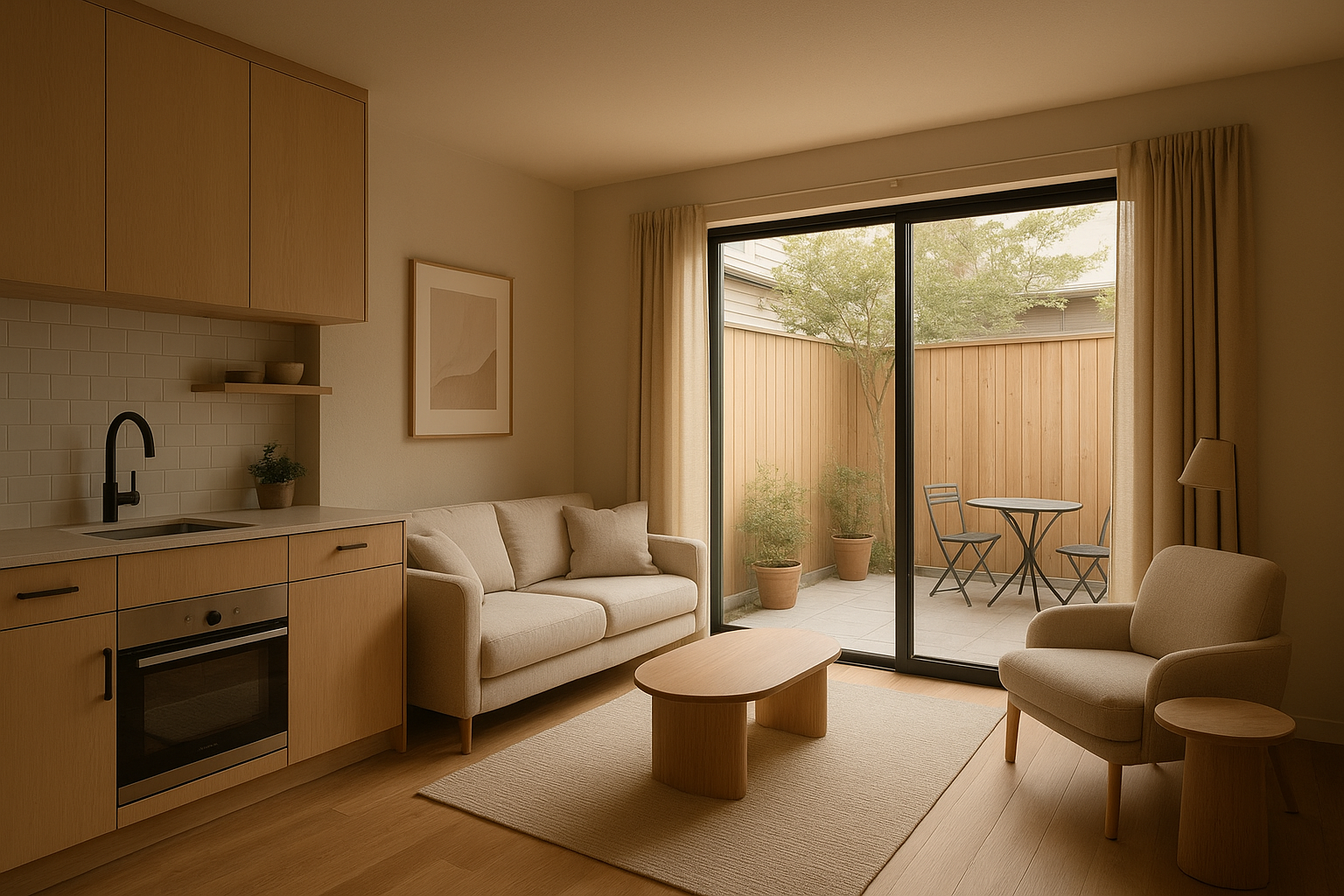
Well-planned ADU interiors maximize every square foot, making even a 400-square-foot unit feel spacious and livable.
ADU Construction Costs in Los Angeles (2025 Pricing)
Cost is typically the biggest concern for LA homeowners considering an accessory dwelling unit. Because construction costs vary widely by project type, location, and finish level, it helps to understand the typical ranges before you set a budget.
In addition to hard construction costs, budget for soft costs such as architectural design (5–10% of construction), permit fees ($5,000–$15,000), soils reports, and landscaping. Specifically, financing through a HELOC, cash-out refinance, construction loan, or the CalHFA ADU Grant Program can make the upfront investment far more manageable. For a full breakdown of loan products, rates, and qualification requirements specific to this market, see this guide to ADU loans in Los Angeles.
Financing Options Compared
- HELOC (Home Equity Line of Credit): Draws against existing home equity; flexible but variable-rate.
- Cash-out refinance: Replaces your existing mortgage with a larger one at current rates.
- Construction loan: Disburses funds in draws tied to construction milestones, then converts to permanent financing.
- CalHFA ADU Grant Program: Offers up to $40,000 in pre-development cost assistance for qualifying homeowners.
- ADU-specific renovation loans: Underwritten partly against projected future rental income rather than only current equity.
Rental Income Potential and Return on Investment
One of the strongest arguments for building an accessory dwelling unit in Los Angeles is the rental income it generates. Depending on neighborhood and unit size, LA ADUs typically rent for $1,500 to $3,500 per month. In high-demand areas like Silver Lake, Los Feliz, Culver City, or West Hollywood, monthly rents can exceed $4,000.
For example, a $200,000 detached ADU renting for $2,500 per month generates $30,000 annually in gross rental income — a 15% gross yield before expenses. After accounting for vacancy, maintenance, insurance, and taxes, net yields commonly range from 8% to 12%. Furthermore, the ADU adds assessed value to the property, building long-term equity alongside monthly cash flow. To understand exactly how much value an ADU can add at resale, see this breakdown of how ADUs increase property value across Los Angeles neighborhoods.
However, it is important to note that short-term rentals under 30 days are restricted in LA unless you live on-site and hold a valid home-sharing permit. Therefore, most ADU investors target long-term tenants for stable, compliant income rather than chasing short-term rental yields.
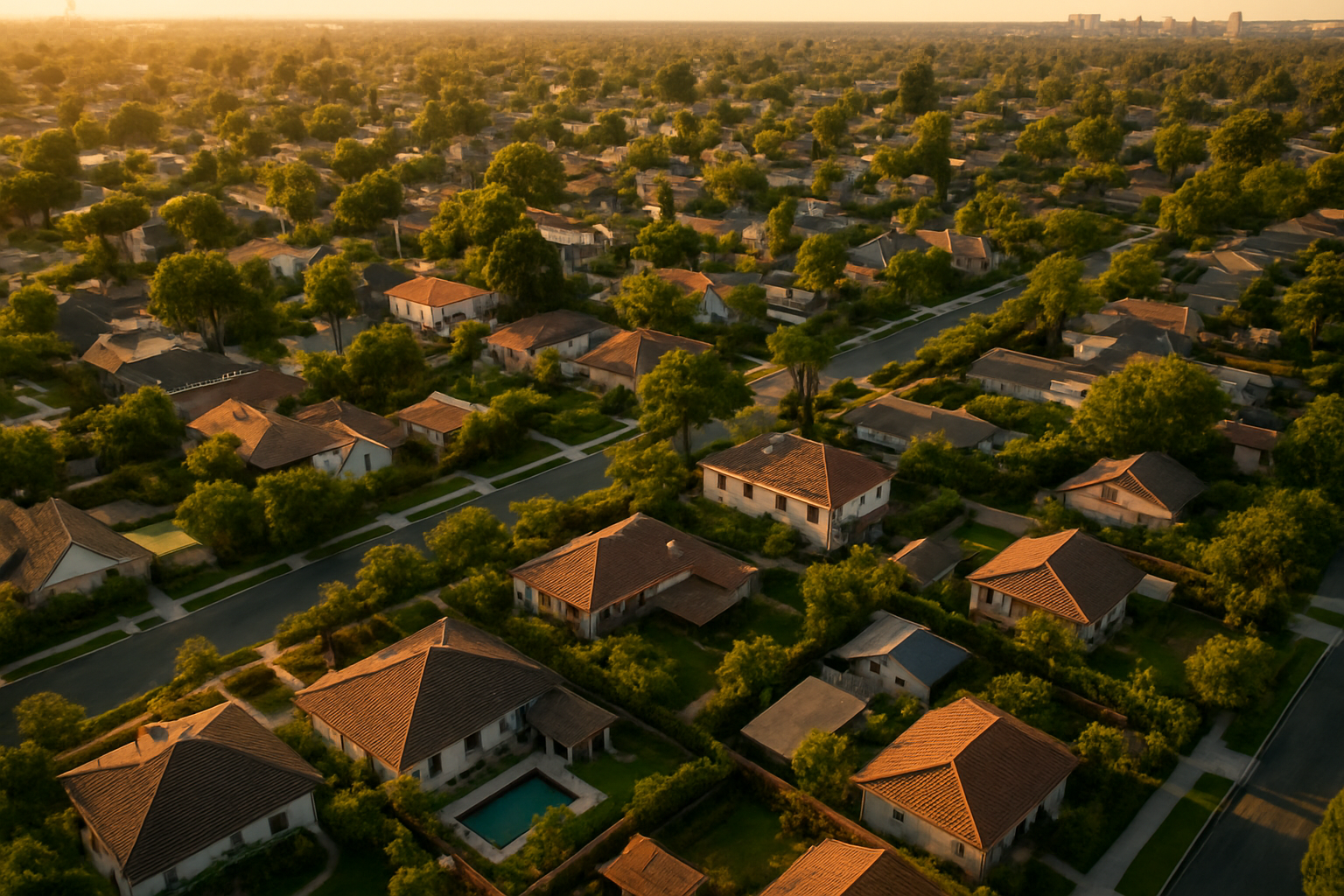
Los Angeles neighborhoods like Silver Lake and Culver City have seen rapid ADU adoption, transforming backyards into income-generating housing units.
Selling an ADU Separately: What AB 1033 Changes in 2025
Historically, an ADU could never be sold apart from the main house. That changed with AB 1033, which allows California cities to opt into a program permitting ADUs to be sold as separate condominium units. As of 2025, Los Angeles has begun evaluating adoption of this framework, though implementation details are still being finalized at the city level. Consequently, homeowners exploring this path should confirm current status directly with LADBS before assuming condo-style resale is available, since local adoption — not just state authorization — is required before it applies to your property.
Common Mistakes to Avoid When Building an ADU in Los Angeles
Many LA homeowners make avoidable errors that delay projects and inflate costs. First, skipping a pre-application meeting with LADBS is a frequent mistake — these free consultations can identify site-specific issues, like overlay zone restrictions, before you invest in design. Second, hiring an unlicensed contractor to save money often results in failed inspections, stop-work orders, and costly rework down the line.
Additionally, underestimating soft costs is a common budget pitfall. Design fees, permit fees, soils reports, and utility connection charges can add $30,000 to $60,000 to a project. Finally, ignoring LA’s rent control implications — specifically whether your ADU falls under the Rent Stabilization Ordinance (RSO) — can create unexpected legal obligations. Because ADUs built after 2020 are generally exempt from the RSO, newer builds offer more landlord flexibility than older converted units.
Frequently Asked Questions About Accessory Dwelling Units in Los Angeles
What is an accessory dwelling unit in Los Angeles?
An accessory dwelling unit in Los Angeles is a secondary residential structure on the same lot as a primary home. It can be detached, attached, or converted from existing space. State law makes most LA properties eligible to add one by right.
How much does it cost to build an ADU in Los Angeles?
Costs range from $80,000 for a basic garage conversion to $350,000 or more for a custom detached ADU. The average new detached unit in LA runs between $150,000 and $250,000 depending on size, finishes, and site conditions.
Do I need a permit to build an ADU in Los Angeles?
Yes, a building permit from LADBS is required. However, state law limits the city’s ability to deny permits for code-compliant ADUs. Most applications are approved ministerially, without discretionary hearings.
How long does ADU permit approval take in LA?
Standard review at LADBS takes 4 to 12 weeks. Using pre-approved standard plans can reduce this to 2 to 4 weeks. Complex or non-standard projects, or those in overlay zones, may take longer.
What is the maximum size for an ADU in Los Angeles?
Detached ADUs can be up to 1,200 square feet. Attached ADUs are capped at 50% of the primary home’s square footage, up to 1,200 sq ft. Junior ADUs are limited to 500 square feet.
Can I rent out my ADU in Los Angeles?
Yes, long-term rentals are fully permitted. Short-term rentals under 30 days require a home-sharing permit and owner occupancy on-site. Most ADU investors target long-term tenants for simplicity and compliance.
What is a Junior ADU (JADU) and how does it differ from a standard ADU?
A JADU is up to 500 sq ft created within the existing walls of a single-family home. Unlike a standard ADU, it requires owner occupancy and typically shares a bathroom with the primary unit. It is generally the lowest-cost ADU option.
Are there owner-occupancy requirements for ADUs in Los Angeles?
California suspended owner-occupancy requirements for standard ADUs through January 1, 2025. After that date, local jurisdictions may reinstate them. JADUs always require owner occupancy of either unit.
Can I convert my garage into an ADU in Los Angeles?
Yes. Garage conversions are among the most popular ADU types in LA. If your property is within half a mile of public transit, replacement parking is not required. This exemption applies to most LA properties.
What are the setback requirements for a detached ADU in Los Angeles?
Detached ADUs require a minimum 4-foot rear and side yard setback. No setback is required from the primary home. Front yard setbacks follow the underlying zoning of the lot.
How much rental income can an ADU generate in Los Angeles?
LA ADUs typically generate $1,500 to $3,500 per month. In high-demand neighborhoods like Silver Lake, Echo Park, or Culver City, rents can exceed $4,000 per month. Net yields commonly range from 8% to 12% after expenses.
What financing options are available for building an ADU in Los Angeles?
Options include HELOCs, cash-out refinancing, construction loans, and ADU-specific loan products. The CalHFA ADU Grant Program offers up to $40,000 in pre-development cost assistance for qualifying homeowners.
Does adding an ADU increase my property taxes in LA?
Yes, the ADU’s added value will increase your property tax bill. However, under Proposition 13, only the new ADU’s assessed value is affected — your existing home’s assessed value remains unchanged.
Are ADUs allowed in Historic Preservation Overlay Zones (HPOZ)?
Yes, ADUs are allowed in HPOZ areas, but the design must meet objective HPOZ compatibility standards. The city cannot deny an otherwise code-compliant ADU solely because of HPOZ status, though review can add two to four weeks.
Do I need fire sprinklers in my Los Angeles ADU?
Generally, no — if your primary home does not require fire sprinklers, your ADU is not required to have them either. This rule can differ in very high fire hazard severity zones, so confirm with LADBS during your pre-application meeting.
Final Takeaways on Building an Accessory Dwelling Unit in Los Angeles
Ultimately, an accessory dwelling unit Los Angeles homeowners build today is one of the most financially rewarding decisions available in 2025 — provided you understand zoning eligibility, overlay zone restrictions, realistic construction costs, and financing options before breaking ground. From navigating LADBS permits to maximizing long-term rental income, working with an experienced ADU specialist saves time, money, and unnecessary stress throughout the process.
Ready to Build Your ADU?
Visit The ADU Pro to connect with Los Angeles ADU experts who can guide your project from concept to certificate of occupancy. For a deeper walkthrough, see our Accessory Dwelling Unit Cost Estimate: 2026 Pricing Guide.