
An ADU grant is free money — provided by a government agency or nonprofit — that helps homeowners pay for the planning, design, or construction of an accessory dwelling unit. Because the housing shortage has intensified across the United States, more cities and states are launching these programs every year. Understanding how they work can save you tens of thousands of dollars on your project. For a complete walkthrough, see our Complete ADU guide.
Unlike a traditional loan, a grant does not need to be repaid as long as you meet the program’s conditions. Therefore, securing even a partial grant dramatically reduces the financial barrier to adding an ADU to your property.
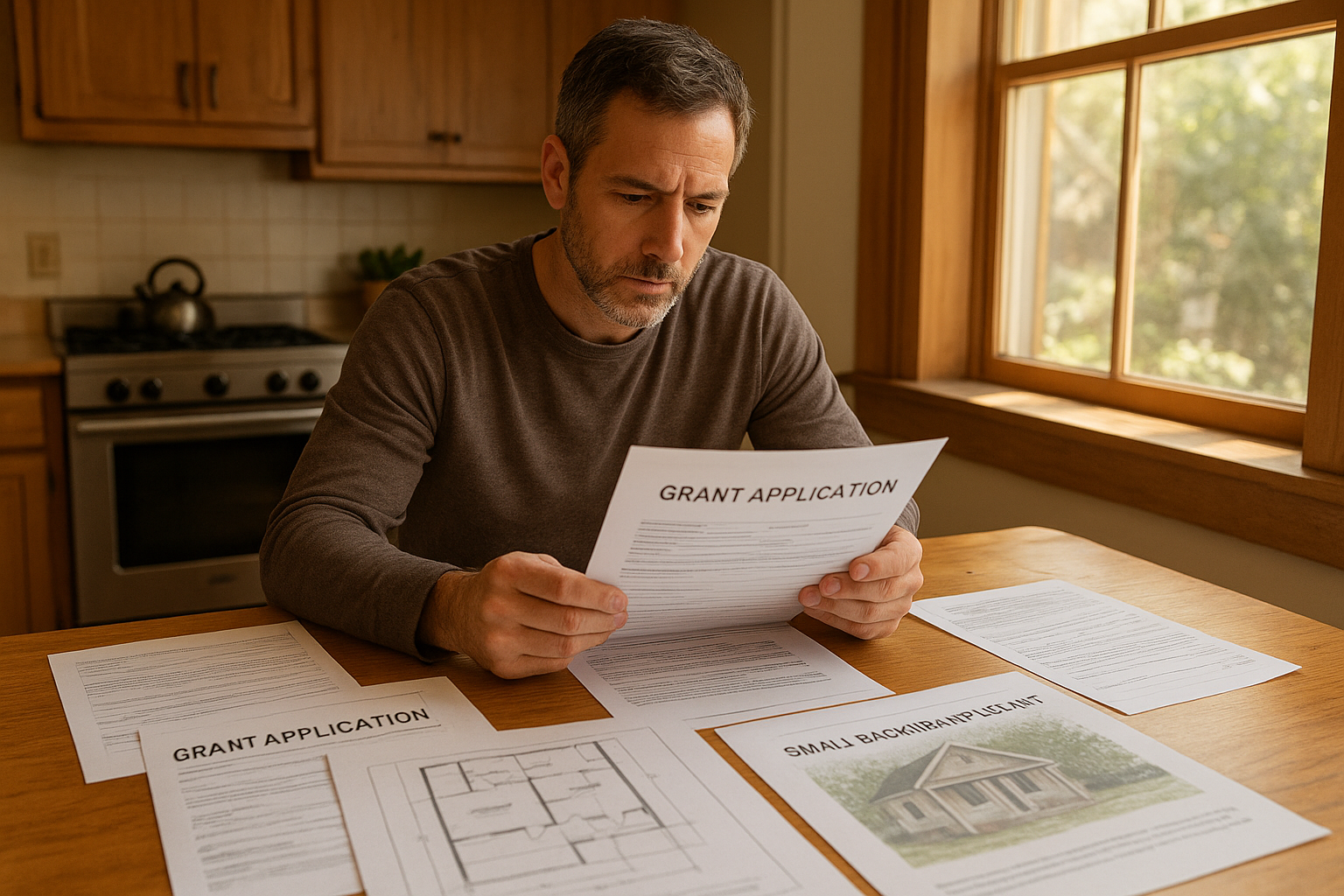
Reviewing your paperwork carefully before submitting an ADU grant application can prevent costly delays.
What Is an ADU Grant and How Does It Work?
An accessory dwelling unit — also called a granny flat, in-law suite, or backyard cottage — is a secondary residential unit on a single-family property. See What is an ADU. Grants for these units are typically funded through federal housing allocations, state housing finance agencies, or local community development block grants administered by HUD.
In practice, most programs fall into one of two categories (see ADU Grant Program 2025). First, pre-development grants cover early costs like feasibility studies, architectural drawings, and permit fees. Second, construction grants or forgivable loans cover actual building expenses and are forgiven after a set compliance period — often five to fifteen years.
Because funding is limited, programs often operate on a first-come, first-served basis. As a result, applying early gives you the best chance of securing money before allocations run out.
Who Qualifies for ADU Funding?
Eligibility requirements vary by program, but several common criteria appear across most applications (see grants for building an ADU). Generally, you must be the owner-occupant of the property, meaning you live in the primary residence. Additionally, most programs set income limits — typically 80% to 120% of the area median income — to target assistance toward households that need it most.
Many programs also require that the completed ADU be rented to income-qualified tenants at below-market rates for a defined period. This condition is how local governments justify using public funds for private property improvements.
However, some newer programs — particularly those focused on housing supply rather than affordability — have relaxed or eliminated income and rental restrictions. Always read the specific program guidelines carefully before assuming you qualify.
Quick Answer — Author: The ADU Pro; Last updated: add publish date.
An ADU grant is money awarded to homeowners — usually by a city, county, or state agency — to offset the cost of building an accessory dwelling unit. It does not need to be repaid as long as program conditions are met. Grant amounts typically range from $1,000 for pre-development costs to over $40,000 for construction assistance.
Notable Programs Across the Country
California leads the nation in ADU incentive programs. The CalHFA ADU Grant Program, for example, provides up to $40,000 to cover pre-development and non-recurring closing costs for eligible homeowners. Meanwhile, several California cities — including Los Angeles and San Jose — layer additional local grants on top of state programs. See our detailed resource on grants for building an ADU.
Outside California, Oregon has funded ADU pilot programs in Portland, and Connecticut has offered forgivable loans through its housing finance authority. In Texas, some municipalities have launched incentive programs tied to affordable rental commitments. Because programs launch, pause, and reopen frequently, checking resources like The ADU Pro keeps you current on available funding in your area.
Additionally, federal Community Development Block Grant (CDBG) funds — distributed through HUD to local governments — sometimes support ADU projects indirectly through city-level housing programs. Therefore, contacting your local housing authority is always a productive first step.
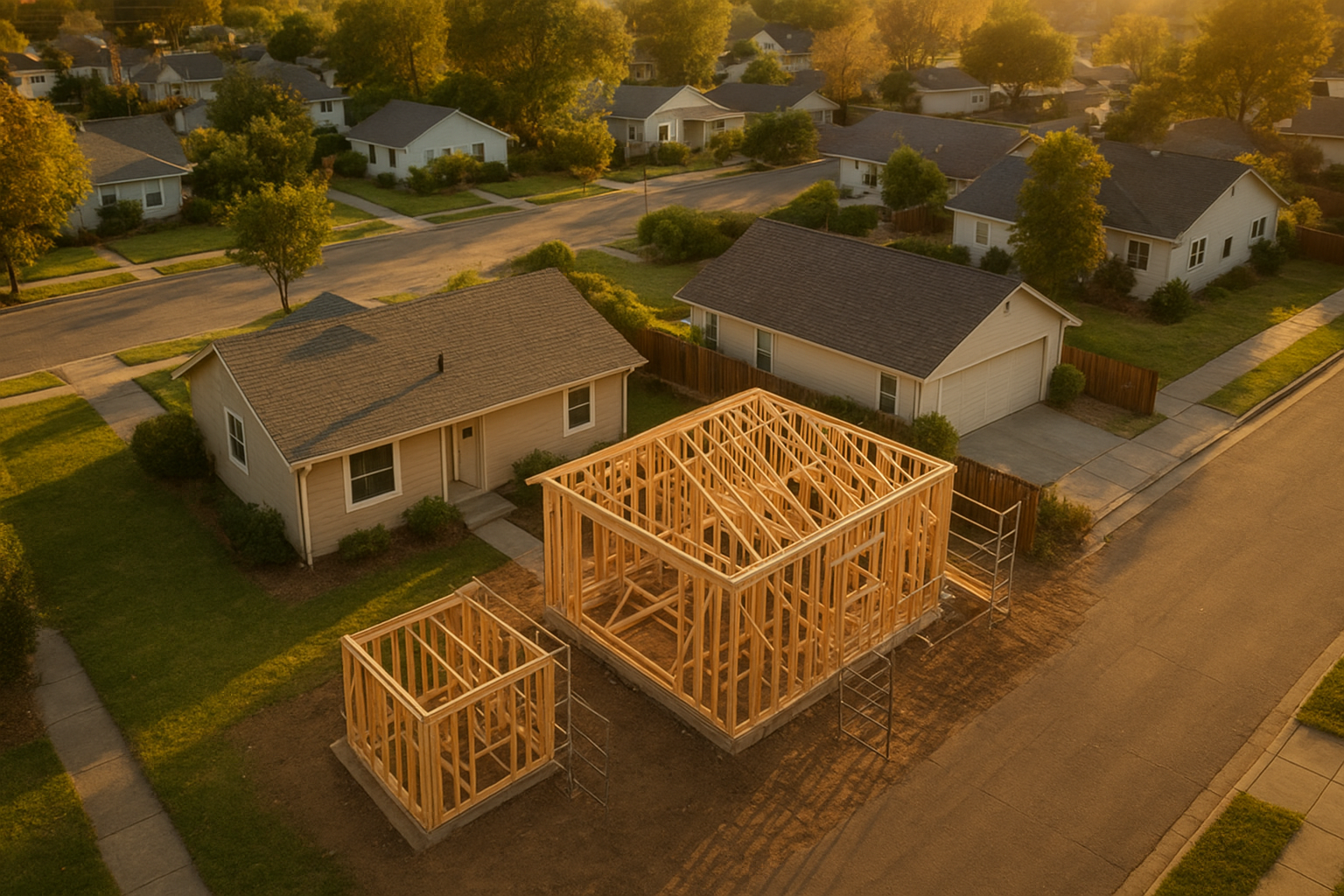
Backyard cottages and detached ADUs are among the most common project types covered by grant programs. ADU construction Los Alamitos
Step-by-Step: How to Apply for an ADU Grant
Following a clear process improves your chances of approval significantly. Here are the five key steps: See our ADU permit guide for common permit timelines and documentation that often appears in grant checklists.
Step 1 — Research available programs. Search your city, county, and state housing authority websites. Also check HUD’s website for CDBG-funded local initiatives. Note application windows and funding caps.
Step 2 — Confirm your eligibility. Review income limits, property location requirements, owner-occupancy rules, and any affordability rental conditions before investing time in paperwork.
Step 3 — Gather required documents. Most programs require proof of ownership, recent tax returns, a site plan or preliminary design, contractor bids, and a signed affordability agreement.
Step 4 — Submit a complete application. File before the deadline and while funds remain available. Incomplete applications are the leading cause of rejection and delay.
Step 5 — Comply with ongoing conditions. After approval, meet all program requirements — such as renting to income-qualified tenants — to keep the grant funds and avoid clawback provisions.
Combining Grants With Other Financing
In most cases, a single grant will not cover the full cost of building an ADU. However, grants can be stacked with other financing tools. For example, you might combine a pre-development grant with a state-backed construction loan or a home equity line of credit to cover the remaining balance. Learn more about ADU financing options to pair with grants.
Some homeowners also layer a local forgivable loan on top of a state grant, effectively reducing their out-of-pocket cost to near zero. Before combining programs, confirm with each administrator that stacking is permitted. Certain federally funded programs restrict dual participation.
Working with an ADU specialist — such as those at The ADU Pro — can help you identify the best combination of funding sources for your specific project and location.
Common Mistakes That Derail Applications
Many homeowners lose grant opportunities because of avoidable errors. First, starting construction before grant approval is a disqualifying mistake in nearly every program — funds are intended to incentivize projects, not reimburse completed ones.
Second, submitting incomplete documentation is the most common reason applications are delayed or rejected. Although it seems obvious, missing a single required form can push you to the back of the queue in a competitive funding round.
Finally, failing to verify that your property is within the eligible service area is a costly oversight. Because many programs are hyper-local, a property just outside city limits may be ineligible even if your neighbor qualifies.

Completing every section of an ADU grant application accurately is critical to avoiding rejection.
Why Local Housing Authorities Are Your Best Starting Point
National databases of ADU grant programs are useful, but they are often outdated. In contrast, your local housing authority or community development department maintains the most current information on active programs, funding availability, and upcoming application windows. ADU regulations
Additionally, housing authority staff can often guide you toward programs you would not find through a general internet search. According to HUD’s Community Development Block Grant program, billions of dollars flow annually to local governments specifically to address housing needs — and a significant share of that funding is underutilized simply because eligible homeowners do not know it exists.
Therefore, a 30-minute phone call or in-person visit to your local housing office could unlock funding opportunities that no online search would surface.
Final Thoughts on Securing an ADU Grant
An ADU grant represents one of the most powerful tools available to homeowners who want to add housing without taking on full construction debt. Because programs vary so widely by location, income level, and project type, the key is to research early, apply completely, and never start building before approval. Add a visible author byline and short bio (author credentials), plus a "Last updated" date near the top to improve trust and E-E-A-T.
In summary, the homeowners who succeed are those who treat the application process with the same diligence they bring to the construction project itself. With the right preparation, free funding for your ADU is a realistic and achievable goal. Learn more about the benefits of adding an ADU to plan your project effectively.
Frequently Asked Questions About ADU Grants
What is an ADU grant?
An ADU grant is free money from a government agency or nonprofit to help homeowners plan or build an accessory dwelling unit. It does not need to be repaid as long as you meet program conditions.
Who qualifies for an ADU grant?
Most programs target low- to moderate-income owner-occupants who plan to rent the ADU at an affordable rate. Eligibility criteria differ by program, so always verify requirements directly with the administering agency.
How much money can an ADU grant provide?
Pre-development grants typically range from $1,000 to $5,000. Construction grants or forgivable loans can reach $40,000 or more. The exact amount depends on the program and your location.
Do I have to repay an ADU grant?
True grants require no repayment. However, forgivable loan programs only forgive the balance after you meet conditions — such as renting affordably for a set number of years. If you violate those terms, repayment may be triggered.
What is the CalHFA ADU Grant Program?
CalHFA’s ADU Grant Program offers up to $40,000 to eligible California homeowners for pre-development and closing costs. Funds are distributed on a first-come, first-served basis and may be exhausted quickly when a new round opens.
Are ADU grants available outside California?
Yes. Oregon, Washington, Connecticut, and many other states and municipalities offer ADU incentive programs. Contact your local housing authority to find what is currently available in your area.
What is the difference between an ADU grant and an ADU loan?
A grant is money you keep without repayment, while a loan must be repaid with interest. Some programs combine both, offering a low-interest loan with a forgivable grant component to reduce your total cost.
Can I use an ADU grant for a garage conversion?
Many programs cover garage conversions, basement conversions, and new detached units. However, some restrict funding to specific ADU types, so confirm coverage with the program administrator before proceeding.
How do I apply for an ADU grant?
Identify programs through your local housing authority or HUD’s website. Gather income documentation, property ownership proof, and project details. Then submit a complete application before the deadline or while funds remain available.
What documents are typically required?
Expect to provide proof of homeownership, tax returns or income verification, a site plan, contractor bids, and a signed affordability agreement. Requirements vary, so review the program checklist thoroughly.
How long does it take to receive ADU grant funds?
Processing times range from a few weeks to several months. Submitting a complete and accurate application early in the funding cycle gives you the best chance of a quick turnaround.
Can an ADU grant be combined with other financing?
Yes, grants are frequently stacked with construction loans, HELOCs, or state-backed ADU loan programs. Always confirm with each program that combining funds is permitted, as some federally funded programs restrict dual participation.
What mistakes should I avoid when applying?
Starting construction before approval, submitting incomplete documentation, and failing to verify property eligibility are the most common and costly mistakes. Read every program guideline carefully before beginning your application.