
Accessory dwelling units ADUs are secondary, self-contained housing units built on the same residential lot as a primary home, and they have become one of the most practical ways for homeowners to add value, generate rental income, or house family members. Because housing costs continue to rise across the United States, interest in ADUs has grown dramatically since 2020. Understanding how they work, what they cost, and how local regulations affect your plans is essential before you break ground.
According to the U.S. Department of Housing and Urban Development (HUD), ADUs represent a meaningful tool for expanding affordable housing supply without requiring new land development. However, every homeowner’s situation is different, so careful planning is key.
What Are the Main Types of ADUs?
Not all ADUs look the same. In fact, they come in several distinct forms, each with its own cost profile, permitting complexity, and use case. Knowing the differences helps you choose the right option for your lot and budget.
Detached ADU: A fully separate structure built in the backyard or side yard of the main home. These are sometimes called backyard cottages or carriage houses. Because they require new foundations and utility connections, they are typically the most expensive option.
Attached ADU: A unit that shares at least one wall with the primary residence. For example, a converted garage or a new addition built onto the side of the house qualifies as an attached ADU.
Interior ADU: A unit created entirely within the existing footprint of the home, such as a finished basement apartment or an attic conversion. These units are often the least disruptive to build.
Junior ADU (JADU): A smaller secondary unit, generally under 500 square feet, carved out of the existing home’s space. JADUs face fewer regulatory hurdles in many states, particularly in California.
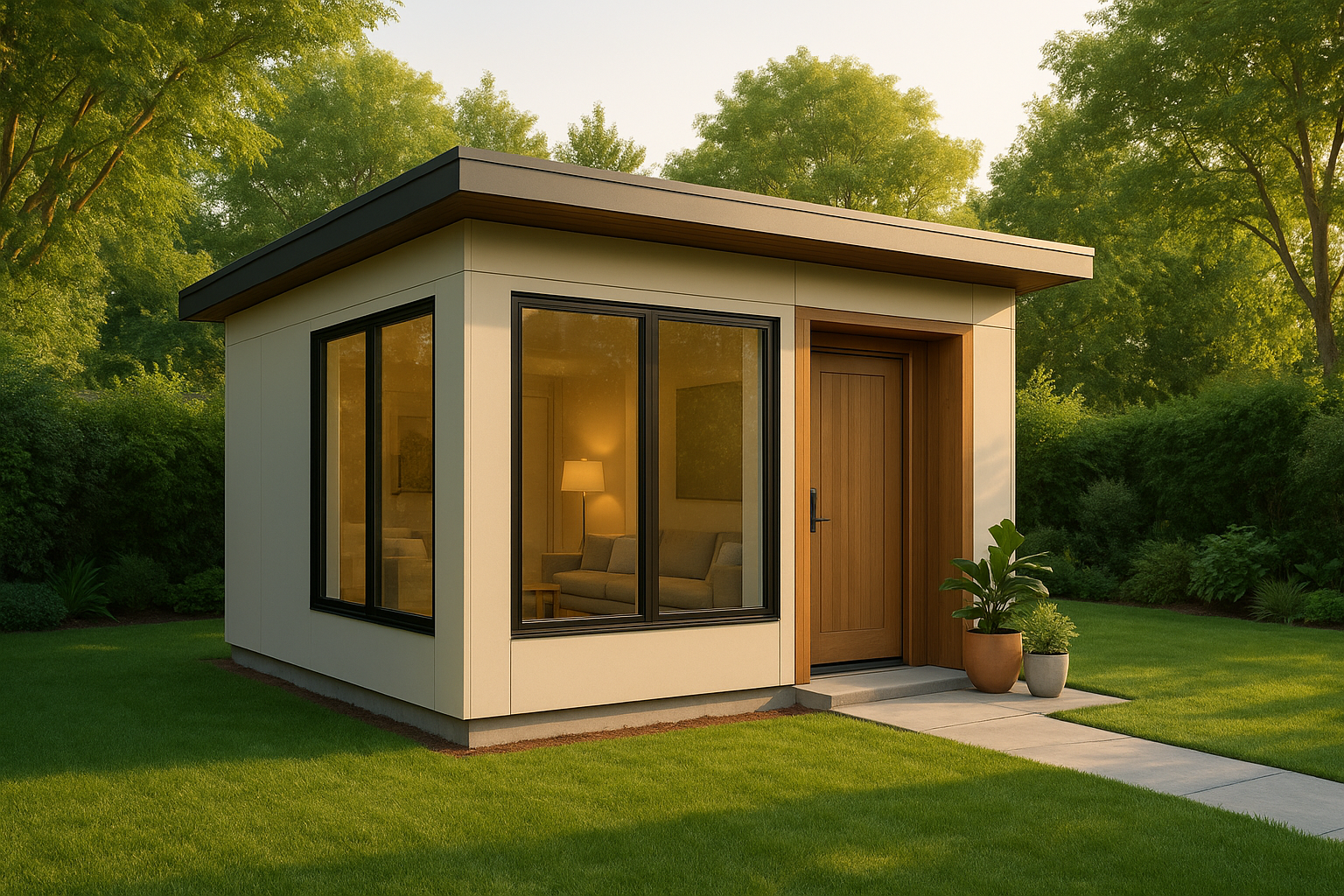
A detached accessory dwelling unit ADU adds livable space without altering the main home’s structure. For a deeper walkthrough, see our Accessory Dwelling Unit Permit: Complete Guide 2024.
How Much Do ADUs Cost to Build?
Cost is one of the first questions homeowners ask, and the answer depends heavily on the type of ADU and the local construction market. Generally speaking, you can expect the following ranges in 2025:
Garage conversion: $50,000 – $120,000
Interior ADU (basement/attic): $60,000 – $150,000
Attached addition ADU: $80,000 – $200,000
Detached new-construction ADU: $120,000 – $300,000+
Additionally, soft costs such as architect fees, permit fees, and utility connection charges can add 10% to 20% to your total budget. Therefore, it is critical to build a detailed financial plan before committing to a project.
For financing, homeowners commonly use home equity loans, HELOCs, cash-out refinancing, or construction loans. Resources like The ADU Pro offer detailed guidance on financing strategies tailored to different homeowner situations.
Zoning Laws and Permit Requirements
Before designing your ADU, you must understand local zoning rules. Although ADUs are legally permitted in all 50 states, individual cities and counties set their own standards. Common requirements include minimum lot size, maximum ADU square footage, setback distances from property lines, height limits, and owner-occupancy rules.
Several states have passed sweeping ADU reform laws in recent years. California, for instance, eliminated most local barriers to ADU approval in 2020, making it significantly easier to build. Oregon, Washington, and Maine have followed with similarly progressive legislation. As a result, homeowners in these states face fewer delays and lower permitting costs.
Permit requirements typically include building permits, electrical permits, and plumbing permits. Depending on your jurisdiction, you may also need a separate address assignment and utility meter. Processing times range from one month in streamlined cities to six months or more in areas with backlogged building departments.
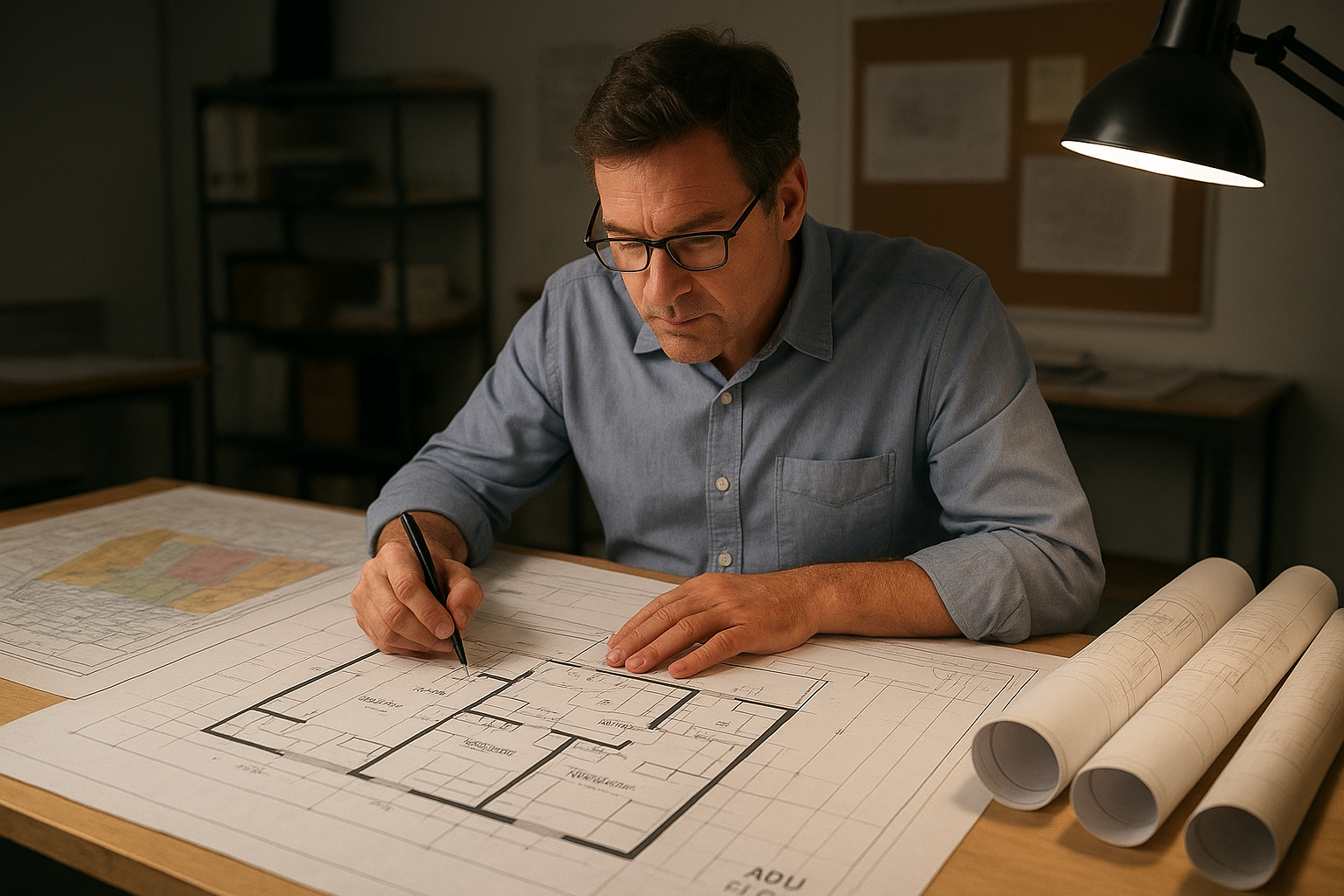
Careful permit planning is a critical early step in any ADU project.
Step-by-Step: How to Build an ADU on Your Property
Building an ADU involves a clear sequence of steps. Following this process reduces costly mistakes and keeps your project on schedule.
Research local zoning laws. First, check your city or county zoning code to confirm ADUs are permitted on your lot. Identify setback rules, size limits, and owner-occupancy requirements before spending money on design.
Choose your ADU type. Next, decide between a detached ADU, attached ADU, garage conversion, or Junior ADU. Your lot size, budget, and long-term goals should drive this decision.
Hire a designer or architect. Work with a licensed professional to create plans that comply with local building codes. A well-designed ADU also maximizes livability and resale appeal.
Submit permit applications. File all required permits with your local building department. Respond promptly to correction notices, because delays at this stage are the most common cause of project slowdowns.
Hire a contractor and begin construction. Select a licensed general contractor with ADU experience. Review references carefully, because ADU construction requires coordination across multiple trades.
Pass final inspections. Finally, schedule all required inspections — framing, electrical, plumbing, and final occupancy — before renting or moving into the unit.
Key Benefits for Homeowners
The financial and lifestyle benefits of building an ADU are substantial. However, each benefit depends on how you intend to use the unit.
Rental income: Renting out an ADU can generate $1,000 to $3,000 per month in many markets, helping offset mortgage payments or fund retirement.
Multigenerational living: ADUs are ideal for housing aging parents or adult children while maintaining privacy for both households. This arrangement is increasingly common as housing costs rise.
Property value increase: Studies indicate that ADUs can increase home values by 20% to 35% in high-demand urban markets, making them one of the highest-return home improvements available.
Housing supply contribution: Beyond personal benefit, ADUs contribute to neighborhood housing supply without requiring rezoning or large-scale development. In practice, this makes them a community asset as well as a personal one.
Common Mistakes to Avoid
Many homeowners encounter avoidable problems during ADU projects. Understanding these pitfalls in advance saves both time and money.
Underestimating total costs: Soft costs, utility upgrades, and landscaping restoration often add 15% to 25% beyond the base construction estimate. Always build a contingency budget of at least 10%.
Skipping zoning research: Some homeowners design and price an ADU only to discover their lot does not meet minimum size requirements. Therefore, zoning research must come first.
Choosing the wrong contractor: ADU construction is more complex than standard home renovation. Hiring a contractor without ADU experience frequently leads to permit rejections and costly rework.
Ignoring utility planning: Water, sewer, gas, and electrical connections for a new unit require careful planning. In older neighborhoods especially, existing utility infrastructure may need upgrading.
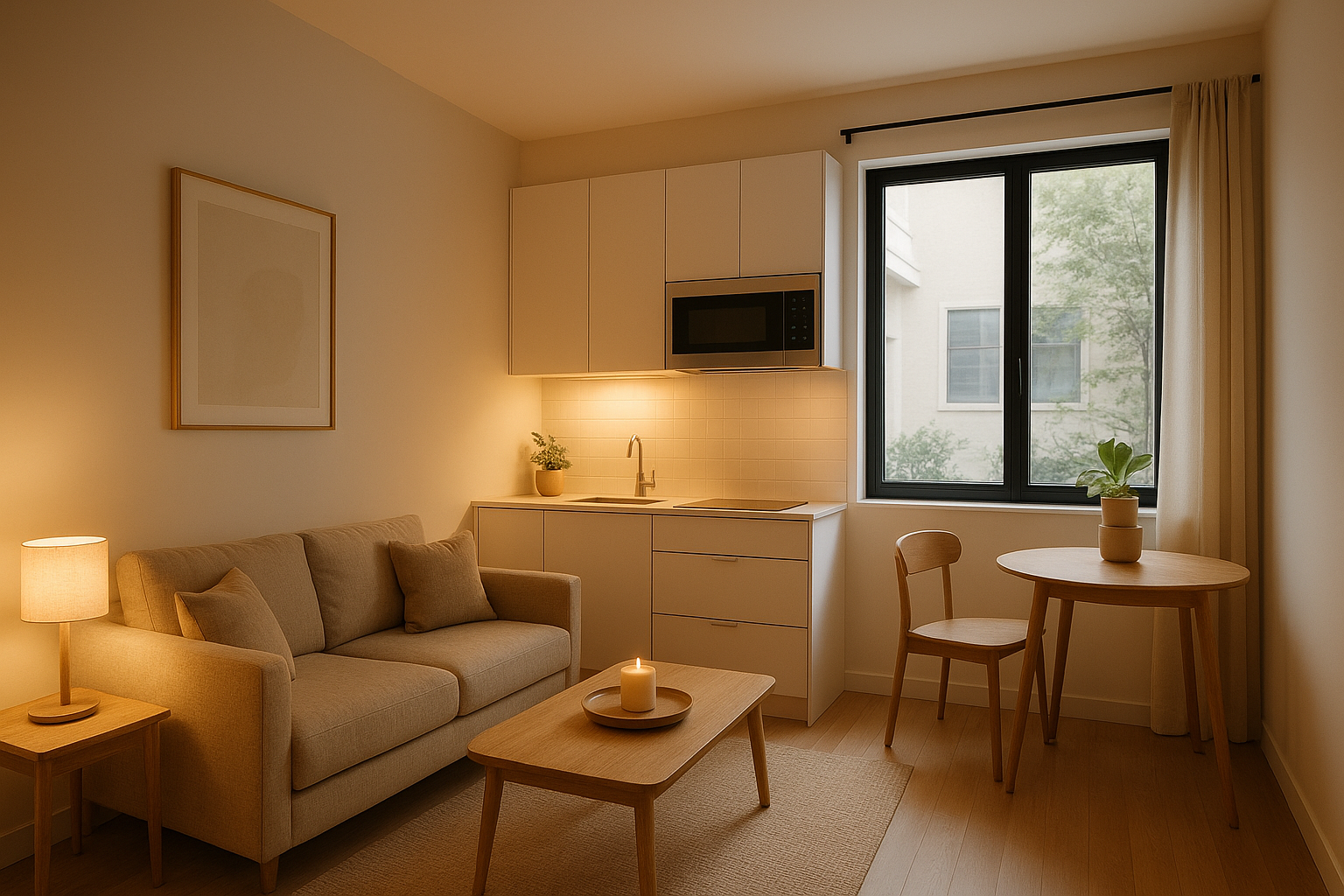
A well-designed ADU interior maximizes functionality even in compact spaces.
Should You Hire an ADU Specialist?
Given the complexity of permitting, design, and construction, many homeowners benefit from working with an ADU-focused consultant or design-build firm. These specialists understand local regulations, have established contractor relationships, and can streamline the permitting process considerably.
For example, platforms like The ADU Pro connect homeowners with experienced professionals who guide projects from initial feasibility through final inspection. Additionally, specialist firms often have pre-approved plan sets that reduce permitting time significantly.
In contrast, homeowners who manage the process themselves often face longer timelines and higher stress, particularly when navigating unfamiliar permit processes for the first time. For most people, the cost of professional guidance is quickly recovered through time savings and fewer costly errors.
Conclusion: Are Accessory Dwelling Units ADUs Right for You?
Accessory dwelling units ADUs offer homeowners a powerful combination of financial return, lifestyle flexibility, and long-term property value growth. Whether your goal is rental income, multigenerational living, or simply maximizing your lot’s potential, an ADU can deliver meaningful results. However, success depends on thorough upfront research, realistic budgeting, and working with qualified professionals. By following the steps outlined in this guide, you can approach your ADU project with confidence and clarity.