
Homeowners researching adu loans Newport Beach lenders offer quickly discover that financing an accessory dwelling unit works differently than a typical home improvement loan. Because an ADU is essentially a second home built on your existing lot, lenders look at equity, projected rental income, and construction timelines together. As a result, choosing the right loan structure matters just as much as choosing the right floor plan.
This guide breaks down the financing paths available to Newport Beach homeowners, explains how costs typically stack up, and walks through the qualification process step by step. In addition, it covers common mistakes, HOA concerns, and property tax questions that come up during an ADU project.

Reviewing financing options is often the first concrete step toward starting an ADU project.
What Are ADU Loans in Newport Beach?
ADU loans Newport Beach homeowners use are financing products — including HELOCs, construction loans, cash-out refinances, and ADU-specific lending programs — designed to cover design, permitting, and construction costs for an accessory dwelling unit. These loans let a homeowner spread the cost of a new rental or living unit over time instead of paying cash upfront.
Unlike a standard personal loan, ADU financing is almost always secured by the home itself. Consequently, lenders evaluate your current equity position, your credit history, and sometimes the projected rental income the finished unit could generate. Specifically, a home equity line of credit draws against equity you already have, while a construction loan is released in stages tied to building milestones.
For homeowners comparing markets, the same financing logic generally applies across Orange County. For example, residents researching ADU loans in Irvine or ADU loans in Huntington Beach will find the same core loan types, though equity levels and home values differ by city.
Why Newport Beach Homeowners Consider ADU Financing
Newport Beach carries some of the highest land and home values in Southern California. Therefore, many homeowners already hold substantial equity, which makes financing an ADU more accessible than in markets with lower home values. In particular, a detached ADU can add usable square footage without the cost of buying additional land.
Beyond added space, rental income is a major driver. According to a Freddie Mac analysis of ADU markets, homes with a legally permitted ADU sold for notably higher prices than comparable homes without one, reflecting both added living space and rental potential. Similarly, multigenerational households use ADU financing to create independent living space for aging parents or adult children while keeping everyone on the same property.
Types of ADU Financing Options Available
There is no single best loan for every homeowner. Instead, the right choice depends on your equity, your timeline, and how much risk you want tied to variable rates.
Home Equity Lines of Credit (HELOCs)
A HELOC is a revolving credit line secured by your home’s existing equity. As a result, you only pay interest on what you draw, which makes it flexible for phased construction costs. However, HELOC rates are usually variable, so monthly payments can shift during the loan term. The Consumer Financial Protection Bureau offers a clear breakdown of how HELOC draw and repayment periods work.
Construction Loans
Construction loans release funds in draws tied to build milestones, such as foundation, framing, and final inspection. Once construction is complete, many of these loans convert into permanent financing. This structure works well for homeowners who want payments aligned directly with project progress rather than a lump sum upfront.
ADU-Specific Loan Programs
Some lenders now underwrite loans specifically for ADUs, basing approval on the home’s after-completion value or projected rental income rather than only current equity. Consequently, these programs can unlock higher loan amounts for homeowners with strong rental potential but limited existing equity.
Cash-Out Refinance
A cash-out refinance replaces your existing mortgage with a larger one, letting you pocket the difference for construction. This can offer a lower fixed rate, but it resets your entire mortgage term, which may not make sense if your current rate is already favorable.
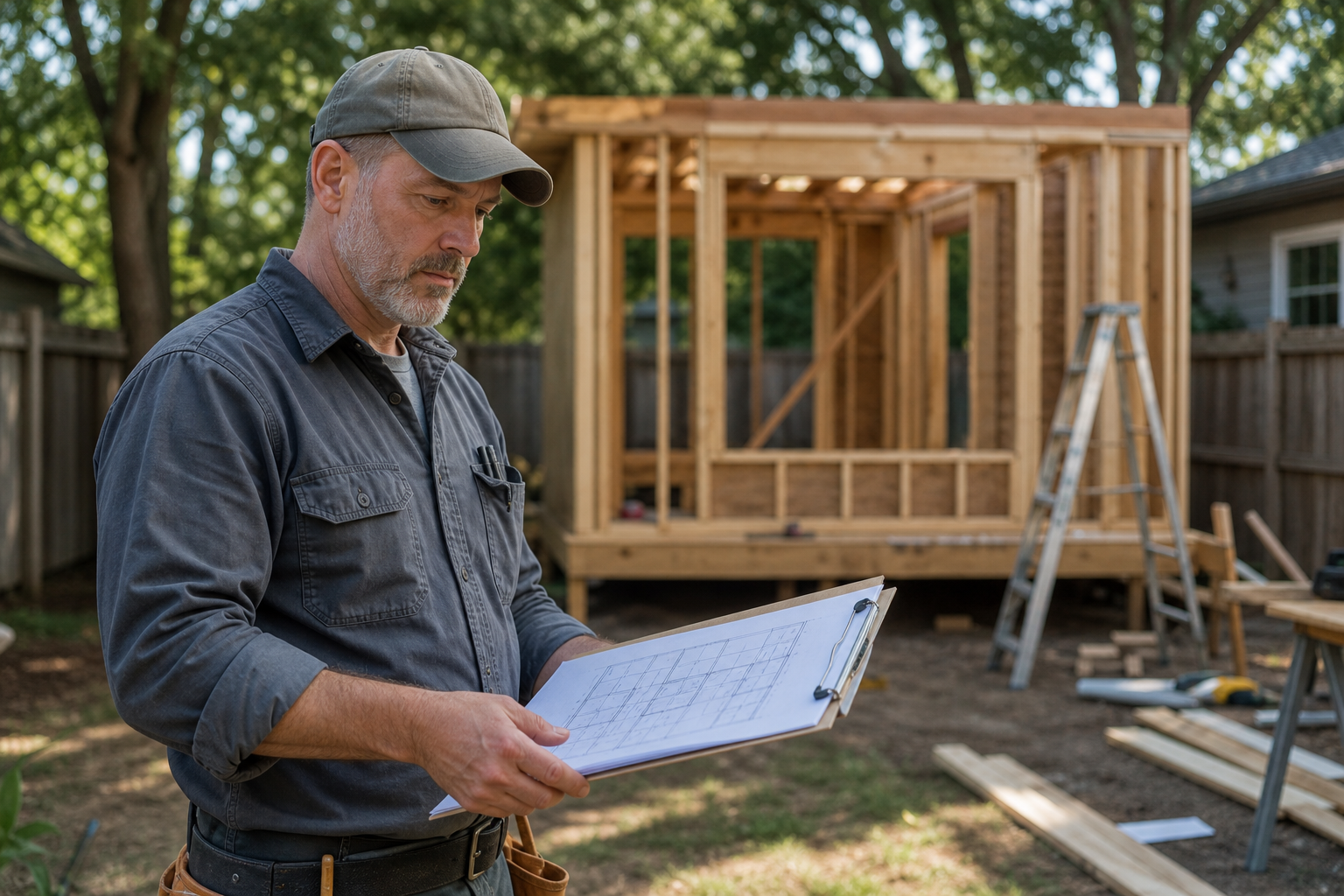
Construction draw schedules are usually tied directly to build milestones like framing and final inspection.
How Much Does an ADU Cost in Newport Beach?
Cost is usually the first question homeowners ask, and it directly shapes which loan amount makes sense. Fully permitted detached ADUs in coastal Orange County commonly range from $180,000 to $400,000, depending on size, finishes, and site conditions. In contrast, garage conversions and JADUs typically cost less since they reuse an existing structure’s foundation and walls.
| ADU Type | Typical Size Range | Relative Cost |
|---|---|---|
| Garage conversion / JADU | 500–600 sq ft | Lower |
| Attached ADU | 600–900 sq ft | Moderate |
| Detached new construction | 800–1,200 sq ft | Highest |
Because costs vary this widely, a site assessment early in the process helps match your loan amount to a realistic budget rather than a rough estimate. For a closer look at regional pricing, homeowners can also review ADU construction costs in Costa Mesa as a nearby comparison point.
How to Qualify for Accessory Dwelling Unit Loans Step by Step
Securing financing follows a fairly predictable sequence. Above all, starting with a realistic budget prevents delays later in the process.
- Get a site assessment and preliminary floor plan so you have a realistic project budget before approaching any lender.
- Review your home equity and credit profile, since most HELOCs and cash-out refinances are capped by combined loan-to-value ratio.
- Compare loan types with a lender, including HELOCs, construction loans, and ADU-specific programs, to find a draw schedule that fits your build timeline.
- Get pre-approved before finalizing plans so your contractor can lock in structural engineering and permit submittals around a confirmed budget.
- Coordinate draw schedules with your contractor so lender fund releases line up with foundation, framing, and inspection milestones.
- Close out financing after final inspection, then finalize any conversion from construction financing to permanent repayment terms.
Choosing the Right ADU Loan for Your Project
No two homeowners have identical equity, income, or timelines, so the “right” loan depends on your personal numbers. If you already have significant equity and want flexibility, a HELOC is often simplest. On the other hand, if your equity is limited but your lot has strong rental potential, an ADU-specific program that weighs future rental income may unlock more borrowing power.
Furthermore, homeowners planning a larger detached unit may prefer a construction loan, since draw-based funding matches the longer build timeline of new construction. In contrast, a smaller garage conversion with a shorter timeline may not need a full construction loan structure at all.
Working With an ADU Design-Build Contractor in Newport Beach
Financing is only one piece of the puzzle. Design, permitting, structural engineering, and construction still need to happen in a way that keeps costs predictable. The ADU Pro handles design, permitting, financing coordination, and construction under one roof for homeowners across Orange County, Los Angeles County, Riverside County, and San Bernardino County, including Newport Beach projects.
Because the same team manages site assessment through final inspection, draw schedules can be coordinated directly with the lender rather than left to the homeowner to manage alone. Homeowners in nearby cities can review related project pages, such as ADU builders serving Newport Beach or ADU financing options in Huntington Beach, to compare how the design-build process works city by city.
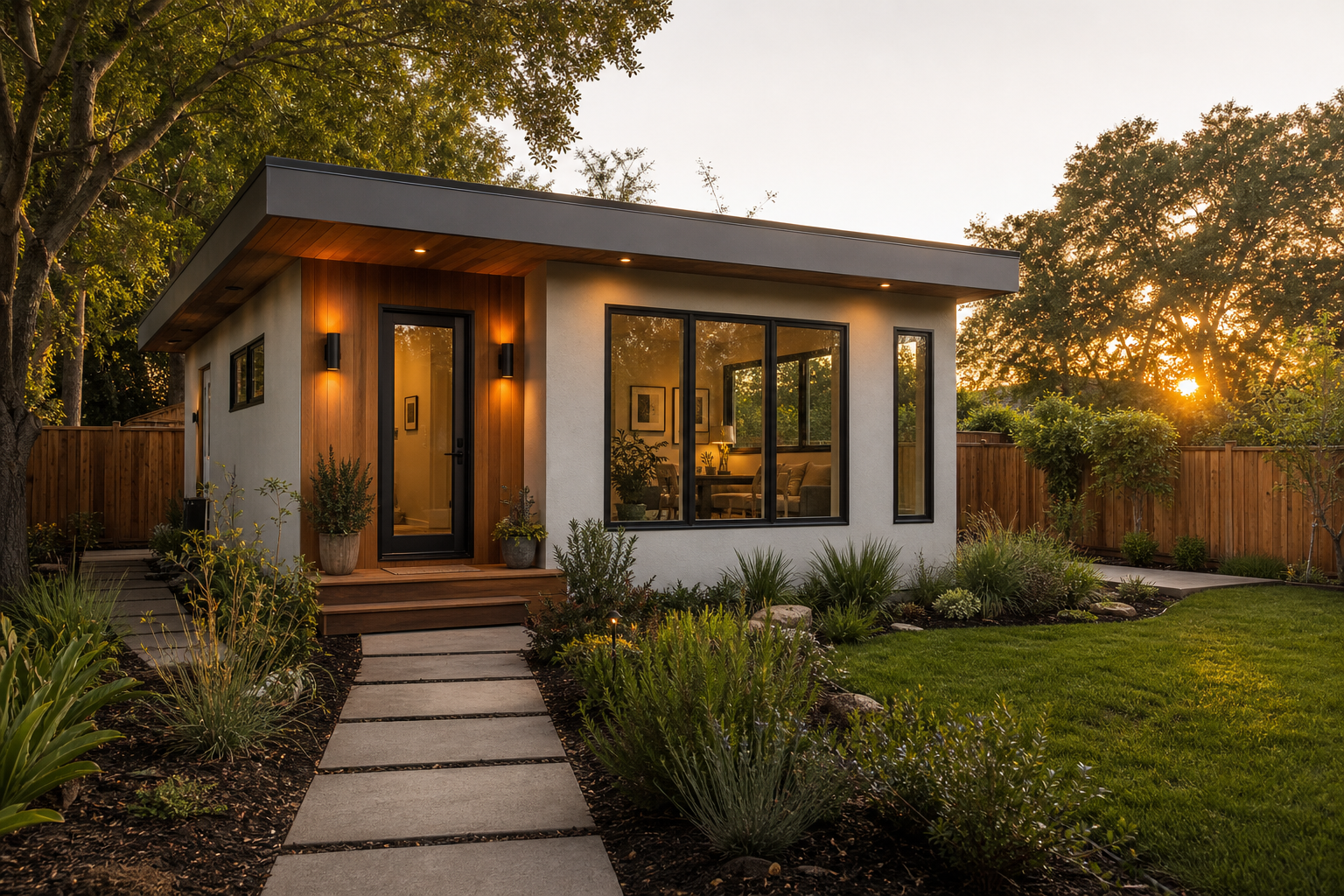
A completed detached ADU, the type of project most adu loans newport beach financing is used to fund.
Frequently Asked Questions
What are ADU loans in Newport Beach?
ADU loans Newport Beach homeowners use are financing products such as HELOCs, construction loans, cash-out refinances, and ADU-specific lending programs that cover design, permitting, and construction costs. These loans let homeowners build a rentable or livable unit without paying the full project cost upfront.
How much can I borrow for an ADU in Newport Beach?
Borrowing limits depend on your home equity, credit profile, and the lender’s program, but many Newport Beach homeowners qualify for $150,000 to $400,000 toward an ADU. A HELOC is typically capped by combined loan-to-value ratio, while construction loans are based on projected after-completion value.
What is the difference between a HELOC and a construction loan for an ADU?
A HELOC is a revolving credit line secured by existing home equity, drawn as needed during construction. A construction loan is a structured loan released in draws tied to build milestones and usually converts to permanent financing once the ADU is complete.
How long does ADU financing approval take?
Approval typically takes two to six weeks, depending on the lender, your documentation, and whether an appraisal is required. Pre-approval before design work begins often speeds up the overall project timeline.
Can an HOA block my ADU in Newport Beach?
California law limits how much HOAs can restrict ADUs, but some associations still impose design or height guidelines. A site assessment can clarify which rules apply to your specific property.
Will building an ADU trigger a property tax reassessment?
Adding an ADU usually triggers a partial reassessment limited to the value of the new construction, not the entire property. Your existing home’s assessed value generally stays protected under Proposition 13.
What rental income can a Newport Beach ADU generate?
Rental income varies by unit size and location, but many coastal Orange County ADUs rent for $2,200 to $3,500 per month. This income can offset loan payments and improve long-term return on investment.
What mistakes should I avoid when financing an ADU?
Common mistakes include underestimating total project cost, skipping pre-approval, and choosing a loan structure that does not match the construction timeline. Working with a design-build team helps align financing with realistic budgets.
Do I need good credit to qualify for ADU loans?
Most lenders prefer a credit score of 680 or higher for favorable ADU loan terms, though some programs accept lower scores with adjusted rates. Strong home equity can sometimes offset a lower credit score.
What size ADU can I build on my Newport Beach lot?
California state law generally allows ADUs up to 1,200 square feet, though local setbacks, lot coverage limits, and lot size affect the maximum buildable footprint. A site assessment determines the exact size your lot supports.
Who handles permits and inspections during ADU construction?
A design-build contractor typically manages permit submittals, city coordination, and final inspections on the homeowner’s behalf. This reduces back-and-forth with the building department and keeps the project on schedule.
Is a cash-out refinance better than a HELOC for an ADU?
A cash-out refinance can offer a lower fixed rate but resets your entire mortgage, which may not make sense if your current rate is low. A HELOC preserves your first mortgage and only uses the equity portion needed for the ADU.
What financing programs exist specifically for ADUs?
Several lenders now offer ADU-specific loan programs that underwrite based on projected rental income or after-completion value rather than only current equity. These programs are designed around the unique draw schedule of ADU construction, and the California Department of Housing and Community Development tracks statewide ADU policy that affects these programs.
How much does an ADU cost to build in Newport Beach?
Fully permitted detached ADUs in coastal Orange County commonly range from $180,000 to $400,000 depending on size, finishes, and site conditions. Garage conversions and JADUs tend to cost less since they reuse existing structure.
Final Thoughts on ADU Loans in Newport Beach
Choosing among the available adu loans Newport Beach lenders offer comes down to matching equity, timeline, and rental goals to the right loan structure. Whether that means a flexible HELOC, a milestone-based construction loan, or an ADU-specific program built around rental income, the financing should fit the project rather than the other way around.
In the end, pairing the right loan with an accurate budget and an experienced design-build team tends to produce the smoothest path from site assessment to final inspection. Homeowners ready to move forward can start with a site assessment through theadupro.com to get a realistic budget before approaching a lender.