
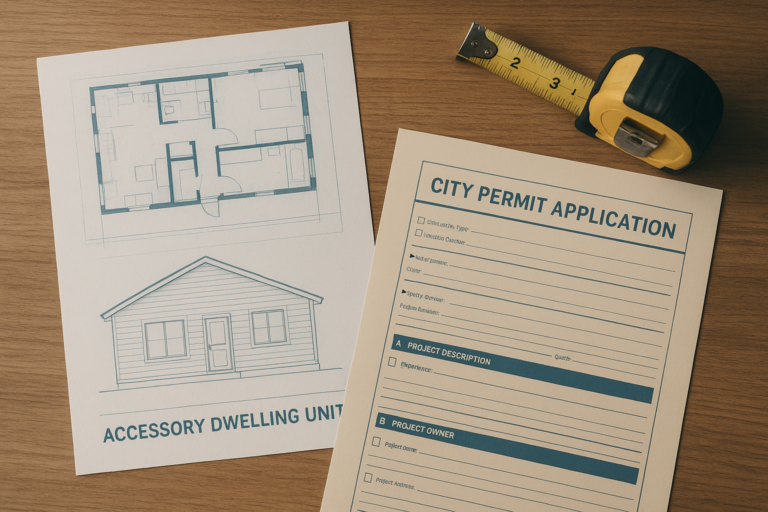
ADU permit coordination services handle the paperwork, city submittals, and inspection scheduling that turn an accessory dwelling unit from a set of drawings into a legally occupied structure. For Southern California homeowners, this work often determines whether a project finishes in six months or drags on for a year. Because Los Angeles County, Orange County, and Riverside County each apply California’s statewide ADU law a little differently at the local level, permit coordination requires someone who understands both the state rules and the specific plan-check habits of the city where the property sits. This guide explains what these services include, why they matter, and how to evaluate a provider before signing a contract.
What Are ADU Permit Coordination Services?
ADU permit coordination services are the professional management of every step between finished plans and an issued building permit. In practice, that means preparing submittal packages, tracking plan check corrections, and communicating directly with city staff on the homeowner’s behalf.
Beyond the initial submittal, coordination also covers Title 24 energy compliance paperwork, structural engineering sign-offs, and utility connection requirements. Consequently, a good coordinator functions as the single point of contact between the homeowner, the architect or designer, the structural engineer, and the building department. Without that single point of contact, corrections and requests for information can sit unanswered for weeks, which is one of the most common reasons ADU projects stall.
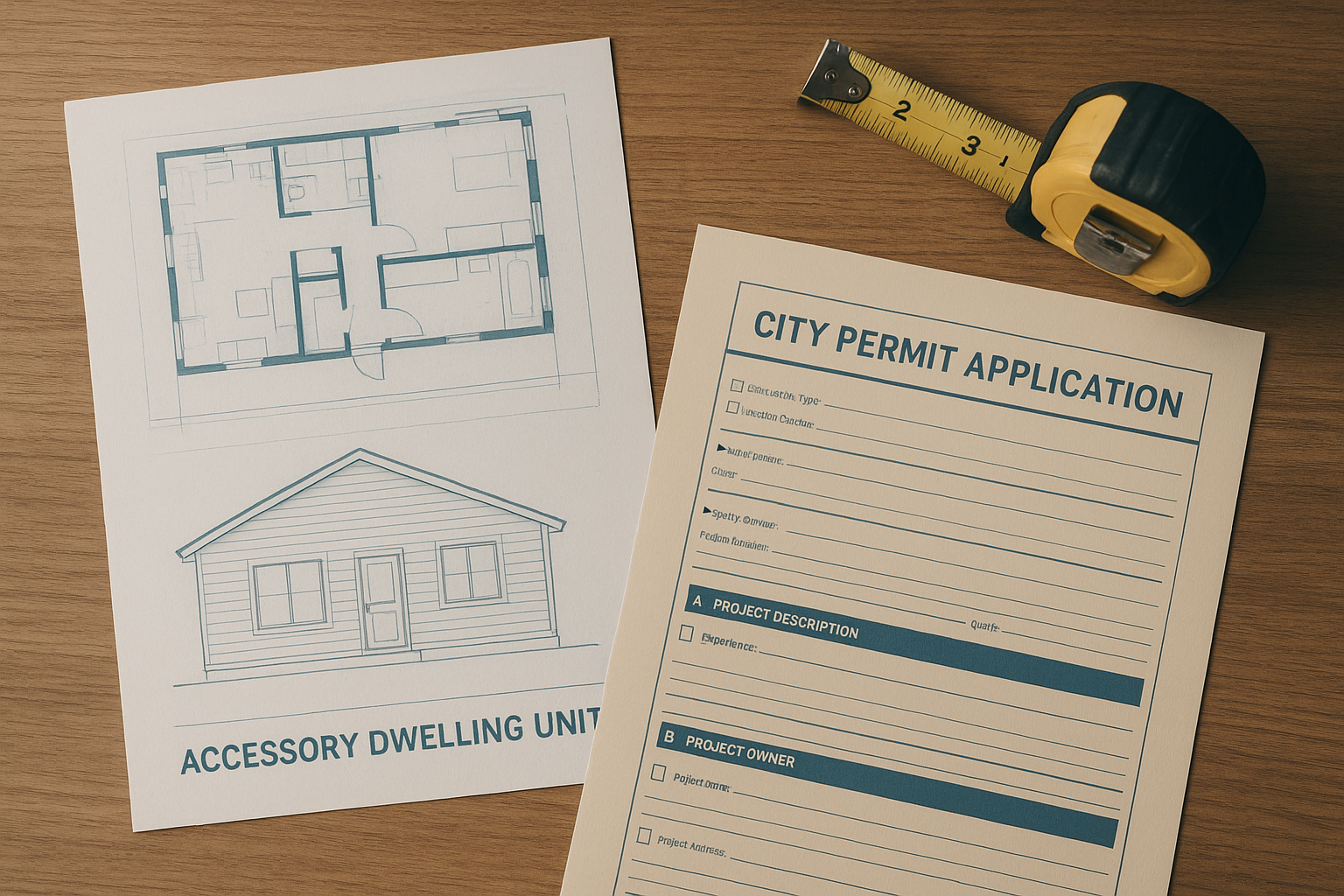
Careful documentation is at the core of ADU permit coordination services.
Why Permit Coordination Matters in Southern California
Southern California is one of the most active ADU markets in the country, and that popularity has consequences. Because building departments in Los Angeles County, Orange County, and Riverside County process large volumes of ADU applications, plan checkers are strict about completeness, and incomplete submittals go to the back of the queue. As a result, a missing structural detail or an outdated Title 24 form can add weeks to a project before construction ever starts.
In addition, cities such as those near Newport Beach, Orange, Placentia, Murrieta, and Riverside each apply state ADU law with their own local supplements covering setbacks, parking, and fire access. For example, a garage conversion in one city may require a simple over-the-counter review, while a similar project in a neighboring jurisdiction triggers a full discretionary review. According to the California Department of Housing and Community Development, statewide ADU production has grown substantially since 2017, and local plan check volume has grown along with it. That growth is exactly why coordination expertise matters so much today.
The ADU Permitting Process, Step by Step
Although every city has its own quirks, the general sequence for ADU permit coordination stays fairly consistent across Southern California. Here is how the process typically unfolds:
- Complete a site assessment and feasibility review to confirm zoning, setbacks, and utility capacity for the lot.
- Develop custom architectural floor plans along with structural engineering drawings tailored to the property.
- Submit the full plan set, application forms, and Title 24 energy compliance documents to the local building department.
- Respond to plan check corrections and resubmit revised drawings until every reviewing department signs off.
- Pay final fees, receive the issued permit, and schedule foundation, framing, and final inspections through completion.
Because each stage depends on the one before it, a delay in step three or four ripples through the entire schedule. Therefore, homeowners evaluating ADU permit coordination services should ask specifically how a provider handles resubmittals, not just the initial application.
How Long Does ADU Permit Coordination Take?
Plan check for a first ADU submittal generally takes six to twelve weeks, and total permitting often runs two to six months once corrections are factored in. Detached ADUs with new foundations typically take longer than garage conversions.
Timelines vary by jurisdiction, current plan check backlog, and how complete the original submittal is. Similarly, a project with an unresolved easement or an undersized sewer lateral can add unexpected weeks even after plans are otherwise approved. For homeowners near Riverside or Murrieta, coordinating early with the local building department about site-specific conditions is often the single biggest time-saver available.

Reviewing plans early helps avoid delays later in the ADU permit coordination timeline.
Common Mistakes That Delay ADU Permit Coordination
Even experienced homeowners underestimate how much small errors can slow a permit down. Incomplete structural details, outdated Title 24 energy calculations, and overlooked setback or fire-access requirements are among the most frequent causes of resubmittal cycles. In particular, garage conversions often get flagged when existing framing doesn’t meet current code without noted upgrades.
Another common mistake is failing to confirm utility capacity before submittal. For instance, an electrical panel that can’t support a new ADU’s load may require an upgrade that wasn’t included in the original scope, which then triggers a separate review. Likewise, homeowners sometimes assume an HOA cannot weigh in on an ADU at all; in reality, state law limits HOA restrictions but doesn’t eliminate reasonable design review. Working with an experienced ADU contractor in Riverside or a similarly focused team elsewhere helps catch these issues before they reach the counter.
Choosing the Right ADU Permit Coordination Partner
Not every provider offering ADU permit coordination services handles the work the same way. Some outsource plan submittal to a third-party expediter, while others keep design, engineering, and permitting under one roof. Consequently, it’s worth asking whether structural drawings, energy compliance, and city communication are managed in-house or passed between multiple companies.
TheADUpro, based in Chino and serving Orange County, Los Angeles County, and western Riverside County, manages design, structural engineering, permit submittal, and construction as one accountable process rather than handing homeowners off between separate vendors. The company holds an active CSLB license and reports a BuildZoom score in the top one percent of California contractors, which reflects a consistent permitting and inspection track record. For homeowners closer to the coast, city-specific pages such as ADU design in Newport Beach, ADU design in Orange, and ADU design in Placentia outline what plan check tends to look like locally, while ADU plans in Murrieta covers inland Riverside County conditions.
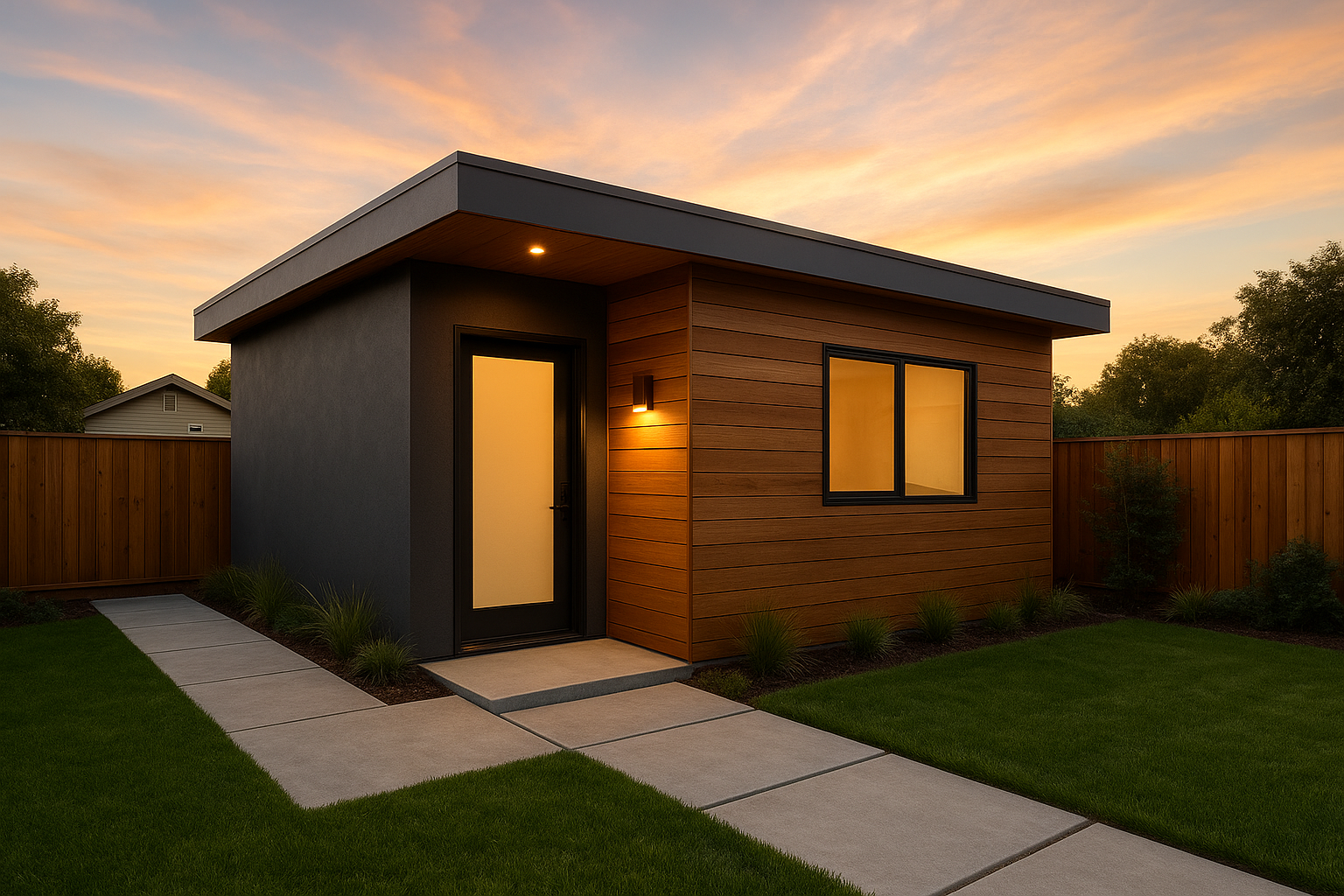
A finished, inspected ADU is the end result of thorough permit coordination.
Frequently Asked Questions About ADU Permit Coordination Services
What are ADU permit coordination services?
ADU permit coordination services manage the preparation, submittal, and follow-up of accessory dwelling unit permit applications with the local building department. This includes handling plan check corrections, tracking fees, and scheduling inspections until a certificate of occupancy is issued.
How much do ADU permit coordination services cost?
Costs typically range from a few thousand dollars up to roughly ten thousand dollars, depending on city complexity, and are often bundled into a design-build contract. Standalone permit runners usually charge separately from city fees.
How long does ADU permit approval take in Southern California?
Plan check review commonly takes six to twelve weeks for a first submittal, with additional time for corrections. Total permitting often ranges from two to six months depending on the city.
Can I coordinate ADU permits myself instead of hiring a service?
Homeowners can self-submit permits, though the process requires accurate structural drawings and familiarity with local plan check comments. Most find that professional coordination reduces resubmittal cycles and saves time overall.
What documents are needed for an ADU permit application?
A typical application includes site plans, floor plans, structural and electrical drawings, and Title 24 energy compliance forms. Some cities also require a survey, soils report, or fire department review.
Which Southern California cities have the fastest ADU permit turnaround?
Turnaround varies by jurisdiction and current plan check volume, so timelines shift over time. Cities with dedicated pre-approved ADU plan programs generally move faster than those requiring full custom review.
What is the difference between plan check and permit issuance?
Plan check is the city’s technical review of submitted drawings for code compliance, while permit issuance happens once corrections are resolved and fees are paid. Construction cannot legally start until the permit is issued.
Do ADUs require separate utility permits?
Many ADUs need separate plumbing, electrical, and mechanical permits alongside the building permit, and some cities require a new utility connection. A coordinator tracks these sub-permits so none are missed before inspections.
What common mistakes delay ADU permit coordination?
Incomplete structural details, missing Title 24 forms, and overlooked setback or fire-access requirements are frequent causes of resubmittals. Skipping an early utility capacity check also causes late-stage delays.
Does an HOA affect ADU permit approval?
State ADU law limits how much an HOA can restrict ADUs, though HOAs can still enforce reasonable design guidelines that don’t conflict with state law. Coordination should account for both city approval and applicable HOA review.
Will adding an ADU trigger a property tax reassessment?
Adding an ADU generally results in a partial reassessment limited to the new construction’s value, not the entire property. The existing home’s Proposition 13 assessed value typically stays unchanged.
What happens after ADU permits are approved?
Once permits are issued, construction begins and the coordinator schedules inspections at each build phase, including foundation, framing, and final. The process concludes with a final inspection and certificate of occupancy.
How do I know if my contractor handles permit coordination in-house?
Ask whether structural engineering, plan submittal, and inspection scheduling are handled directly by the contractor’s team or outsourced to a third party. In-house coordination usually means fewer communication gaps and faster corrections.
What financing considerations affect ADU permit timing?
Construction loans and some HELOC programs require an issued permit before funds are disbursed, so permit delays can push back financing. Coordinating design, permitting, and lender requirements together helps avoid gaps between approval and funding.
Final Takeaways on ADU Permit Coordination
In summary, ADU permit coordination services matter because they connect design, engineering, and city approval into one accountable process instead of a series of disconnected steps. As shown above, the difference between a smooth six-month project and a stalled one-year project often comes down to how well plans, Title 24 documents, and utility details are prepared before the first submittal. For homeowners in Orange County, Los Angeles County, or western Riverside County, choosing a provider that manages design, structural engineering, permitting, and construction under one roof, and can point to a track record such as an active CSLB license, is one of the clearest ways to keep an ADU project on schedule. Homeowners ready to take the next step can request a site assessment through theadupro.com to see how ADU permit coordination services would apply to their specific lot.

