Title 24 compliant ADU construction is the process of designing and building an accessory dwelling unit (ADU) so it meets California’s statewide energy efficiency standards, covering insulation, windows, HVAC systems, and lighting. For Southern California homeowners, this isn’t optional — every city building department checks Title 24 compliance before issuing a permit or signing off on a final inspection. In addition, meeting these standards helps lower long-term utility bills and supports the net-zero-focused building approach many ADU contractors now use by default. This guide breaks down what compliance actually requires, how it affects your budget and timeline, and what to look for in a contractor who can deliver it correctly the first time.
Quick Answer
Title 24 compliant ADU construction means your unit’s insulation, windows, HVAC, and lighting meet California’s Building Energy Efficiency Standards, verified through CF1R design documents and a final HERS rater inspection. Without this sign-off, a city building department cannot issue your certificate of occupancy.
What Is Title 24 Compliant ADU Construction?
Title 24 compliant ADU construction refers to building practices that satisfy Part 6 of the California Code of Regulations, commonly called the Building Energy Efficiency Standards. Specifically, these rules dictate how much heat a wall assembly can lose, how efficient a window must be, and what type of mechanical equipment can heat and cool the space. As a result, every ADU permit application in Southern California must include energy compliance documentation, regardless of whether the project is a new detached unit or a garage conversion.
Because the California Energy Commission updates these standards roughly every three years, the exact requirements your project must meet depend on the code cycle active when you submit for permit. Therefore, working with a contractor who tracks current Title 24 updates, rather than relying on outdated assumptions, directly affects whether your plans pass review the first time. For a deeper breakdown of code sections specific to ADUs, see this detailed Title 24 requirements guide.
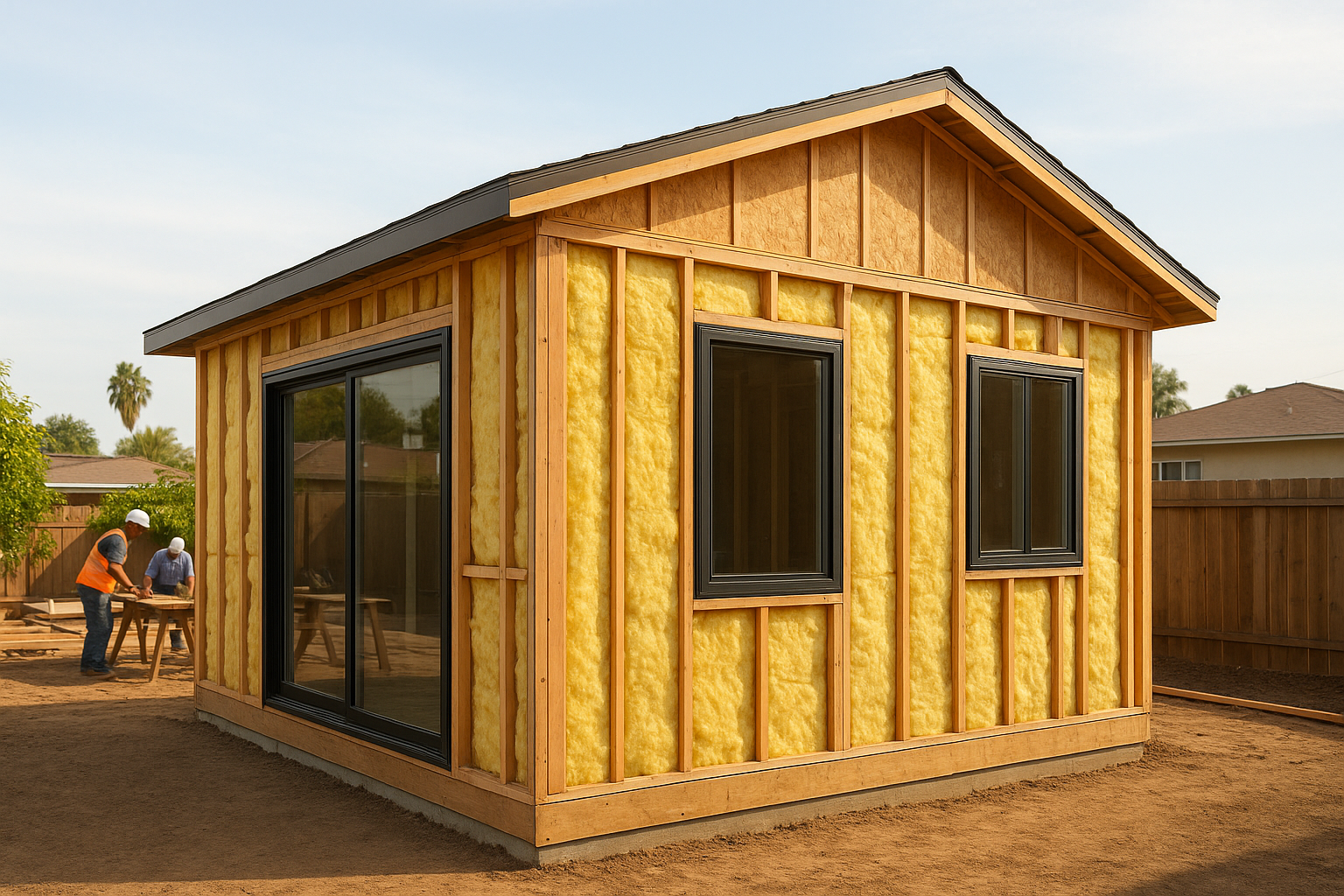
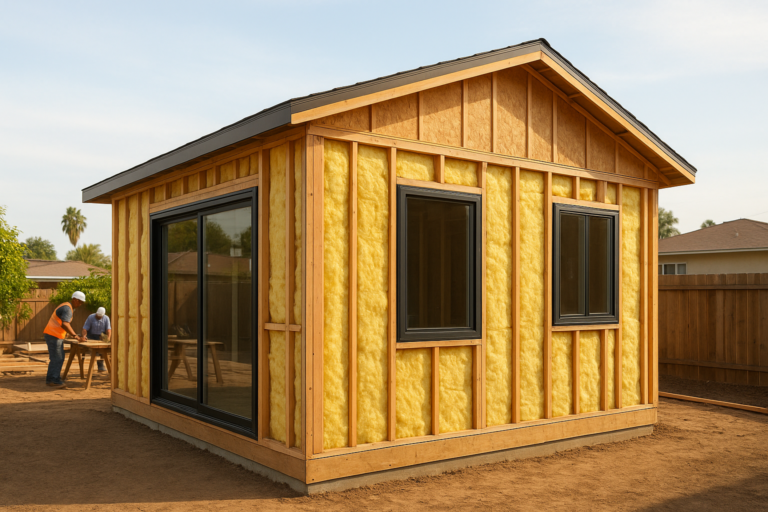
Insulation and glazing choices made early in design determine whether title 24 compliant ADU construction stays on budget.
Why Title 24 Energy Standards Matter for Your ADU
Beyond the legal requirement, Title 24 energy standards exist to reduce statewide electricity and gas demand while improving occupant comfort. According to the California Energy Commission, the 2022 Title 24 Part 6 update reduced energy use in newly built homes by building on electrification-ready requirements introduced in the 2019 cycle. In practical terms, this means a compliant ADU typically costs less to heat and cool month to month than an older, non-compliant structure of the same size.
Furthermore, meeting Title 24 standards supports net-zero-focused construction, an approach that pairs efficient building envelopes with optional solar to offset most or all of a unit’s annual energy use. Consequently, homeowners who plan to rent out their ADU often see this efficiency reflected in tenant satisfaction and reduced utility disputes, since lower bills make the unit more attractive long-term.
Key Title 24 Requirements for Southern California ADUs
Several building components fall under direct Title 24 review. For example, wall, floor, and attic insulation must meet minimum R-values based on climate zone, and Southern California spans several distinct zones that each carry different thresholds. Similarly, window U-factor and solar heat gain coefficient ratings are checked against the compliance model, which means swapping a specified window brand mid-project can jeopardize approval.
In addition, HVAC equipment efficiency, duct sealing, and whole-house ventilation are all reviewed, along with lighting fixture types throughout the unit. Garage conversions and JADUs face these same requirements once the space becomes habitable, so homeowners should not assume an existing garage shell reduces compliance scope. You can review how these rules interact with local building codes in this local code compliance guide.
How to Achieve Title 24 Compliant ADU Construction
Reaching compliance follows a fairly predictable sequence when the design and construction teams coordinate early. Below is the general process most Southern California ADU projects follow.
- Complete a site assessment and energy pre-check. A qualified contractor evaluates lot orientation, utility connections, and sun exposure to inform an efficient design before drawings begin.
- Choose a compliance path and finalize design. The designer selects either the prescriptive path, with fixed minimum specs, or the performance path, which models the whole building and allows trade-offs.
- Submit CF1R documents with the permit set. Energy compliance forms are filed alongside structural drawings so the city reviews both together, reducing back-and-forth delays.
- Build to the approved specifications. Crews install the exact windows, insulation, and HVAC equipment listed in the approved energy model, since substitutions can trigger a failed inspection.
- Pass the HERS inspection and final sign-off. A certified HERS rater field-verifies installation quality, then CF2R and CF3R forms are submitted to close out compliance.
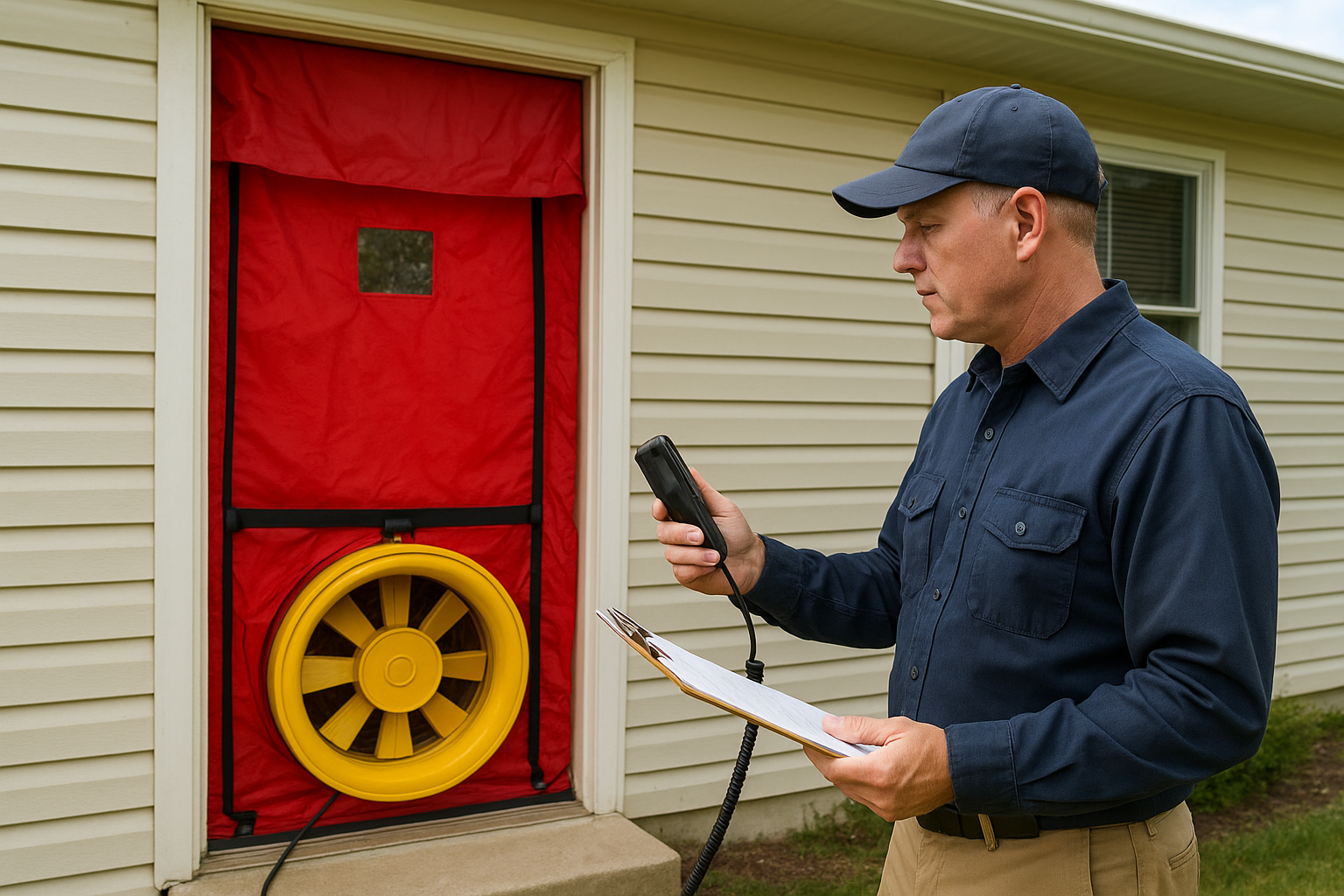
Field verification by a certified HERS rater is the final checkpoint before an ADU can be marked complete.
Costs and Timeline Considerations
Compliance-related costs generally include energy modeling fees, any upgraded materials needed to meet the model, and the HERS rater’s inspection fee. As a result, these line items often add a modest percentage to overall construction cost rather than a dramatic one, particularly when efficient materials are specified from the start rather than added later as corrections.
Regarding timeline, well-prepared CF1R documentation typically moves through plan check alongside the rest of the permit set without separate delays. However, inconsistencies between the energy model and submitted drawings are a common source of correction letters, which can add weeks to an already lengthy municipal review. Homeowners curious about typical review windows in their city can reference this guide on local building code compliance for additional context.
Common Mistakes That Delay Title 24 Compliant ADU Projects
Three mistakes account for most Title 24-related delays. First, window specifications on the approved plans sometimes don’t match what’s actually ordered or installed, which forces a resubmittal. Second, missing or incomplete CF2R and CF3R field verification paperwork can stall a final inspection even after construction is otherwise finished.
Third, HVAC equipment that differs from what the energy model assumed, even a seemingly minor efficiency rating change, can invalidate the original compliance calculation. In contrast, projects that lock in material specifications before ordering and keep documentation organized throughout construction rarely encounter these setbacks. Choosing durable, well-documented materials also helps; this ADU materials guide covers options that tend to perform well under Title 24 review.
Choosing the Right Contractor for Title 24 Compliant ADU Construction
Because compliance touches design, material selection, and field verification, homeowners generally benefit from a single accountable team rather than separate designers, engineers, and builders. TheADUPro, based in Chino and serving Orange County, Los Angeles County, and western Riverside County, handles site assessment, custom design, in-house structural engineering, permitting, and construction under one roof, with a net-zero-focused approach and USA-sourced materials built into standard practice.
Specifically, this design-build structure means the same team preparing your CF1R documents is also responsible for installing the materials that satisfy them, which reduces the finger-pointing that can occur when multiple separate vendors are involved. Homeowners can review the full scope of services, including financing coordination with third-party lending partners, through TheADUPro’s ADU design and construction services or by visiting theadupro.com directly.
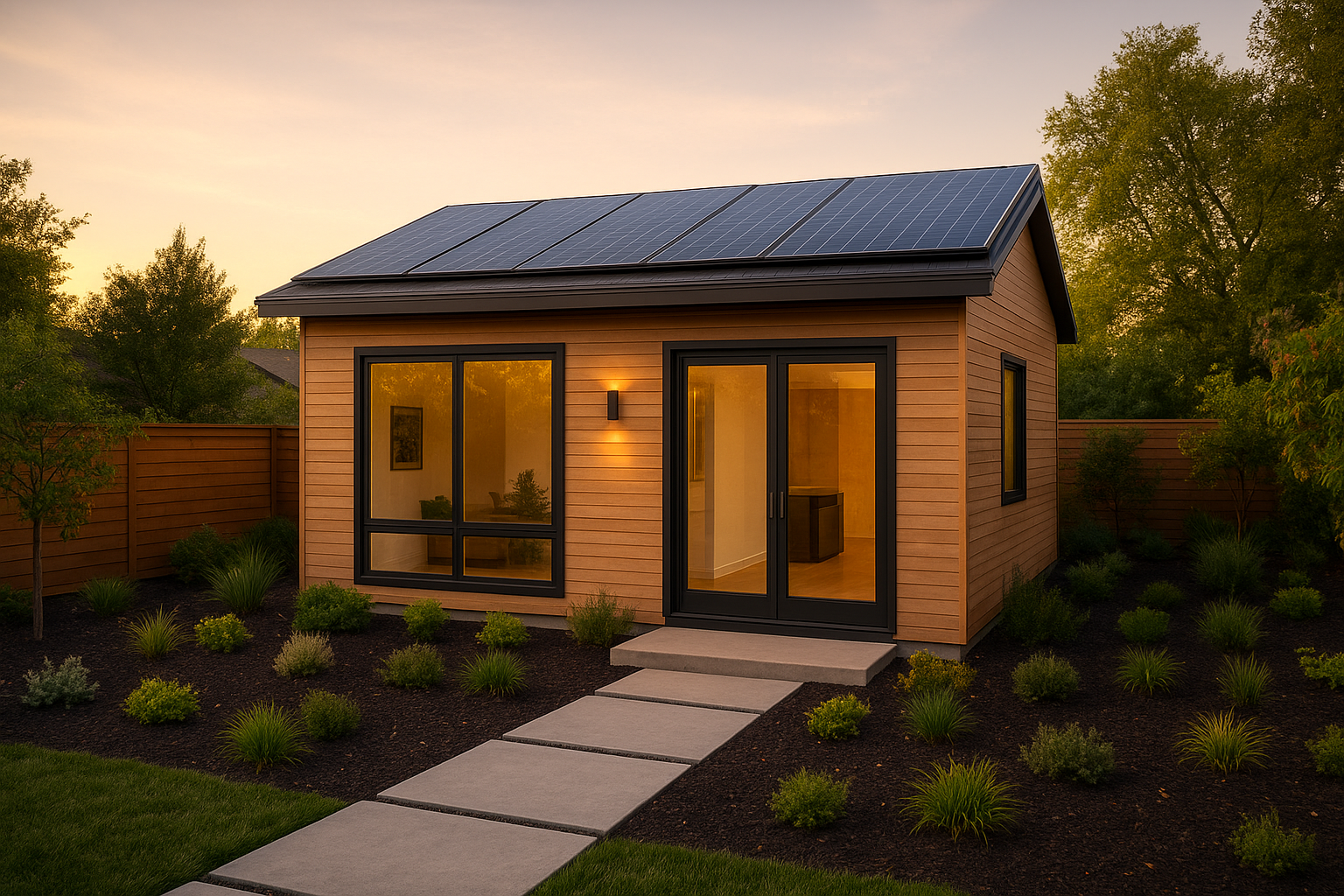
A finished, energy-efficient ADU reflects the design decisions made during Title 24 compliance planning.
Frequently Asked Questions About Title 24 Compliant ADU Construction
What is Title 24 compliant ADU construction?
Title 24 compliant ADU construction means a detached or attached accessory dwelling unit is designed and built to meet California’s Building Energy Efficiency Standards covering insulation, windows, HVAC equipment, and lighting. Local building departments will not issue a permit or final approval without this compliance documentation.
Why does my ADU need to meet Title 24 energy standards?
California requires Title 24 compliance to reduce statewide energy consumption and greenhouse gas emissions. Beyond the legal requirement, compliant ADUs typically run more efficiently, which lowers monthly utility costs for whoever occupies the unit.
How much does Title 24 compliance add to ADU construction costs?
Compliance-related costs usually include energy modeling, upgraded windows or insulation, and a HERS rater inspection, often adding a modest amount to the total project. The exact figure depends on your chosen compliance path and the design’s existing efficiency.
How long does Title 24 compliance review take during permitting?
Energy compliance documents are typically reviewed alongside the full permit set, adding minimal extra time when prepared correctly upfront. However, incomplete or inconsistent CF1R forms can trigger plan check corrections that add several weeks.
What’s the difference between the prescriptive and performance compliance paths?
The prescriptive path requires meeting fixed minimum specifications for each building component, while the performance path models the whole building’s energy use and allows trade-offs between features. Most ADU designers choose whichever path results in lower overall construction cost.
Do garage conversions need to meet Title 24 standards too?
Yes, garage conversions must meet the same Title 24 energy requirements as new detached ADUs once converted into livable space. This often means adding insulation, upgrading windows, and installing compliant HVAC equipment.
What is a HERS rater and why is one required?
A HERS (Home Energy Rating System) rater is a certified, independent inspector who verifies that specific Title 24 measures, such as duct sealing and insulation installation, were actually built as designed. Many current Energy Code measures require this third-party field verification before final sign-off.
Can I use solar panels to meet Title 24 requirements?
Solar can help offset energy use under the performance compliance path, though many ADUs under 750 square feet have reduced or exempt solar requirements. A net-zero-focused design approach still benefits from solar when the lot and budget allow it.
What common mistakes delay Title 24 approval?
The most frequent delays come from mismatched window specifications between plans and installed products, missing CF2R or CF3R field verification forms, and HVAC equipment that doesn’t match the approved energy model. Catching these issues before installation saves significant rework time.
Does Title 24 compliance affect my ADU’s resale value or rental income potential?
An energy-efficient, code-compliant ADU is generally more attractive to renters and buyers because of lower utility costs and documented compliance paperwork. In contrast, non-compliant construction can create legal and financing headaches during resale or refinancing.
Is Title 24 the same as CALGreen?
No, Title 24 Part 6 covers energy efficiency, while Title 24 Part 11, known as CALGreen, addresses broader green building measures like water efficiency and waste reduction. Most ADU projects must satisfy both parts simultaneously.
Who is responsible for Title 24 compliance documentation — me or the contractor?
An experienced design-build ADU contractor typically prepares and submits the CF1R energy compliance forms as part of the permit package. Homeowners should still confirm this responsibility is clearly outlined in the construction contract.
What materials help meet Title 24 energy requirements?
High-performance windows, continuous wall and attic insulation, sealed ductwork, and efficient heat pump HVAC systems are common materials used to satisfy Title 24. Choosing durable, USA-sourced materials can also support long-term energy performance.
Will Title 24 standards change before my permit is approved?
California updates its Energy Code roughly every three years, so projects submitted close to a code cycle change should confirm which standard applies. Your contractor or city plan checker can confirm the effective code version for your submittal date.
Final Thoughts
Ultimately, title 24 compliant ADU construction is not a box to check at the end of a project — it’s a set of decisions that start at site assessment and carry through to the final HERS inspection. Specifically, choosing the right windows, insulation, and HVAC equipment early, and keeping documentation consistent throughout construction, prevents the delays and cost overruns that catch many homeowners off guard. For additional background on how California’s statewide standards apply to your specific lot, the California Energy Commission and California HCD both publish current guidance worth reviewing alongside your contractor’s recommendations. For readers who want to go deeper on the underlying regulatory framework, Wikipedia’s overview of the California Building Standards Code provides helpful context. Whether you’re planning a detached unit, a second-story addition, or a garage conversion, working with a design-build team that treats Title 24 compliance as a core part of the process, rather than an afterthought, is the most reliable path to a smooth permit and a comfortable, efficient finished ADU.