
Financing your ADU project is one of the most important — and most misunderstood — steps in building an accessory dwelling unit (ADU). An ADU is a secondary residential unit built on the same lot as a primary home, and it can take the form of a detached guest house, a garage conversion, an attached addition, or a junior ADU within the existing structure. For homeowners across Orange County, Los Angeles County, and Riverside County, the right financing strategy can make the difference between a project that moves forward confidently and one that stalls before breaking ground.
According to the U.S. Census Bureau, California leads the nation in ADU permit applications, with tens of thousands filed annually. Therefore, understanding your funding options before you start is essential for a smooth build experience.
What Does Financing Your ADU Project Actually Mean?
Simply put, financing your ADU project means securing the funds needed to cover design, permitting, and construction costs before and during your build. Most homeowners do not pay entirely out of pocket. Instead, they leverage financial products tied to their home’s equity or creditworthiness to fund the work.
In Southern California, ADU construction costs typically range from $100,000 to $300,000, depending on the type and size of the unit. Consequently, having a clear funding plan is not optional — it is foundational to the entire project timeline.
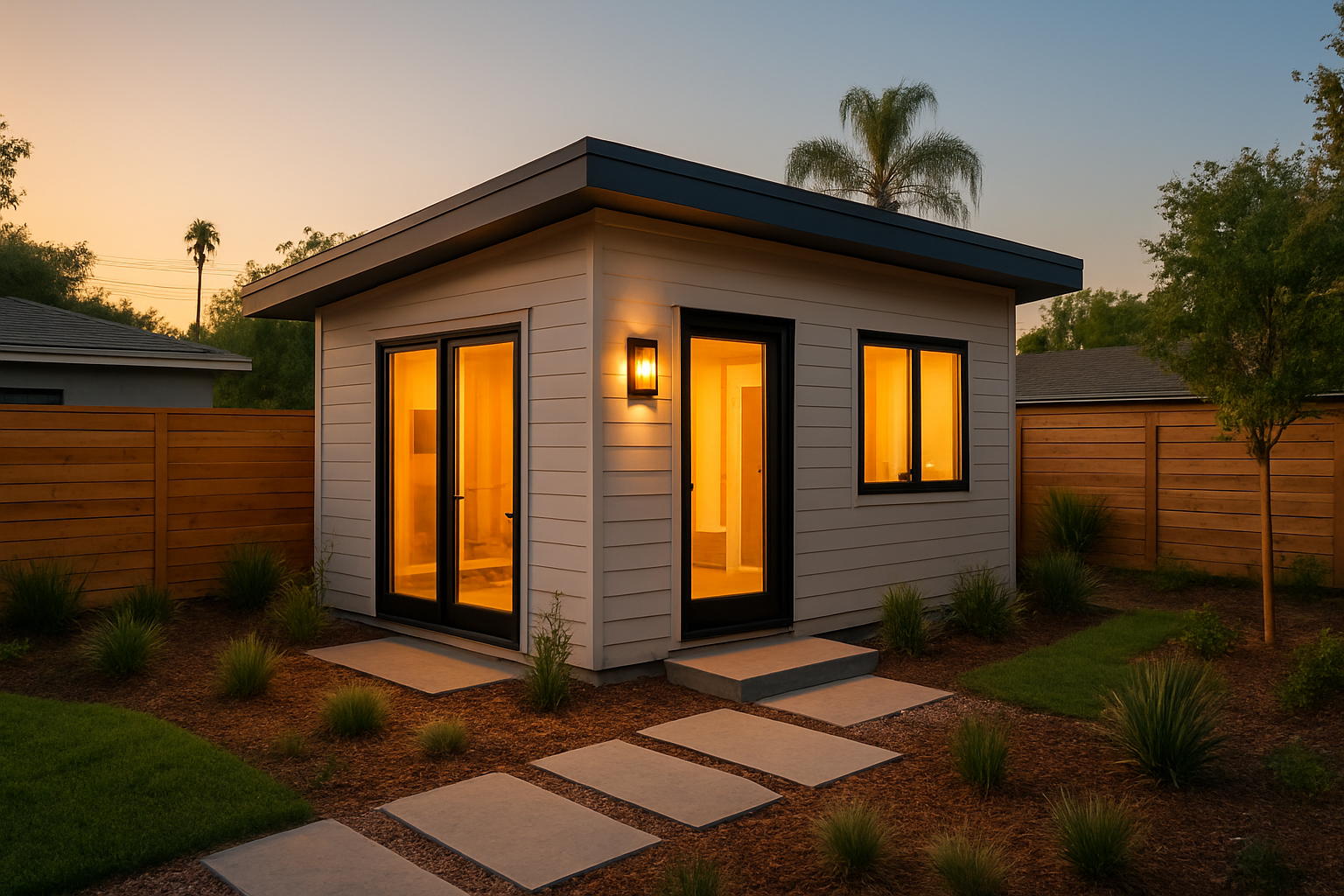
A completed detached ADU in Southern California — the kind of project that becomes achievable with the right financing strategy in place.
Top Loan Options for Funding Your ADU Build
Fortunately, homeowners today have more loan products available than ever before. Each option carries its own terms, benefits, and eligibility requirements. Below are the most widely used financing tools for ADU construction in California.
Home Equity Line of Credit (HELOC)
A HELOC — or Home Equity Line of Credit — is a revolving credit line secured by the equity in your home. It works similarly to a credit card: you draw funds as needed during the construction phase and pay interest only on what you use. This flexibility makes it especially popular for ADU builds, where expenses are staged over several months.
To qualify, most lenders require at least 15% to 20% equity remaining after the line is opened. Additionally, a credit score of 680 or higher typically yields the most competitive rates. For more details on how this works in practice, visit the ADU financing options guide at theadupro.com.
Home Equity Loan
Unlike a HELOC, a home equity loan provides a lump sum at a fixed interest rate. This is ideal for homeowners who have a firm project budget and prefer predictable monthly payments. Furthermore, because the rate is fixed, you are protected from rising interest rates during the repayment period.
Home equity loans generally offer terms of 5 to 30 years. As a result, monthly payments can be structured to remain manageable even for larger ADU builds.
Cash-Out Refinance
A cash-out refinance replaces your existing mortgage with a new, larger loan. The difference between the two amounts is paid to you in cash, which you can then use to fund your ADU. This option works best when current interest rates are equal to or lower than your existing mortgage rate.
However, if rates have risen significantly since you first bought your home, a cash-out refinance may increase your overall monthly costs. Therefore, it is important to run the numbers carefully before choosing this route.
ADU Construction Loan
A construction loan is a short-term loan specifically designed to cover building costs. Funds are released in stages — called draws — as each phase of construction is completed. Once the ADU is finished, the loan either converts to a permanent mortgage or is paid off through a refinance.
Construction loans typically require a detailed project plan and contractor bids upfront. Specifically, lenders want to verify that the project is viable before committing funds. Learn more about how to receive your ADU funding through a structured draw process.
California Grants and Assistance Programs Worth Knowing
In addition to traditional loans, California has introduced grant programs specifically aimed at reducing the upfront cost of ADU development. The CalHFA ADU Grant Program has offered eligible homeowners up to $40,000 to cover pre-development and non-recurring closing costs. While funding availability changes with each cycle, it represents a meaningful opportunity to reduce your out-of-pocket burden.
Similarly, some local municipalities within Los Angeles County and Orange County have launched their own incentive programs. Therefore, it is worth checking with your city’s housing department in addition to state-level resources.
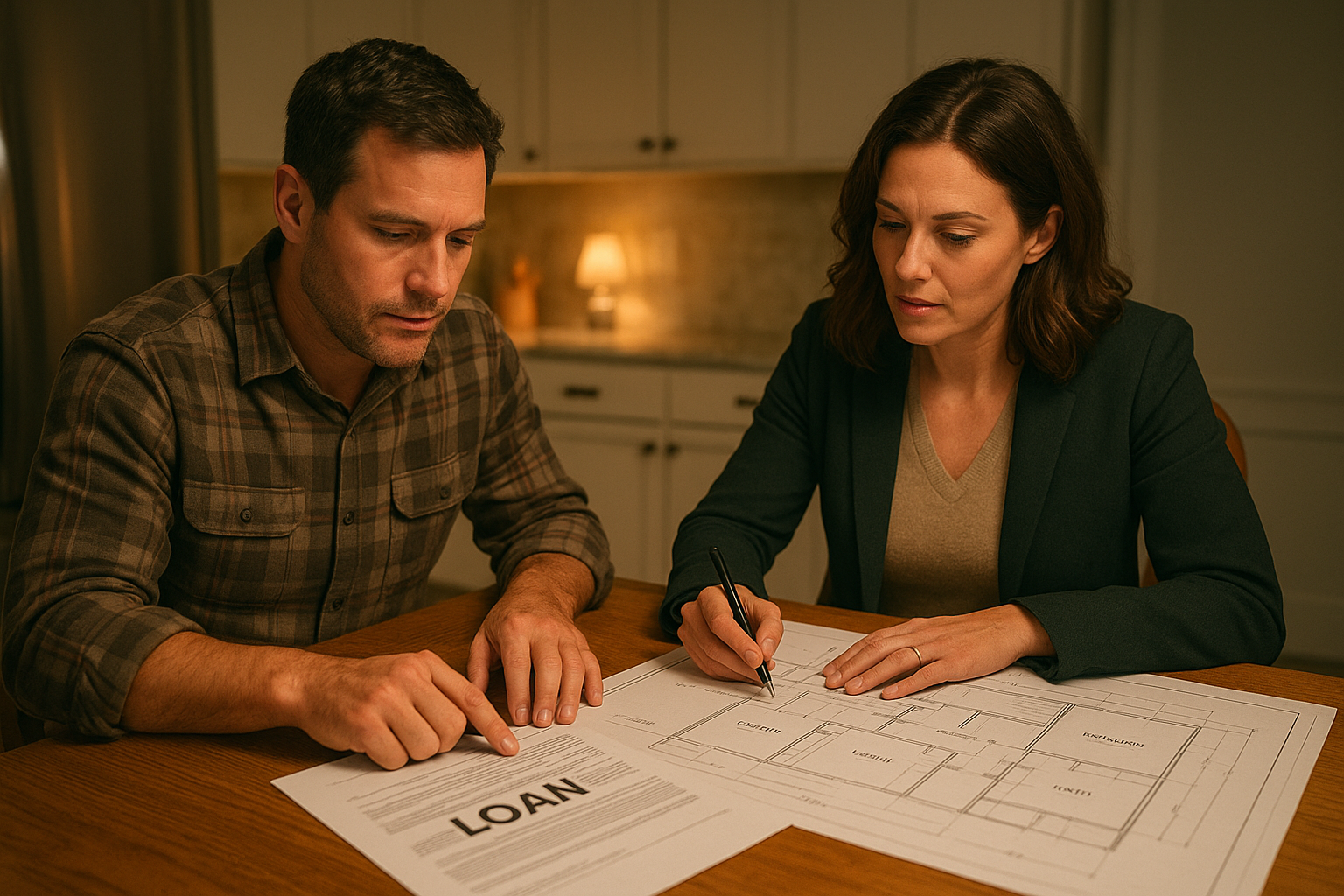
Reviewing loan documents and construction plans together helps homeowners make confident financing decisions for their ADU build.
Fannie Mae Programs That Support ADU Funding
Fannie Mae has expanded its lending guidelines to better accommodate ADU financing. The HomeStyle Renovation loan, for example, allows homeowners to bundle the cost of ADU construction into a single mortgage. This product is particularly useful for buyers purchasing a property with the intent to build an ADU immediately.
Furthermore, Fannie Mae now allows lenders to count projected ADU rental income when qualifying borrowers for certain loan products. This change makes it significantly easier for homeowners to qualify for the loan amount they need.
How to Finance Your ADU Project Step by Step
Following a structured approach helps avoid delays and ensures you secure the right funding product for your situation. Here is a proven six-step process:
- Determine your ADU budget. Get a detailed cost estimate from a licensed contractor. Include design, permitting, construction, and a 10% to 15% contingency buffer.
- Assess your equity and financial profile. Review your home equity, credit score, and debt-to-income ratio. These factors determine which loans you qualify for and at what rates.
- Research and compare loan products. Compare HELOCs, home equity loans, cash-out refinances, and construction loans from multiple lenders. Focus on interest rates, draw terms, and closing costs.
- Check for grants and assistance programs. Visit CalHFA’s website and your local county housing authority to identify available grants or low-interest ADU programs.
- Submit your loan application. Gather proof of income, tax returns, a property appraisal, and your ADU construction plans. Submit a complete application to begin underwriting.
- Close on financing and begin construction. Once approved, coordinate with your contractor to release funds per the draw schedule and officially start your build.
For homeowners in the Inland Empire, specific loan resources are also available locally. For instance, the ADU loans in Redlands page outlines options tailored to that region’s market conditions.
Why ADU Financing Is a Smart Long-Term Investment
Beyond the construction itself, financing an ADU is a wealth-building strategy. Research from the Urban Institute indicates that ADUs can increase property values by 20% to 30% in many California markets. In addition, rental income from a well-positioned ADU in Southern California can range from $1,500 to $3,000 or more per month, depending on location and unit quality.
Consequently, many homeowners find that the rental income generated by their ADU covers — or even exceeds — the monthly loan payment. This effectively makes the ADU self-financing over time.
theadupro.com has helped hundreds of homeowners across Orange County, Los Angeles County, and Riverside County navigate both the construction and financing sides of ADU development. Their easy-to-finance approach is designed to reduce barriers and simplify the funding process from day one.
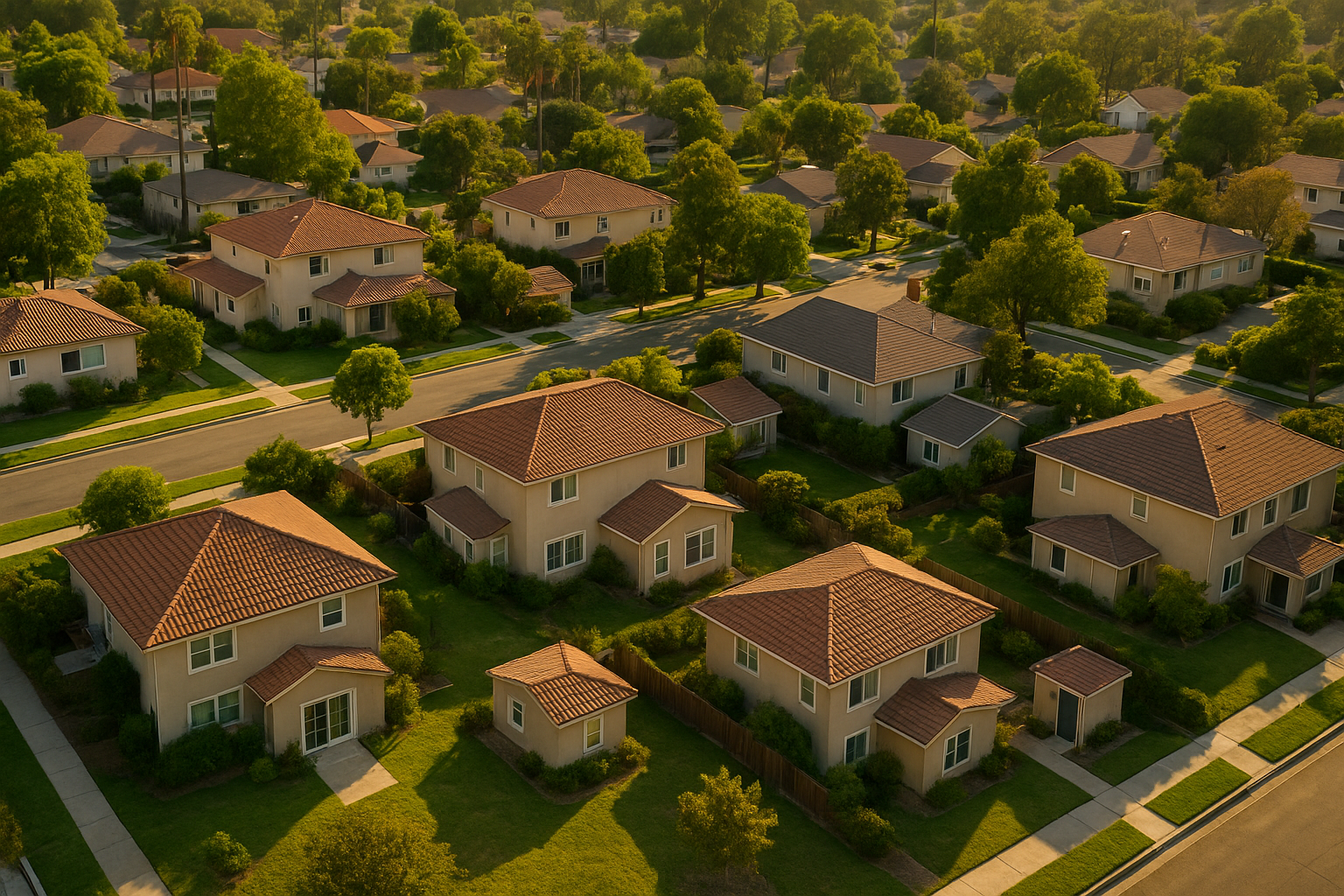
Southern California neighborhoods increasingly feature ADUs funded through a variety of smart financing approaches.
Common Mistakes to Avoid When Securing ADU Funding
Even well-prepared homeowners can stumble during the financing process. Here are the most common pitfalls to avoid:
- Underestimating total project costs. Always include permitting fees, utility connections, and landscaping in your budget — not just hard construction costs.
- Applying for only one loan product. Comparing multiple lenders and loan types can save thousands of dollars in interest over the life of the loan.
- Ignoring the draw schedule. Misaligned draw schedules between your lender and contractor can cause costly construction delays.
- Skipping the grant search. Many homeowners miss out on thousands in free funding simply because they did not research available programs before applying for a loan.
For a deeper look at all available funding paths, explore the ADU financing resources section at theadupro.com, which covers topics from grant eligibility to lender comparisons.
Frequently Asked Questions About Financing Your ADU Project
What does financing your ADU project typically cost in California?
Financing your ADU project in California typically involves total project costs ranging from $100,000 to $300,000 depending on ADU type, size, and location. Detached ADUs tend to cost more than garage conversions or junior ADUs. Your financing costs — interest and fees — will vary based on the loan product you choose.
What is the best loan option for an ADU build?
The best option depends on your equity, credit score, and timeline. HELOCs and home equity loans are popular for homeowners with significant equity. Construction loans and cash-out refinances work well for larger projects or buyers who are purchasing and building simultaneously.
Can I use a HELOC to fund an ADU?
Yes. A HELOC is one of the most flexible ways to fund an ADU. It allows you to draw funds as needed during construction, which helps manage cash flow effectively. Most lenders require 15% to 20% remaining equity after the line is opened.
Does California offer grants for ADU construction?
Yes. The CalHFA ADU Grant Program has offered up to $40,000 to eligible homeowners for pre-development and non-recurring closing costs. Availability depends on funding cycles, so check CalHFA’s website for current program status before applying.
How does a cash-out refinance work for ADU financing?
A cash-out refinance replaces your existing mortgage with a larger loan, and you receive the difference in cash to fund your ADU. This works best when current interest rates are favorable compared to your existing mortgage rate. If rates have risen significantly, this option may increase your total monthly costs.
What is an ADU construction loan?
An ADU construction loan is a short-term loan that covers building costs during the construction phase. Funds are released in draws as each phase is completed. Once the ADU is finished, the loan typically converts to a permanent mortgage or is paid off through refinancing.
Can rental income from my ADU help pay off the loan?
Absolutely. Many homeowners use ADU rental income to offset monthly loan payments. In Southern California, ADUs can generate $1,500 to $3,000 or more per month depending on location and unit quality. Over time, this can make the ADU largely self-financing.
What credit score do I need to finance an ADU?
Most lenders require a minimum credit score of 620 to 680 for ADU financing. However, better rates and terms are typically available for borrowers with scores of 720 or higher. Improving your credit before applying can significantly reduce your total interest costs.
Is it possible to finance an ADU with no equity?
It is more challenging but not impossible. Some lenders offer personal loans or unsecured home improvement loans that do not require equity. However, these products typically carry higher interest rates, so they should be used as a last resort.
How long does it take to get ADU financing approved?
Approval timelines vary by loan type. HELOCs and home equity loans typically take 2 to 6 weeks. Construction loans may take 4 to 8 weeks due to additional underwriting requirements. Planning ahead and submitting a complete application helps minimize delays.
Does adding an ADU increase my property value?
Yes. Research indicates that adding an ADU can increase property value by 20% to 30% in many California markets. This makes ADU construction a strong long-term investment that can more than offset the cost of financing over time.
What is a Fannie Mae HomeStyle loan and can it fund an ADU?
The Fannie Mae HomeStyle Renovation loan allows homeowners to finance both a home purchase or refinance and renovation costs in a single loan. It can be used to fund ADU construction when the ADU adds value to the primary property. This is particularly useful for buyers who want to build immediately after purchasing.
Conclusion: Making Financing Your ADU Project Work for You
Financing your ADU project requires careful planning, but the tools available to Southern California homeowners today make it more accessible than ever. Whether you choose a HELOC, a home equity loan, a cash-out refinance, or a construction loan, the key is to match the product to your financial profile and project timeline. In addition, taking advantage of California grants and Fannie Mae programs can meaningfully reduce your upfront costs. Above all, partnering with an experienced ADU contractor like theadupro.com ensures that your build is managed efficiently — so your investment delivers maximum value from day one. With the right funding strategy and the right team behind you, your ADU project is well within reach.