
Prefab ADU options are among the fastest-growing solutions for Southern California homeowners who want to add livable space without the lengthy timelines of traditional construction. In fact, according to the California Department of Housing and Community Development, ADU permit applications have surged by over 400% statewide since 2017 — and prefab methods are driving much of that growth. Understanding your choices before committing to a build can save you thousands of dollars and months of delays. Authored by The ADU Pro® team — our designers and permitting specialists in Southern California. See author bio for credentials and project experience.
What Are Prefab ADU Options?
Prefab ADU options — short for prefabricated accessory dwelling unit options — refer to any ADU construction method where major components are built off-site in a factory setting, then transported and assembled on your property. This approach contrasts with traditional site-built construction, where everything is framed and finished on location from scratch.
There are several distinct categories of ADU construction, and each carries its own cost profile, design flexibility, and permitting pathway. Choosing the right one depends on your lot, budget, and long-term goals.
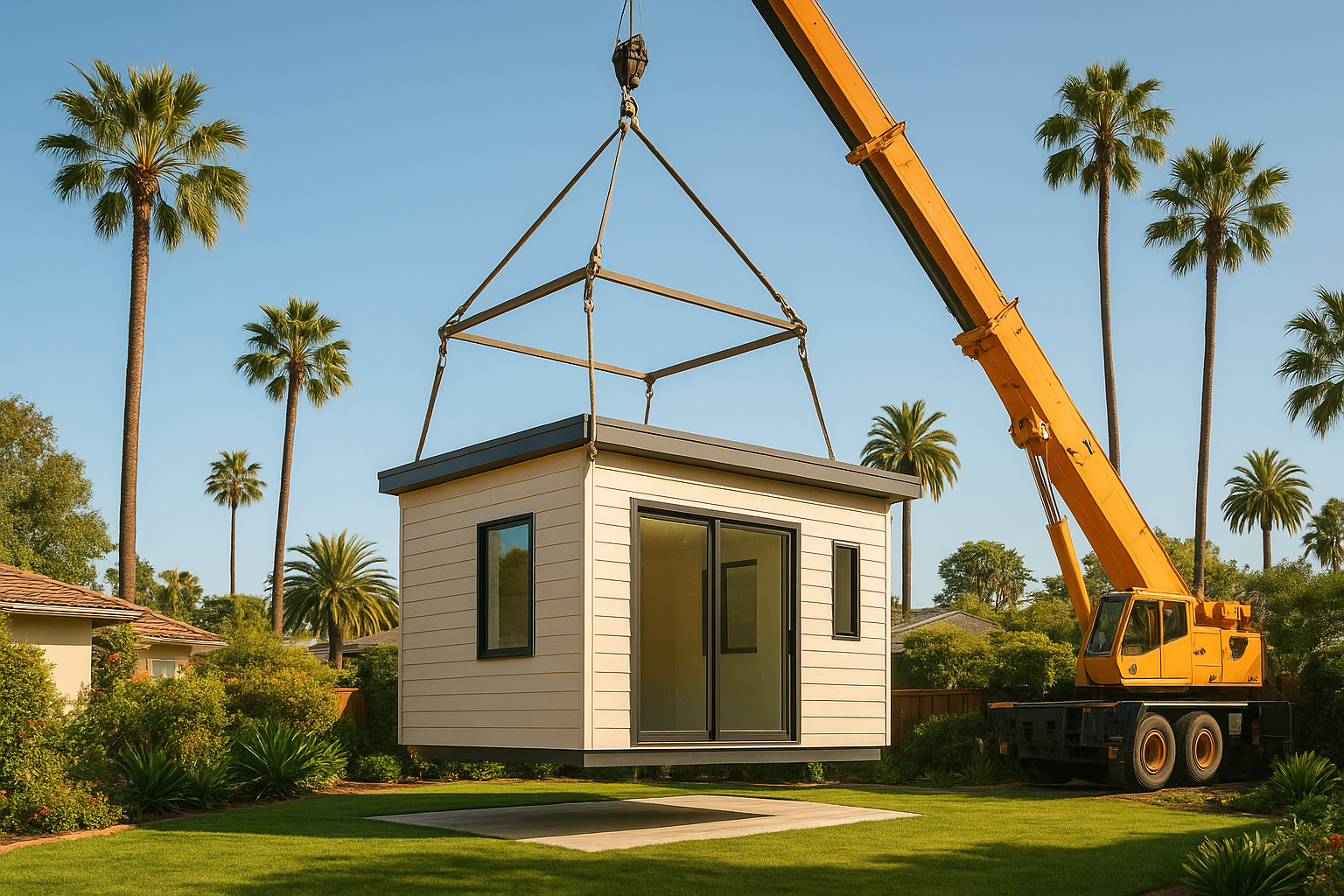
Prefab ADU options like modular units can be craned into place within a single day, dramatically reducing on-site construction time.
The Four Main Types of Prefab ADUs
Before diving into costs and timelines, it helps to understand the four primary types of ADUs available to homeowners today.
1. Modular ADUs
Modular ADUs are built in sections — called modules — inside a climate-controlled factory. These sections are then trucked to your property and assembled on a permanent foundation. Modular units must meet the same local building codes as site-built homes, making them a strong choice in regulated markets like Los Angeles and Orange County. See our Prefab ADU guide for full costs and the building process.
2. Panelized ADUs
Panelized construction involves pre-built wall, floor, and roof panels shipped flat to your site. Consequently, on-site assembly is faster than traditional framing, but more labor-intensive than modular delivery. Panelized ADUs offer more design flexibility and are well-suited to irregular lots.
3. Manufactured ADUs
Manufactured homes are built entirely in a factory to HUD federal standards rather than local building codes. However, many California jurisdictions restrict where HUD-code units can be placed, so it is essential to verify zoning compatibility before purchasing. These units are typically the most affordable upfront, but financing and resale considerations can be more complex.
4. Container-Based ADUs
Shipping container ADUs repurpose steel freight containers as structural building blocks. They have a distinctive industrial aesthetic and can be stacked or combined for larger footprints. That said, insulation, plumbing, and finishing costs can offset the initial savings, and not all jurisdictions approve them readily.
How Much Do Prefab ADUs Cost in California?
Cost is often the first question homeowners ask. Prefab ADU prices in California typically range from $80,000 to $250,000 or more, depending on size, type, and location. However, that figure rarely tells the full story. Use our ADU cost estimator to refine your budget.
Site preparation — including grading, foundation work, and utility connections — commonly adds $20,000 to $60,000 to the total project budget. In addition, ADU permits and approvals in cities like Los Angeles or Irvine can range from $5,000 to $20,000 depending on the scope. Therefore, homeowners should budget conservatively and plan for contingencies.
For a detailed look at financing strategies, the team at ADU financing options and smart ways to fund your build outlines home equity loans, construction loans, and California-specific programs like CalHFA that can make ADU development more accessible.
How to Choose and Build a Prefab ADU: Step-by-Step
The process of adding a prefab unit to your property follows a clear sequence. Following these steps in order helps avoid costly mistakes and permit delays. Begin with our start planning your ADU guide.
- Assess your lot and zoning. Review your property’s zoning designation, lot size, setback requirements, and utility access. Not all lots can accommodate every prefab type, so this step determines your real options before you spend money on plans.
- Choose a prefab ADU type. Select the construction method that best matches your budget, timeline, and design goals. Modular units suit those prioritizing speed; panelized suits those needing design flexibility.
- Obtain permits and approvals. Submit applications to your local building department, including site plans, foundation drawings, and California Title 24 energy compliance documents. Working with an experienced contractor significantly speeds this step.
- Prepare the site and foundation. Complete grading, soil testing, and foundation construction before the prefab unit arrives. A properly prepared site prevents delivery delays and structural issues down the line.
- Deliver, assemble, and connect. Coordinate factory delivery and on-site assembly, then complete interior finishing, utility hookups, and inspections for final approval and certificate of occupancy.
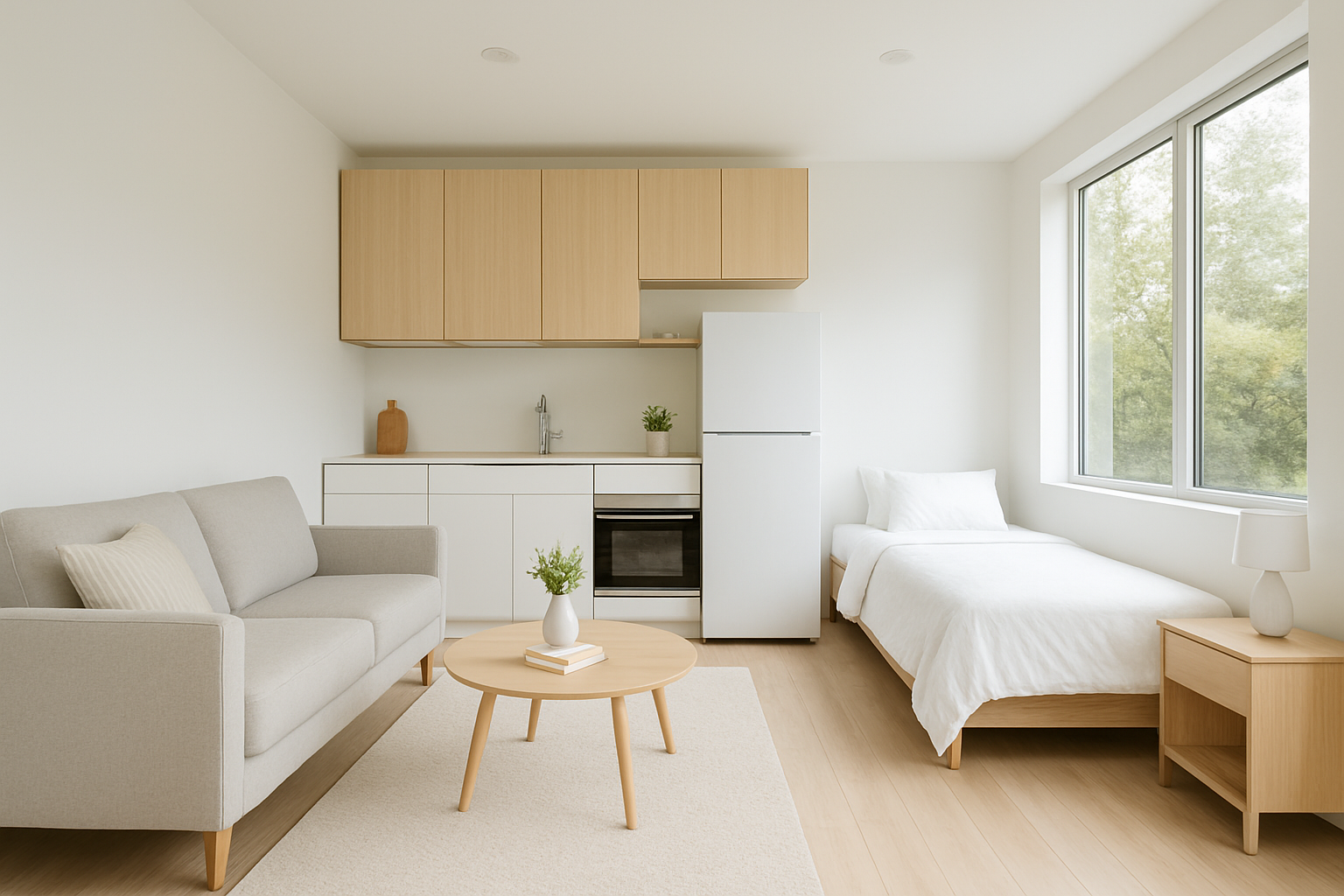
Modern prefab ADU interiors can rival custom-built spaces in quality and style when properly designed and finished.
Prefab vs. Custom-Built ADUs: Which Is Right for You?
Many homeowners assume prefab is always cheaper. In reality, the total cost difference narrows significantly once site work and permits are included. The true advantage of prefab is speed — factory production and site preparation can happen simultaneously, often cutting the overall timeline from 12–18 months to 4–6 months.
Custom-built ADUs, on the other hand, offer complete design freedom. They can be tailored to match your home’s architecture, maximize an awkward lot, or incorporate highly specific features. For inspiration, explore these ADU design ideas for maximizing space and style that apply equally to prefab and custom projects.
Furthermore, custom ADUs built on a permanent foundation are generally easier to finance through conventional mortgage products and tend to add more appraised value to the property. For homeowners in high-value markets like Orange County or the greater Los Angeles area, that long-term equity gain can outweigh the upfront time savings of prefab.
California Regulations and Prefab ADUs
California has made significant legislative strides to streamline ADU approvals. Under AB 68 and subsequent ADU reform bills, cities and counties must ministerially approve compliant ADU applications, reducing discretionary review. However, prefab ADUs still must satisfy Title 24 energy standards, local setback rules, and utility capacity requirements.
Specifically, modular units built to California Building Code (CBC) standards face the smoothest permitting path. Manufactured (HUD-code) units, in contrast, may face additional hurdles in certain jurisdictions. Therefore, verifying local acceptance of your chosen prefab type before purchasing is critical; review our permitted ADU designs for permit-aligned plans.
Working With a Local ADU Contractor
Selecting the right builder is arguably as important as selecting the right prefab type. A contractor with deep local knowledge can navigate permit offices, coordinate factory deliveries, and manage site prep efficiently — all of which directly affect your timeline and budget. Learn more about local ADU costs & options to discuss with prospective builders.
For guidance on evaluating contractors, this resource on how to choose the right ADU builder, understand costs, and spot red flags is an excellent starting point. Similarly, reviewing custom ADU design services that cover planning, permitting, and building correctly can help you understand what a full-service contractor should provide.
theadupro.com serves homeowners throughout Orange County, Los Angeles County, and ADU Plans Riverside, offering end-to-end ADU development from design and permitting through construction and final inspection. Their team brings specific expertise in California’s evolving ADU regulations, helping clients avoid the costly missteps that often accompany prefab projects.
Smart Design Strategies for Prefab ADUs
Even within the constraints of a prefab floor plan, thoughtful design choices make a significant difference. See ADU design ideas for practical options. Open-concept layouts, high ceilings, and large windows maximize perceived space in smaller units. Additionally, built-in storage and multi-function furniture are especially valuable in ADUs under 600 square feet.
For more creative approaches, these 7 smart ADU design ideas that transform living spaces offer practical inspiration whether you are building prefab or custom. Above all, aligning your design choices with the intended use — rental income, multigenerational living, or a home office — ensures the finished space truly serves its purpose.
Quick Fact: According to Zillow Research, homes with ADUs in California sell for an average of 35% more than comparable homes without them, highlighting the strong investment case for adding any type of ADU to your property.
Frequently Asked Questions About Prefab ADU Options
What are prefab ADU options?
Prefab ADU options are accessory dwelling units built partially or fully off-site in a factory, then delivered and assembled on your property. Common types include prefab homes California, modular, panelized, manufactured, and container-based units. Each type has different costs, timelines, and permitting requirements.
How much does a prefab ADU cost in California?
Prefab ADU costs in California typically range from $80,000 to $250,000 or more, depending on size, type, and location. Site preparation, foundation work, and permit fees are usually additional expenses that can add $30,000 to $80,000 to the total. For a comparative look at prefab homes and cost drivers, see Prefab homes in California for examples and pricing context.
How long does it take to build a prefab ADU?
Prefab ADUs generally take 3 to 6 months from permit approval to move-in, which is faster than traditional site-built ADUs that can take 9 to 18 months. Factory production and site prep often happen simultaneously, saving significant time overall.
Do prefab ADUs require permits in California?
Yes, prefab ADUs still require building permits in California regardless of how they are manufactured. You must comply with local zoning rules, setback requirements, and utility connection codes before occupying the unit.
What is the difference between a modular and a manufactured ADU?
Modular ADUs are built in sections off-site and assembled on a permanent foundation, meeting local building codes. Manufactured ADUs (HUD-code homes) are built entirely in a factory and may face different financing restrictions and zoning limitations in California.
Can a prefab ADU be used as a rental unit?
Yes, a properly permitted prefab ADU can be rented out as a long-term or short-term rental, subject to local regulations. California law generally supports ADU rentals as part of its strategy to address the statewide housing shortage.
Are prefab ADUs cheaper than custom-built ADUs?
Prefab ADUs can be less expensive upfront due to factory efficiencies, but total costs often become comparable once site work, permits, and utility hookups are factored in. Custom ADUs typically offer more design flexibility and stronger long-term property value gains.
What foundation does a prefab ADU need?
Most prefab ADUs require a concrete slab or perimeter foundation engineered to local soil and seismic conditions. Foundation costs typically add $10,000 to $30,000 to the total project budget and must be completed before the unit is delivered.
What size prefab ADU can I build in California?
California law allows detached ADUs up to 1,200 square feet, though local jurisdictions may impose additional size limits. Prefab units typically range from 200 to 1,200 square feet, making them suitable for a wide range of lot sizes and household needs.
What are the biggest mistakes homeowners make with prefab ADUs?
Common mistakes include underestimating site preparation costs, choosing a manufacturer without local permit experience, and skipping soil or utility assessments before ordering a unit. Working with a knowledgeable local contractor helps avoid these costly pitfalls.
How do I finance a prefab ADU?
Homeowners can finance a prefab ADU through home equity loans, cash-out refinancing, construction loans, or ADU-specific lending programs. California also offers state-backed assistance through programs like CalHFA to help lower-income homeowners access ADU funding.
Is a prefab ADU a good investment?
Yes, a prefab ADU can be a strong investment by increasing property value and generating consistent rental income. In high-demand markets like Orange County and Los Angeles, ADUs can yield significant long-term financial returns for homeowners.
Conclusion: Choosing the Right Prefab ADU Path
Exploring prefab ADU options is a smart starting point for any Southern California homeowner considering adding a dwelling unit to their property. These factory-built solutions offer real advantages in speed and, in some cases, upfront cost — but they also come with important trade-offs in design flexibility, financing, and permitting complexity that deserve careful consideration.
Whether you ultimately choose a modular unit, a panelized system, or a fully custom-built ADU, success depends on thorough planning, local regulatory knowledge, and the right construction partner. Working with an experienced team that understands California’s ADU landscape — from initial design through final inspection — is the most reliable path to a project that meets your goals, your budget, and your timeline. Author: The ADU Pro team, Orange County ADU design and construction specialists. Last updated: 2026-08-10.