Architect Cost to Design an ADU: Complete 2025 Pricing Guide
The architect cost to design an ADU typically ranges from $5,000 to $30,000, or roughly 5%–15% of total construction cost. Most homeowners pay between $8,000 and $15,000 for a straightforward design in California. See our ADU cost estimate.
The architect cost to design an ADU is one of the most important budget items you will face when planning an Accessory Dwelling Unit — that is, a secondary living space built on the same lot as your primary home. Over the past several years, ADU construction has surged across California and other high-demand housing markets, making it critical to understand exactly what you will pay, why fees vary so widely, and how to get the most value from your architect. In this guide, we break down every cost factor, pricing structure, and money-saving strategy so you can plan your ADU budget with confidence. Explore our ultimate ADU design guide.
What Is an ADU and Why Does Architect Design Matter?
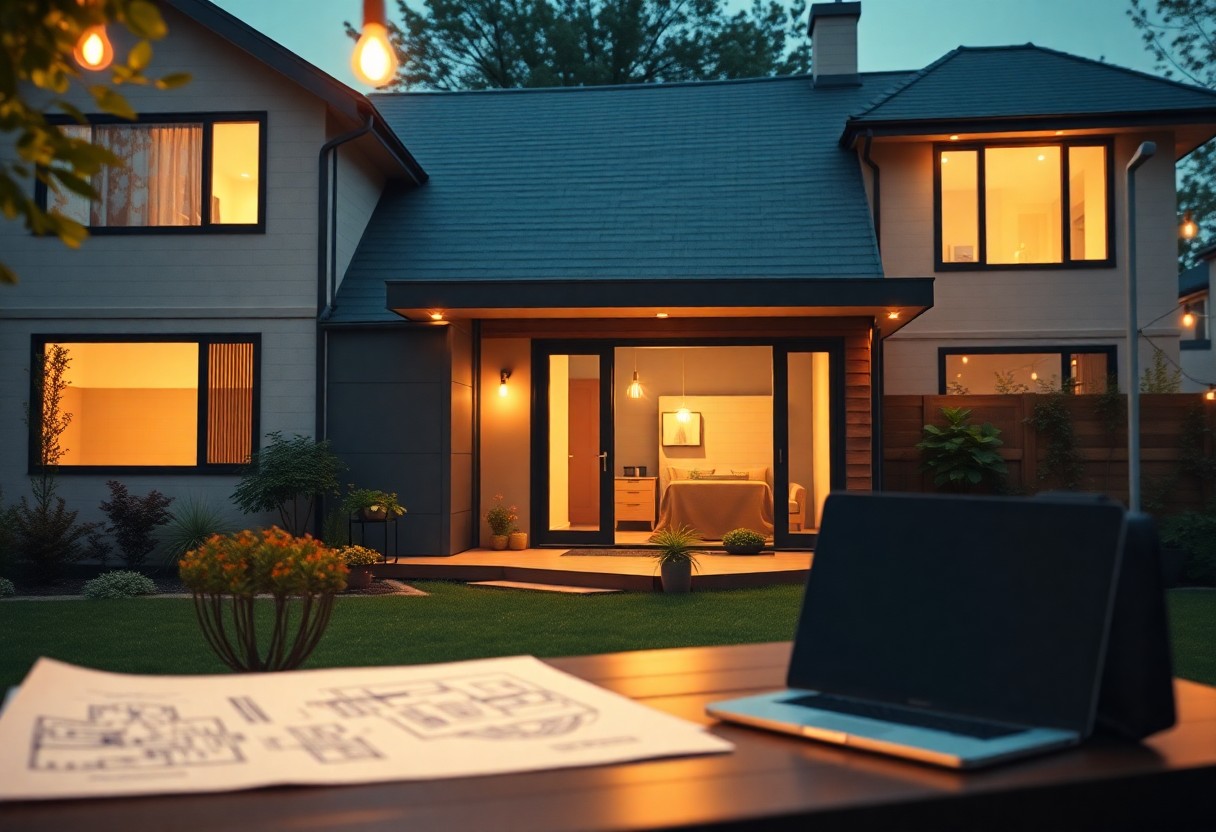
An Accessory Dwelling Unit (ADU) is a self-contained living space — complete with its own kitchen, bathroom, and sleeping area — located on the same parcel as a single-family or multi-family home. ADUs are sometimes called granny flats, in-law suites, backyard cottages, or secondary units. Specifically, they serve three major purposes: providing housing for family members, generating rental income, and increasing overall property value.
However, building an ADU is not as simple as adding a room. Because an ADU must meet residential building codes, zoning setback requirements, utility connection rules, and energy efficiency standards, professional architectural design is almost always required. Furthermore, a well-designed ADU maximizes livable square footage on a constrained site — something that takes real expertise to achieve. As a result, understanding what you will pay an architect is a foundational step in any ADU project.
Types of ADUs and How They Affect Architect Fees
The type of ADU you build directly influences design complexity and, therefore, the architect cost to design an ADU. Below is a summary of the most common types:
| ADU Type | Description | Typical Design Complexity |
|---|---|---|
| Detached ADU | Freestanding structure on the property | Medium–High |
| Attached ADU | Addition connected to the main home | Medium |
| Garage Conversion ADU | Existing garage converted to living space | Low–Medium |
| Basement ADU | Living space carved from existing basement | Medium |
| Junior ADU (JADU) | Up to 500 sq ft within the primary home’s footprint | Low |
- Detached ADUs typically carry the highest architect fees because they require full foundation-to-roof design from scratch.
- Garage conversions are often the most affordable to design because the structural shell already exists.
- Basement ADUs can involve complex egress and waterproofing considerations that add design hours.
- JADUs are the simplest and least costly to design, though they have strict square footage limits.
ADU architect cost: Detailed price ranges
Architect fees for ADU design vary significantly by project type, size, and location. However, the following ranges reflect real-world pricing patterns across California and comparable high-cost markets. Understanding these numbers gives you a realistic baseline for your own project budget. See our ADU cost breakdown for detailed prebuilding insights.
Flat Fee Ranges by ADU Type
| ADU Type | Typical Architect Fee (Flat) | % of Construction Cost |
|---|---|---|
| Junior ADU / JADU | $3,000 – $8,000 | 5%–8% |
| Garage Conversion | $5,000 – $12,000 | 6%–10% |
| Attached ADU | $8,000 – $18,000 | 8%–12% |
| Detached ADU (Standard) | $10,000 – $25,000 | 8%–15% |
| Detached ADU (Custom / Complex) | $18,000 – $40,000+ | 10%–15%+ |
💡 Example: A 600 sq ft detached ADU with a construction cost of $180,000 would generate architect fees of approximately $14,400–$27,000 at the 8%–15% range. However, many ADU-specialist firms offer flat-fee packages that come in below the percentage-based figure for standard builds.
Hourly Rates for ADU Architects
Some architects bill hourly rather than charging a flat fee or a percentage. In California, ADU architect hourly rates typically range from $100 to $250 per hour, depending on the firm’s size and the architect’s seniority. In contrast, general residential architects in lower-cost markets may charge $75–$150 per hour. Hourly billing can be cost-effective for smaller projects or when you only need specific services — for example, a permit drawing review or a zoning consultation.
However, be cautious with open-ended hourly arrangements. Without a clearly defined scope of work, costs can escalate quickly if the project encounters design revisions, city plan check corrections, or coordination challenges with engineers. Therefore, always request a detailed estimate of anticipated hours before agreeing to an hourly billing structure.
What Does an ADU Architect Actually Do for That Fee?
Many homeowners question whether the architect cost to design an ADU is truly justified. In reality, an experienced ADU architect delivers a comprehensive set of services that extend far beyond producing drawings. Understanding exactly what is included helps you evaluate competing proposals with precision; read our ADU complete guide for broader context on ADU types and processes.
Phase 1: Feasibility and Site Analysis
Before any design work begins, the architect evaluates your property’s development potential. Specifically, this includes:
- Zoning analysis — confirming ADU is permitted and identifying setback, height, and lot coverage limits
- Utility assessment — reviewing sewer, water, and electrical capacity for an additional unit
- Site measurement — documenting existing structures, trees, and topography that affect design
- AB 68 / SB 9 compliance review (California) — confirming applicable state ADU law exemptions and streamlined approval pathways
Phase 2: Schematic Design and Design Development
During this phase, the architect translates your goals into actual floor plans and elevations. Furthermore, they optimize the layout for natural light, ventilation, privacy from neighbors, and efficient use of square footage. Design development refines the schematic into a complete set of drawings that defines materials, finishes, and structural systems.
Phase 3: Construction Documents and Permit Drawings
This is the most labor-intensive phase. Construction documents — also called permit drawings or working drawings — are the complete technical package submitted to the city building department for plan check review. A thorough permit drawing set includes:
- Site plan showing property lines, existing structures, and proposed ADU location
- Floor plans with dimensions, room labels, and door/window schedules
- Elevations showing all four exterior faces of the building
- Sections and details showing wall assemblies, roof construction, and waterproofing
- Title 24 energy compliance documentation (required in California)
- Coordination with structural engineer drawings (engineer’s fee is typically separate)
Phase 4: Permit Support and Construction Administration
After submission, the city often issues a plan check correction list (commonly called “red lines”). Consequently, the architect responds to these corrections and resubmits until the permit is approved. Some architects also offer construction administration — attending site visits, answering contractor questions, and reviewing shop drawings — though this service is sometimes priced separately or offered as an add-on.
Key Factors That Drive the Architect Cost to Design an ADU Higher
Not every ADU design costs the same. Several specific variables consistently push architect fees toward the higher end of the range. Knowing these factors in advance helps you anticipate cost and — in some cases — make design decisions that reduce fees without sacrificing quality.
1. Project Size and Square Footage
Larger ADUs require more drawings, more engineering coordination, and more time. A 1,200 sq ft two-bedroom detached ADU will naturally cost more to design than a 400 sq ft studio garage conversion. In California, most municipalities cap detached ADUs at 1,200 sq ft, so size rarely becomes extreme — but even within that range, the difference in architect fees between a 400 sq ft and 1,200 sq ft unit can be $5,000–$10,000. Learn more about 2-story ADU design.
2. Custom vs. Pre-Designed Plans
Fully custom designs are the most expensive. However, some municipalities — particularly in California — now offer pre-approved ADU plan libraries. Using a pre-approved plan can dramatically reduce design fees to as low as $2,000–$5,000, since the permit drawings have already been approved by the city. The trade-off is limited flexibility in layout and appearance.
Similarly, some ADU design-build firms offer semi-custom plans — standardized designs that can be modified for your specific lot. These typically cost $4,000–$10,000 in design fees and represent a strong middle-ground option. For a deeper walkthrough, see our Attached ADU Designs: Smart Plans, Costs, Permits.
3. Site Complexity
Difficult sites cost more to design. For example, a steeply sloped lot requires more complex foundation design and may need a geotechnical (soils) report. Similarly, a lot with mature trees protected by ordinance, easements, or irregular boundaries requires extra survey work and creative design problem-solving — all of which add hours to the architect’s scope.
4. Local Jurisdiction and Permit Process
Some cities have streamlined ADU permitting processes with over-the-counter approvals for standard designs. Others require extensive plan check reviews, discretionary hearings, or neighborhood notification processes that add months to the timeline — and add hours to the architect’s billing. As a result, architect fees in cities with complex permitting environments (such as certain LA neighborhoods or hillside zones) can run 20%–30% higher than in jurisdictions with simplified processes.
5. Architect’s Experience Level and Firm Type
An ADU specialist with a streamlined workflow and deep knowledge of local codes will often complete permit drawings faster — and sometimes at lower total cost — than a generalist architect who needs more time to research local requirements. Furthermore, large full-service architectural firms typically charge more than boutique ADU-focused studios or design-build companies that have developed efficient, repeatable processes for ADU work specifically.
Additional Design-Related Costs Beyond Architect Fees
The architect cost to design an ADU is only one piece of the full pre-construction budget. In addition to architectural fees, most ADU projects require several other professional services and municipal fees. Failing to budget for these can create significant surprises once the project is underway.
Structural Engineering
A licensed structural engineer is required for virtually every new detached ADU and most attached ADUs. The structural engineer calculates foundation sizing, beam spans, and lateral force resistance (earthquake and wind loads). In California, structural engineering fees typically range from $1,500 to $5,000 for a standard ADU, depending on complexity.
Title 24 Energy Compliance Report
California’s Title 24 energy code requires a compliance report demonstrating that the ADU meets state energy efficiency standards. This report is produced by a certified energy consultant and typically costs $500 to $1,500. Some architects include this in their fee; others treat it as a reimbursable expense — so confirm which applies in your contract.
Topographic Survey
If your lot lacks a recent survey, the city may require one before accepting your permit application. A topographic survey — which maps existing conditions including elevations, trees, and structures — costs approximately $1,500 to $4,000 depending on lot size and complexity.
Soil / Geotechnical Report
On sloped or unstable sites, the city’s building department may require a geotechnical report (soils report) before issuing a permit. These reports typically cost $2,500 to $6,000 and can add several weeks to the pre-construction timeline.
Building Permit Fees
Permit fees vary widely by jurisdiction and are typically calculated based on the ADU’s valuation or square footage. In California, permit fees commonly range from $3,000 to $15,000 for an ADU. However, California law (AB 2221) limits excessive impact fees for ADUs under 750 sq ft, which has reduced permit costs in many jurisdictions.
Summary of Pre-Construction Soft Costs
| Cost Item | Typical Range | Always Required? |
|---|---|---|
| Architect fees | $5,000 – $30,000+ | Yes |
| Structural engineering | $1,500 – $5,000 | Usually yes |
| Title 24 energy report | $500 – $1,500 | Yes (California) |
| Topographic survey | $1,500 – $4,000 | Situational |
| Geotechnical report | $2,500 – $6,000 | Situational |
| Building permit fees | $3,000 – $15,000 | Yes |
Architect vs. Designer vs. Design-Build: Which Is Right for Your ADU?
When budgeting for the architect cost to design an ADU, it helps to understand that not all design professionals carry the same credentials — or the same price tag. Choosing the right type of design professional can significantly affect both your costs and your project outcomes.
Licensed Architect (AIA)
A licensed architect holds a state-issued license, has completed an accredited degree program, and passed the Architect Registration Examination. Architects carry professional liability insurance (errors and omissions insurance), which protects you if a design error causes construction problems or code violations. For complex, custom, or high-value ADUs, a licensed architect is usually the best choice.
Building Designer or Draftsperson
In many states, including California, a licensed architect is not legally required to produce permit drawings for residential projects under a certain size. A qualified building designer or draftsperson can prepare ADU permit drawings at a lower cost — typically $2,500 to $8,000. However, they may not carry professional liability insurance and may have less expertise navigating complex zoning issues or design challenges.
ADU Design-Build Company
An ADU design-build firm handles both design and construction under one contract. Design fees are typically bundled with the overall construction contract or offered at a reduced rate to secure the build contract. For many homeowners, this is the most cost-efficient and least stressful path. Specifically, design-build companies that specialize exclusively in ADUs have refined processes that minimize design time and permitting delays — reducing both fees and timeline risk.
At The ADU Pro, we offer an integrated design-build process that keeps architecture, engineering coordination, and permitting under one roof — so there are no gaps in communication and no surprise fees. Learn about our custom ADU design services and bundled options.
How to Evaluate and Compare ADU Architect Proposals
Receiving a proposal from an architect can feel overwhelming, especially if you have no prior experience with construction projects. Consequently, many homeowners make decisions based purely on price — and end up with incomplete drawings, permit rejections, or a design that doesn’t maximize their property. For help aligning proposals to your financial plan see our ADU budget guide. The following steps help you evaluate proposals properly.
Step 1: Confirm What Is Included in the Scope
Ask each architect specifically which deliverables are included in their quoted fee. A complete ADU permit drawing set should include at minimum:
- Site plan and topographic information
- Floor plans with dimensions and notes
- All four exterior elevations
- Building sections and wall details
- Title 24 energy compliance documentation
- Structural drawings (or structural engineering coordination)
- Plan check correction response (at least one round)
Step 2: Ask About ADU-Specific Experience
Not all architects have experience with ADUs specifically. In particular, ask how many ADUs they have designed in your city or county, what their typical plan check approval rate is, and whether they have existing relationships with local plan checkers. An architect who is unfamiliar with local ADU ordinances will take longer — and cost more — than one who has already navigated the same permitting environment dozens of times. Learn about our custom ADU design services and permit-ready approach.
Step 3: Review Their Portfolio
Ask to see photographs and floor plans of completed ADUs. Look for projects that are similar in size and type to yours. Additionally, ask whether you can speak with past clients to understand how the architect managed timelines, communicated during the project, and handled unexpected challenges.
Step 4: Understand the Contract Terms
Before signing, clarify the following contract terms in writing:
- Payment schedule — is it milestone-based or due upfront?
- Revision policy — how many design revisions are included at no charge?
- Plan check corrections — how many rounds are covered by the flat fee?
- Reimbursable expenses — are travel, printing, and filing fees billed separately?
- Termination clause — what happens and what do you own if you part ways mid-project?
How to Reduce the Architect Cost to Design an ADU Without Cutting Corners
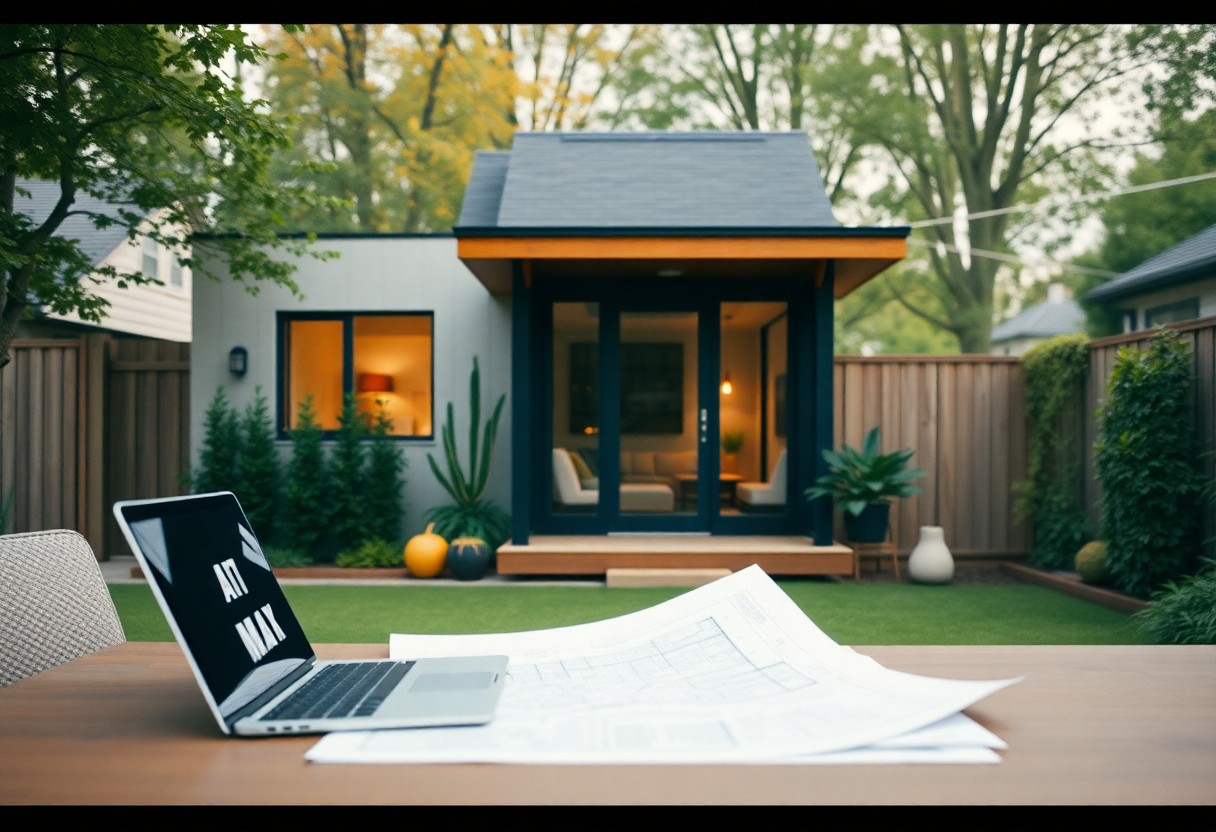
There are several legitimate strategies that can meaningfully reduce your architect cost to design an ADU while still achieving a high-quality, fully permitted result. Consequently, these approaches are worth exploring before you commit to any design contract.
Use Pre-Approved ADU Plans Where Available
Several California cities — including Los Angeles, San Jose, and Sacramento — maintain libraries of pre-approved ADU plans that any homeowner can use. Because these plans have already passed plan check, permitting is dramatically faster and design fees are minimal. For affordable pathways and semi-custom options see affordable ADU options. The downside is that you are limited to available designs, which may not perfectly match your site or aesthetic preferences.
Choose a Simpler Design
Every custom feature — cantilevered overhangs, curved walls, rooftop decks, large glazed openings — adds design time and structural complexity. In contrast, a rectangular footprint with a simple gable roof is significantly faster to design, easier to permit, and less expensive to build. For most rental ADUs, a clean, efficient design outperforms a showy one in terms of return on investment.
Work with an ADU Specialist Firm
As noted above, firms that exclusively design ADUs have invested heavily in standardizing their process. As a result, they can produce permit-ready drawings in less time than a generalist architect who starts from scratch on each project. Lower time investment translates directly to lower fees.
Minimize Design Revisions
Design revisions are a major source of cost overruns in architecture contracts. Therefore, arrive at your first design meeting with a clear brief: number of bedrooms, preferred layout, must-have features, and budget ceiling. The more specific you are upfront, the fewer revision rounds the architect will need — and the lower your final bill.
Budgeting for Your ADU Project: A Step-by-Step Approach
Building a realistic ADU budget requires more than just adding up the architect’s quote. See our cost to build an ADU guide for construction-cost context. Below is a structured approach to assembling a complete pre-construction and construction budget so there are no surprises along the way.
- Define your ADU goals — rental income, family housing, or resale value — because your goal shapes the design and therefore the design budget.
- Research your local ADU ordinance to understand what size, height, and setback requirements apply to your specific lot. This information is publicly available from your city’s planning department and takes about 30 minutes to review.
- Get three design proposals — from an ADU specialist, a general architect, and a design-build firm — so you have a genuine price comparison across different service models.
- Build your soft costs budget first, using the ranges in the table above. Add architect fees + engineering + energy report + survey + permits to arrive at your total pre-construction cost.
- Research construction costs per square foot in your area. In Southern California as of 2025, new detached ADU construction typically runs $250–$400 per square foot for a turnkey build. For a deeper walkthrough, see our Affordable ADU Construction: Costs, Permits, and Savings.
- Add a 10%–15% contingency to your total project budget. Unexpected site conditions, design revisions, and material price changes are common — and a contingency fund ensures they don’t derail the project.
- Explore financing options including ADU-specific loan programs, cash-out refinancing, HELOCs, and California’s ADU Grant Program (where available). A financial advisor with experience in ADU projects can identify the most cost-effective path given your equity position and income.
Is Hiring an Architect for Your ADU Worth the Cost?
For many homeowners, the architect fee feels like a significant upfront expense. However, consider the following: a poorly designed ADU that fails plan check, has structural issues, or doesn’t comply with zoning can cost far more to correct than the architect’s original fee. For line-item soft-costs and allowances see our ADU cost breakdown. Furthermore, a well-designed ADU commands higher rental rates, reduces vacancy, and adds measurably more resale value to your property than a poorly executed one.
Specifically, research on ADU rental yields in Southern California consistently shows that professionally designed units — with optimized layouts, proper natural light, and high-quality finishes — rent for 10%–20% more per month than comparable units with poor design. Over a 10-year holding period, that additional rental income far exceeds the architect’s initial fee.
In addition, an experienced ADU architect adds value that is harder to quantify but equally real: fewer contractor change orders (because the drawings are complete and clear), faster permitting (because the architect knows what the plan checker wants to see), and greater peace of mind throughout a complex process.
Frequently Asked Questions About ADU Architect Costs
Q: What is the typical architect cost to design an ADU in California?
A: In California, architect fees for ADU design typically range from $5,000 to $30,000, depending on ADU type, size, and project complexity. Garage conversions and JADUs tend to fall at the lower end ($5,000–$10,000), while custom detached ADUs with complex sites can reach $25,000–$30,000 or more. Alternatively, pre-approved plan programs offered by some California cities can reduce design costs to $2,000–$5,000.
Q: Do I legally need a licensed architect to design an ADU?
A: In California and most other states, a licensed architect is not legally required for residential ADU projects below a certain size threshold. However, the permit drawings must be prepared by a person competent to do so — typically a licensed architect, civil or structural engineer, or qualified building designer. For complex projects, using a licensed architect is strongly advisable for liability protection and design quality.
Q: What factors influence the architect cost to design an ADU the most?
A: The five most influential factors are: (1) ADU type and size, (2) whether the design is fully custom or based on a pre-approved/semi-custom plan, (3) site complexity including slope and easements, (4) the permitting complexity of your local jurisdiction, and (5) the architect’s specialization and experience level with ADU projects specifically.
Q: Are structural engineering fees included in the architect’s quote?
A: Typically, no. Structural engineering is usually billed separately and adds $1,500–$5,000 to the pre-construction budget for a standard ADU. However, some ADU design-build firms bundle architectural and engineering fees into a single package price. Always ask whether engineering is included when comparing proposals — an apparent low architect fee may not include engineering coordination, which makes the comparison misleading.
Q: Can I save money by using online ADU design software instead of hiring an architect?
A: Online design tools and AI-based floor plan generators have improved significantly and can be useful for early-stage visualization. However, they cannot produce California-compliant permit drawing sets, perform energy compliance analysis, coordinate with structural engineers, or respond to plan check corrections. For simple projects in jurisdictions with pre-approved plan libraries, the pre-approved route is a legitimate low-cost alternative to a full custom design. For everything else, professional design services remain essential.
Q: How long does ADU architectural design and permitting typically take?
A: In California, the design phase for a standard ADU typically takes 4–8 weeks from kickoff to permit submittal. Permitting timelines vary widely: some jurisdictions offer over-the-counter approvals in 1–2 days for pre-approved plans, while complex jurisdictions can take 3–6 months for plan check. Total time from first design meeting to permit issuance commonly runs 3–7 months for a custom detached ADU. See regional pricing in ADU cost in Los Angeles.
Q: What should I look for when hiring an architect for an ADU project?
A: Prioritize architects or design firms with demonstrated ADU experience in your specific city or county. Ask for permit approval history, a portfolio of completed ADUs, and references from recent clients. Additionally, confirm they carry professional liability (errors and omissions) insurance, have a clear fee proposal in writing, and include plan check correction responses in their scope of work.
Get Started With Your ADU Design Today
Ready to move forward with your ADU project? Let The ADU Pro walk you through the design and build process from start to finish. Our team has completed ADU projects throughout Southern California and brings deep local permitting knowledge to every project we design.
Conclusion
Understanding the architect cost to design an ADU is the essential first step toward building a successful project. Fees vary from as little as ,000 for a simple JADU to ,000 or more for a fully custom detached ADU — and the right choice depends on your specific site, budget, and goals. Furthermore, architectural fees represent only one part of your total pre-construction soft costs. However, when you choose the right design professional, that investment pays back many times over through faster permitting, fewer construction problems, higher rental income, and increased property value. Use this guide to compare proposals with confidence, ask the right questions, and ultimately build an ADU that delivers lasting financial returns. Author: Daniel Messina, Licensed General Building Contractor. Last updated: 2026-06-11.