
Living space additions give Southern California homeowners one of the fastest, most reliable ways to gain more room, more rental income, and a higher resale price — all without buying a new house. Whether you are picturing a detached backyard cottage, a garage conversion, a second-story build-out, or an attached suite for aging parents, choosing the right type of living space additions starts with understanding exactly what each option involves, what it costs, and how California’s permitting rules apply. Consequently, this guide covers every major addition type in far more depth than a typical overview, including current pricing, realistic timelines, financing paths, and the regulatory details most homeowners only discover halfway through their project.
What Are Living Space Additions?
Living space additions are newly built, fully habitable areas added onto — or created within — an existing residential property. In California, the most popular form is the accessory dwelling unit (ADU) — a self-contained living unit with its own kitchen, bathroom, and sleeping area. However, the category also includes attached room additions, second-story expansions, sunrooms, bump-outs, and junior ADUs (JADUs) carved from existing interior space.
Specifically, these projects differ from cosmetic remodels because they create entirely new livable square footage rather than simply updating what already exists. As a result, they are subject to building permits, zoning review, and California’s evolving regulatory framework — a set of rules unique to habitable, code-compliant square footage. Understanding that distinction upfront saves homeowners significant time and money before a single shovel hits the ground.
Types of Living Space Additions in Southern California
Not every property suits the same type of addition. Therefore, understanding the available options helps you match the right solution to your lot, budget, and goals. For pre-built solutions, see prefab ADU options. Below are the most common types of living space additions in Southern California:
- Detached ADU: A fully separate structure in the backyard or side yard. Ideal for maximum privacy and rental income potential.
- Attached ADU: Connected to the main home but with a private entrance. Suitable for lots with limited open space.
- Garage Conversion: Transforms an existing attached or detached garage into a livable unit. Often the most cost-effective option.
- Junior ADU (JADU): Up to 500 square feet carved from within the existing home. Lower cost but requires owner occupancy in most cases.
- Above-Garage Addition: Adds a second story above an existing garage structure, maximizing vertical space.
For more inspiration on how to design functional and stylish units, explore ADU design ideas that maximize space and style — a helpful resource for homeowners in the planning phase. In particular, if you are working with a smaller lot, these guides go even deeper: the complete guide to maximizing space in a small ADU, a look at functional ADU designs that maximize value, and a rundown of the best ways to maximize space in an ADU.
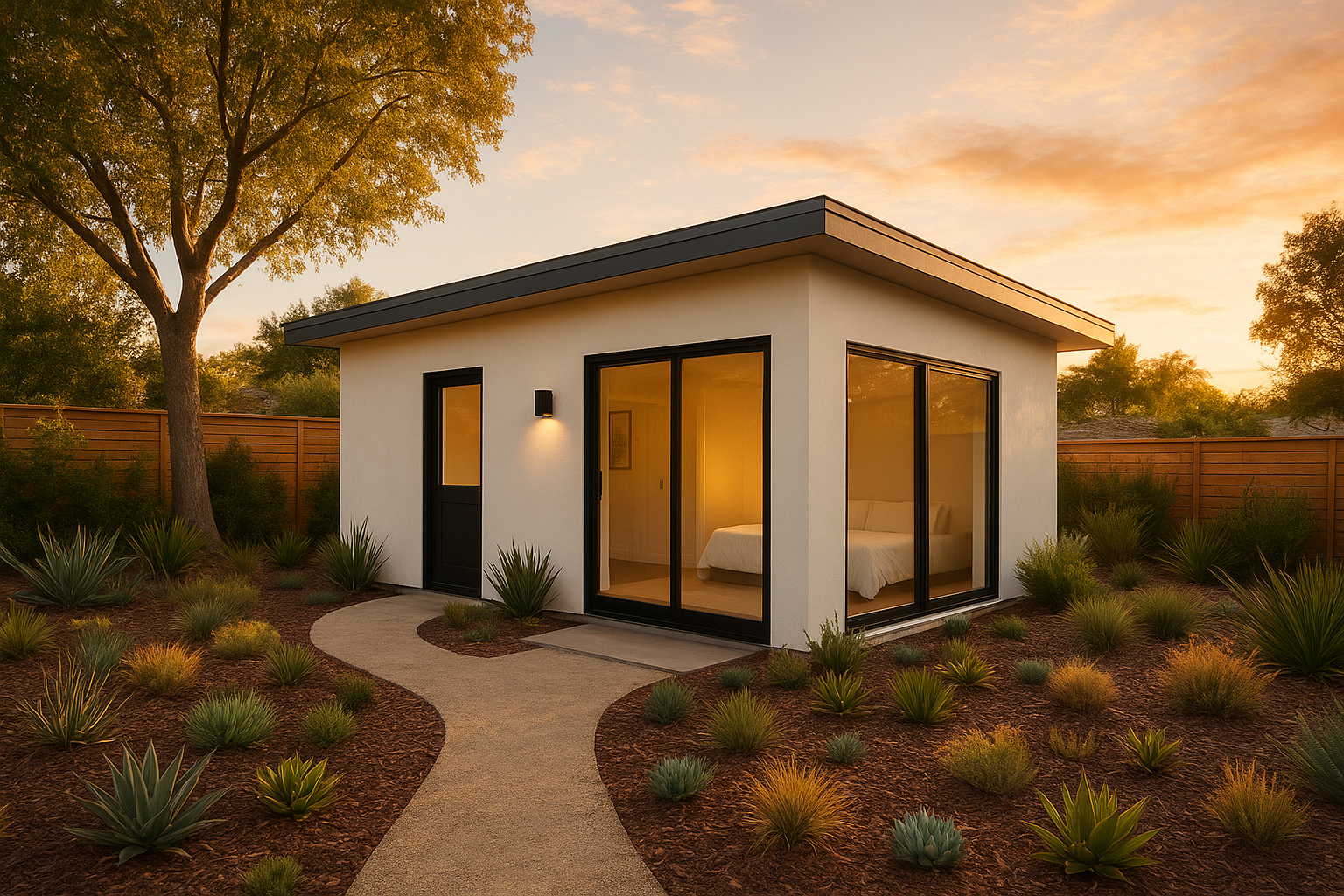
A well-designed detached living space addition can outdoor living ADU transform an underused backyard into a fully functional dwelling unit.
Home Addition Types Beyond the ADU: Second Stories, Bump-Outs, and Sunrooms
Not every home expansion needs to be a rentable unit. In fact, many homeowners simply want more room for their existing family — and several home addition types accomplish that without triggering California’s full ADU pathway. Here is how they compare:
- Second-Story Addition: Builds new square footage above the existing footprint. Best for narrow lots with little remaining yard space, though it requires structural reinforcement of the foundation below.
- Bump-Out Addition: Extends a single room outward by a few feet, typically without a new kitchen or bathroom. This keeps the project outside ADU rules and generally lowers cost significantly.
- Sunroom or Conservatory: Adds a glass-enclosed living area, often used as a den or dining space. Permit requirements vary depending on whether the room is heated and permanently attached.
- Basement or Attic Conversion: Converts existing unused volume into finished living space. Cost-effective, though it depends heavily on ceiling height, egress windows, and existing utility access.
- Mudroom or Utility Addition: A smaller, functional addition that expands storage and entry space rather than bedrooms — useful for larger families but limited in resale impact.
In contrast to an ADU, none of these traditional home addition types can be rented out as an independent dwelling. Above all, that difference matters most when deciding whether your goal is simply “more room” or genuine rental income.
Why These Home Expansion Projects Pay Off Financially
The demand for additional living space in Orange County, Los Angeles County, and Riverside County has surged in recent years. According to the California Department of Housing and Community Development, ADU permit applications statewide increased by more than 1,000% between 2016 and 2022 — a clear signal of how popular these projects have become.
Furthermore, research from the Urban Institute shows that ADUs can increase property values by 20% to 35% in high-demand markets. For homeowners in the greater Los Angeles area, that return is especially compelling given already high real estate prices.
In addition to financial gains, many families use these additions for multigenerational living — housing aging parents or adult children while maintaining separate, private spaces. That flexibility makes living space additions uniquely valuable in today’s housing market, and it is a benefit that bump-outs and sunrooms simply cannot match.
How to Plan Living Space Additions: A Step-by-Step Guide
Planning a successful addition requires careful preparation. Consequently, skipping steps often leads to budget overruns, permit delays, or compliance issues. For a full checklist, see the Complete ADU guide. Follow this process for the smoothest possible experience:
- Assess Your Property and Goals: Evaluate your lot size, zoning classification, and personal objectives — whether that’s rental income, multigenerational housing, or increased resale value; see our residential ADU solutions for design options by lot type.
- Choose Your Addition Type: Select the addition type that best fits your budget and lot constraints. A garage conversion, for example, typically costs far less than a new detached structure.
- Hire a Licensed ADU Contractor and Designer: Engage professionals experienced in California’s ADU regulations to develop compliant construction drawings. This step directly affects how quickly your permits are approved.
- Submit Plans and Obtain Permits: File your drawings with the local building and planning departments. Respond promptly to correction notices to avoid unnecessary delays. For guidance on permitting best practices, see streamline permit approval.
- Begin Construction and Pass Inspections: Construction proceeds in phases, each requiring scheduled inspections — foundation, framing, electrical, plumbing, and final occupancy sign-off.
Understanding California’s Rules for Living Space Additions
California has enacted some of the most homeowner-friendly ADU laws in the nation. Since 2020, state legislation has significantly reduced barriers, including eliminating most owner-occupancy requirements, capping impact fees for smaller units, and mandating faster ADU permits process review timelines. In addition, ADUs up to 800 square feet are exempt from many local floor-area-ratio calculations, and most cities cannot require additional parking for units within a half-mile of public transit.
However, local jurisdictions retain some authority over design standards, setbacks, and height limits. In particular, most California cities require a minimum 4-foot rear and side setback for detached ADUs, while height caps typically range from 16 to 25 feet depending on lot size and proximity to the main residence. Always verify local rules with your city or county planning department before finalizing designs.
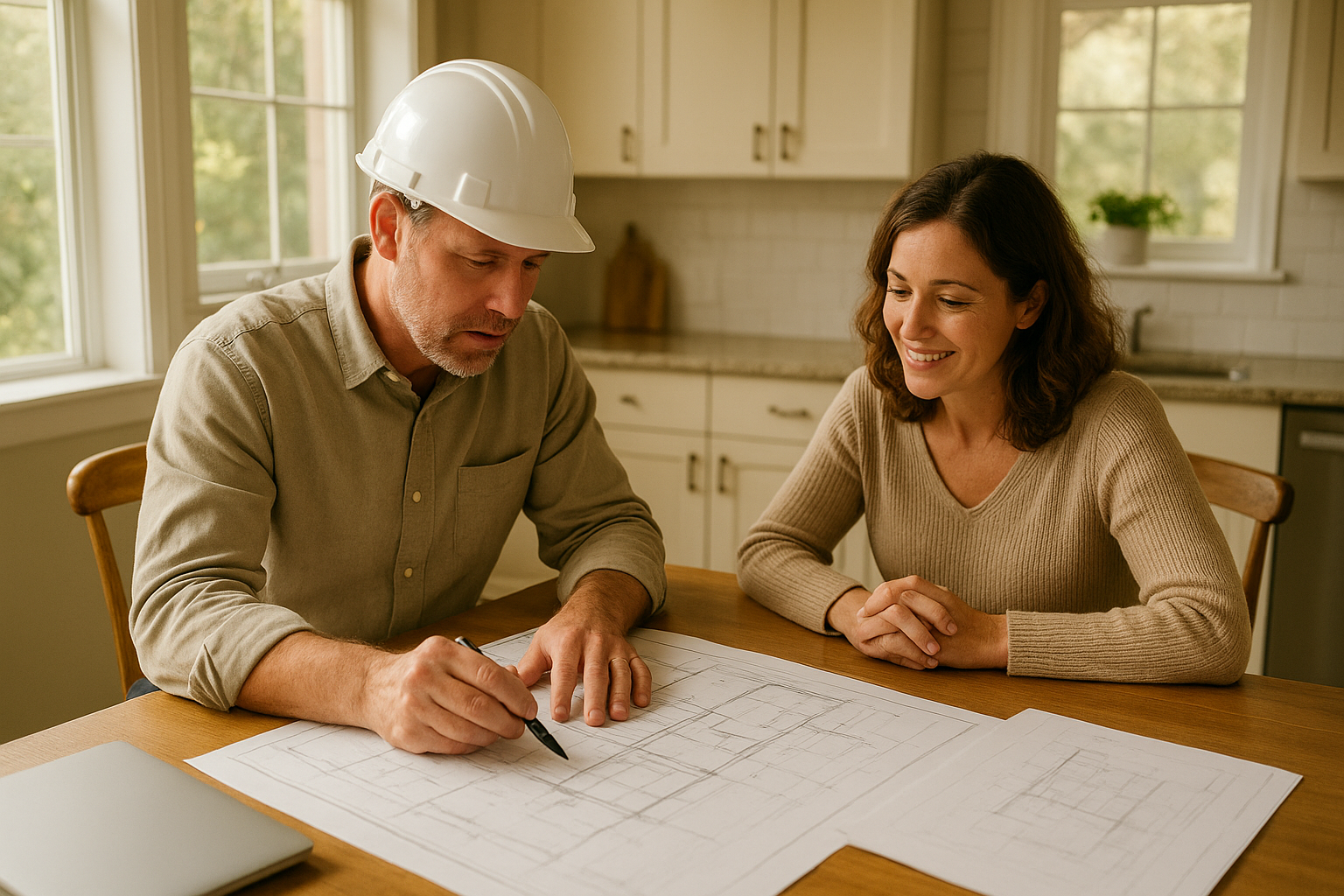
Working with an experienced contractor ensures your living space addition meets all local building codes and stays on schedule.
Costs and Timelines for Every Type of Residential Space Expansion
Budgeting accurately is critical for any home expansion project. Specifically, costs vary enormously depending on which addition type you choose:
- Garage conversion: $80,000–$150,000, typically completed in 3 to 5 months from permit approval.
- Detached ADU: $150,000–$350,000+, typically completed in 6 to 12 months.
- Junior ADU (JADU): $40,000–$90,000, since most interior structure and utilities already exist.
- Second-story addition: $150,000–$300,000+, plus 8 to 14 months due to structural reinforcement work.
- Bump-out or sunroom addition: $20,000–$60,000, usually completed in 6 to 10 weeks since no new kitchen or bathroom is involved.
Permitting itself can add 4 to 16 weeks on top of these estimates, depending on the jurisdiction and plan complexity. Therefore, it pays to build extra time into your schedule regardless of which addition type you select.
Financing Your Living Space Addition
Financing options have expanded considerably in recent years. Many homeowners fund their projects through home equity lines of credit (HELOCs), cash-out refinancing, personal construction loans, or California’s ADU-specific financing programs. According to the Consumer Financial Protection Bureau, homeowners should compare fixed-rate versus variable-rate options carefully before committing, since a multi-month construction timeline can be affected by rate changes. Discussing financing early in the process helps prevent mid-project delays.
Regional Spotlight: Addition Projects Across Southern California
Each Southern California county has its own character and zoning nuances. For instance, homeowners in coastal communities like San Clemente benefit from specific design approaches that complement local aesthetics — explore ADU design options in San Clemente for region-specific guidance.
Similarly, the Pasadena area has a rich architectural heritage that influences ADU design standards. Homeowners there should review ADU design considerations in Pasadena before finalizing plans. Understanding local context helps ensure your addition complements the existing neighborhood character.
At theadupro.com, the team serves homeowners across Orange County, Los Angeles County, and Riverside County — handling everything from initial design through final inspection. Their deep familiarity with local regulations in each jurisdiction is a key advantage for homeowners navigating the permitting process.
Common Mistakes to Avoid When Adding Living Space
Even well-intentioned projects can go sideways. Therefore, awareness of common pitfalls is essential before breaking ground. The most frequent mistakes include:
- Underestimating total costs: Always build a 15% to 20% contingency buffer into your budget for unexpected site conditions or material price changes.
- Skipping professional design: Poorly drawn plans lead to permit rejections and costly revisions. Professional architectural drawings pay for themselves in time saved.
- Ignoring zoning rules: Assuming your property qualifies without verifying setbacks, height limits, and utility capacity can derail a project entirely.
- Choosing the wrong contractor: A contractor without ADU experience may not understand California’s specific requirements, leading to compliance failures and inspection failures.
For broader context on how space planning affects addition quality, the space planning resources on this site offer practical guidance for homeowners at every stage of the process.
Living Space Additions vs. Traditional Home Additions: Which Wins?
If your goal is purely more square footage for your own family, a bump-out, sunroom, or basement conversion may be the simplest and cheapest route. In contrast, if you want rental income, a separate space for extended family, or maximum long-term property value, a true ADU-based living space addition wins on almost every measure. For a detailed side-by-side breakdown of costs, financing, and resale impact, see this comparison of ADU vs. home addition investment value, which walks through real numbers for both approaches.
Frequently Asked Questions About Living Space Additions
What are living space additions?
Living space additions are new habitable areas added to an existing property, such as detached ADUs, garage conversions, attached room additions, second-story builds, or junior ADUs. They expand a home’s usable square footage and can serve as rental units, guest quarters, or multigenerational housing.
How much do living space additions cost in Southern California?
Costs vary widely depending on type and size. Garage conversions typically range from $80,000 to $150,000, while detached ADUs can cost $150,000 to $350,000 or more. Lower-cost options like bump-outs and sunrooms can run $20,000 to $60,000. Factors include materials, labor, permits, and site conditions.
Do I need a permit for a living space addition in California?
Yes, virtually all living space additions require permits in California. Your local building department reviews plans for zoning compliance, structural safety, and energy efficiency. An experienced ADU contractor streamlines this process significantly.
How long does it take to complete an ADU addition?
Garage conversions may take 3 to 5 months from permit approval. New detached ADUs typically take 6 to 12 months. Permitting alone can add several weeks to months depending on the municipality.
Can a living space addition increase my home’s value?
Yes. ADUs and other living space additions can increase property value by 20% to 35% in high-demand markets like Southern California. They also generate rental income, further improving return on investment.
What is the difference between an ADU and a home addition?
An ADU is a self-contained dwelling unit with its own kitchen, bathroom, and living area. A traditional home addition expands the primary residence without creating a separate unit. ADUs offer greater income potential but involve different permitting requirements.
What types of living space additions are available?
Common types include detached ADUs, attached ADUs, garage conversions, junior ADUs (JADUs), above-garage additions, second-story additions, bump-outs, and sunrooms. Each suits different lot sizes, budgets, and intended uses.
Are there setback requirements for ADU additions in California?
Yes. California state law requires a minimum 4-foot rear and side setback for most ADUs. However, local jurisdictions may have additional requirements, so always verify with your city or county planning department before starting.
Can I rent out my living space addition?
Yes. ADUs can be rented as long-term rentals. California law prohibits owner-occupancy requirements for ADU rentals in most cases, making them an excellent income-generating investment for homeowners.
What is a junior ADU (JADU)?
A junior ADU is a small dwelling unit of up to 500 square feet created within the walls of an existing home, often from a bedroom or garage. JADUs require an owner-occupancy commitment and must include an efficiency kitchen.
How do I choose the right contractor for a living space addition?
Look for a licensed contractor with specific ADU experience in your county, strong references, and transparent pricing. A contractor familiar with California’s ADU regulations will navigate permits faster and avoid costly mistakes.
What are the most common mistakes in ADU projects?
Common mistakes include underestimating costs, skipping professional design, ignoring local zoning rules, and choosing contractors without ADU experience. These errors cause project delays, budget overruns, and compliance issues.
What’s the difference between a bump-out addition and a full ADU?
A bump-out addition extends an existing room by a few feet and typically does not include a kitchen or bathroom, so it stays outside ADU rules. A full ADU, by contrast, is a self-contained unit with its own kitchen and bathroom, which triggers California’s ADU permitting pathway and allows it to be rented as a separate home.
Do sunrooms and patio covers need permits in California?
Yes. Most sunrooms, patio covers, and conservatories still require a building permit in California, even though they are not classified as ADUs. Permit requirements depend on whether the structure is heated, attached to the home, and adds square footage — always confirm with your local building department before starting work.
Can I add a second story without going through the full ADU process?
In many cases, yes. A second-story addition that expands the primary home, rather than creating a separate unit, follows the standard home addition permitting process instead of California’s ADU-specific pathway. However, if the new floor includes a separate entrance, kitchen, and bathroom, it may be classified as an attached ADU instead.
How much more does a detached ADU cost compared to a bump-out or sunroom addition?
Detached ADUs generally cost $150,000 to $350,000 or more because they include full kitchens, bathrooms, and separate utility connections. Bump-out and sunroom additions typically cost $20,000 to $60,000 since they add square footage without new plumbing or a full foundation, making them a lower-cost option for homeowners who don’t need rentable space.
Conclusion: Making the Most of Your Property with Living Space Additions
Living space additions represent one of the smartest investments a Southern California homeowner can make in today’s real estate environment. Whether you’re building a detached ADU for rental income, converting a garage for a family member, adding a second story, or choosing a simpler bump-out for extra room, the financial and lifestyle benefits are substantial. Furthermore, California’s regulatory environment has never been more favorable for these projects. By working with an experienced, licensed contractor who understands local codes — and by planning carefully from day one — you can transform your property’s potential into a lasting, tangible asset. To explore your options and get expert guidance, visit theadupro.com and take the first step toward your ideal addition today.