A granny pod is a small, self-contained backyard structure built to house an aging parent or family member close to home while still preserving everyone’s privacy. As home prices climb across Orange County, Los Angeles County, and Riverside County, more families are turning to this compact housing solution instead of assisted living. In this guide, you’ll learn exactly what a granny pod is, how it compares to assisted living on cost, what California law requires, and how to plan a project from the first sketch to final inspection.
Quick answer: A granny pod is a detached backyard structure, usually 300 to 800 square feet, offering a private bedroom, bathroom, and small kitchen for an elderly family member. In Southern California, most accessory dwelling units (ADUs) qualify as ADUs — a state-recognized housing category — and are permitted through the same streamlined process used for other ADUs.
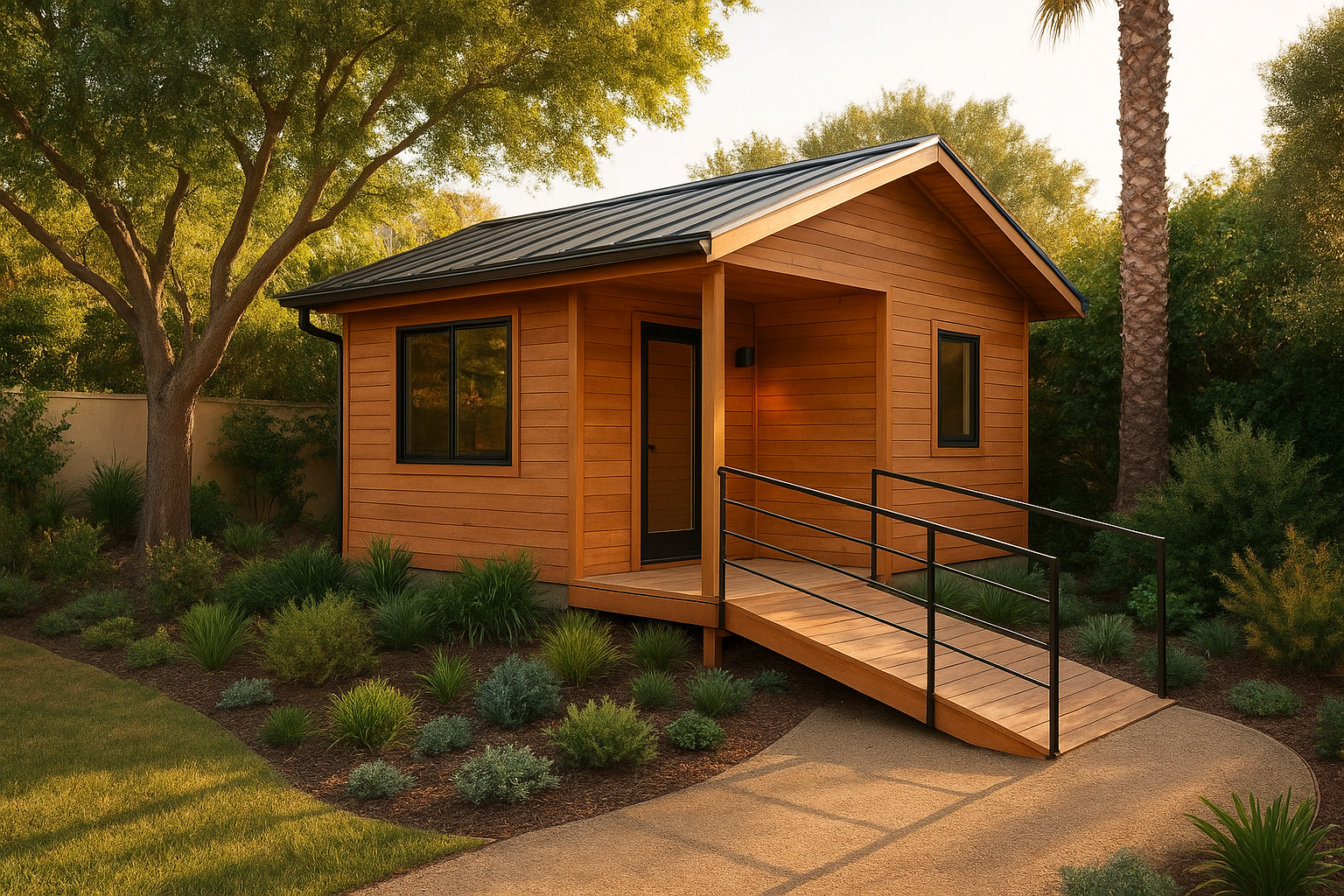
A well-designed granny pod combines privacy with easy access for aging family members.
What Is a Granny Pod?
A granny pod, as this Granny Pod Guide explains, is a compact, freestanding dwelling built on the same lot as a primary residence, designed primarily for elderly family members who need proximity to caregivers. Unlike a full-size guest house, a granny pod is usually outfitted with accessibility features such as wider doorways, grab bars, and step-free entries. Because it functions as an independent living space with its own kitchen and bathroom, California classifies most granny pods as ADU types, meaning they follow the same permitting rules as other ADUs.
In addition, granny pods are increasingly built with senior-friendly technology, a point many competing guides mention only in passing. As you’ll see below, understanding these features matters just as much as understanding cost and zoning.
The Origin of the Granny Pod: From MedCottage to Modern ADU
The term “granny pod” grew popular alongside modular housing companies that market prefabricated, medically equipped cottages — sometimes branded as “MedCottage” units. These early designs emphasized health monitoring sensors, emergency call buttons, and telehealth video connections built directly into the walls. However, homeowners today are not limited to a single prefab brand. Many Southern California families instead work with a licensed contractor to design a custom unit that matches the style of the main house and fits the specific caregiving needs of their household, rather than paying a premium for a trademarked medical cottage.
Granny Pod vs. Traditional ADU: What’s the Difference?
Every granny pod is technically an ADU, but not every ADU is a granny pod. A traditional accessory dwelling unit — sometimes called a backyard cottage or granny flat — can serve many purposes, including a rental unit, home office, or space for an adult child. A granny pod, on the other hand, is specifically designed around caregiving and aging-in-place needs.
For example, a standard ADU might include stairs, a full second floor, or a detached garage layout. A granny pod typically skips these features in favor of single-level living, emergency call systems, and close proximity to the main home. As a result, the design priorities differ even though the underlying permitting process is often identical. If you’re comparing broader options, our full guide to granny apartments in Southern California covers layouts beyond the caregiving-focused pod.
Junior ADUs and Attached Options
Some families prefer a junior accessory dwelling unit (JADU), which is built within the existing footprint of the home rather than as a separate structure. This can be a lower-cost alternative to a detached granny pod, particularly when a garage conversion is already feasible on the property. Because a JADU shares at least one wall with the main house, plumbing and electrical hookups are often simpler and less expensive than a fully detached pod.
Granny Pod vs. Assisted Living: Which Costs Less?
This is where a granny pod often wins the argument outright. According to AARP’s cost-of-care research, assisted living facilities frequently charge $4,000 to $6,000 per month, per resident — a recurring expense that never builds equity. A granny pod, by contrast, is a one-time construction cost of roughly $120,000 to $250,000 in Southern California, and it adds permanent value to the property rather than disappearing into monthly rent.
Furthermore, a granny pod keeps family caregivers close at hand, which can reduce the need for paid staff altogether. Specifically, many families use a granny pod for a few years during active caregiving, then convert it into a rental unit once it’s no longer needed — something an assisted living facility payment can never do. In short, while assisted living offers built-in staffing and social programming, a granny pod offers long-term financial upside alongside daily proximity.
Health Monitoring and Smart Features in Modern Granny Pods
Modern granny pods can include the same kind of caregiving technology once associated with branded “medical cottage” products. Common upgrades include fall-detection sensors, video-enabled intercoms for telehealth visits, motion-activated lighting, and smart thermostats that alert caregivers to unusual temperature swings. Unlike a locked prefab package, however, a custom-built granny pod lets homeowners choose exactly which technologies are worth the added cost, rather than paying for a bundled system they may not fully use.
How Much Does a Granny Pod Cost in Southern California?
Cost is usually the first question homeowners ask. In Southern California, a granny pod typically ranges from $120,000 to $250,000, depending on size, finish level, and site conditions such as utility access and grading. According to research compiled by the California Department of Housing and Community Development, statewide ADU construction costs commonly fall between $100,000 and $300,000, which aligns closely with granny pod pricing in the region.
Several factors influence the final price. Foundation work, sewer and electrical hookups, and accessibility upgrades such as roll-in showers can each add tens of thousands of dollars. Similarly, sloped lots or limited utility access can drive costs higher than a flat, easily accessible backyard. Homeowners exploring financing often review options like an ADU loan program in Long Beach to help cover these upfront construction costs; for practical build and contractor solutions, review our residential ADU solutions guide.
Financing Your Granny Pod Project
Homeowners commonly finance a granny pod through home equity loans, cash-out refinances, dedicated construction loans, or state-backed ADU financing programs. Because a granny pod is a permanent, permitted structure, many lenders treat it similarly to other home improvement projects that add appraised value. As a result, comparing rates and terms with a lender familiar with ADU projects specifically — rather than a generic personal loan officer — usually produces better terms and fewer surprises during the draw schedule.
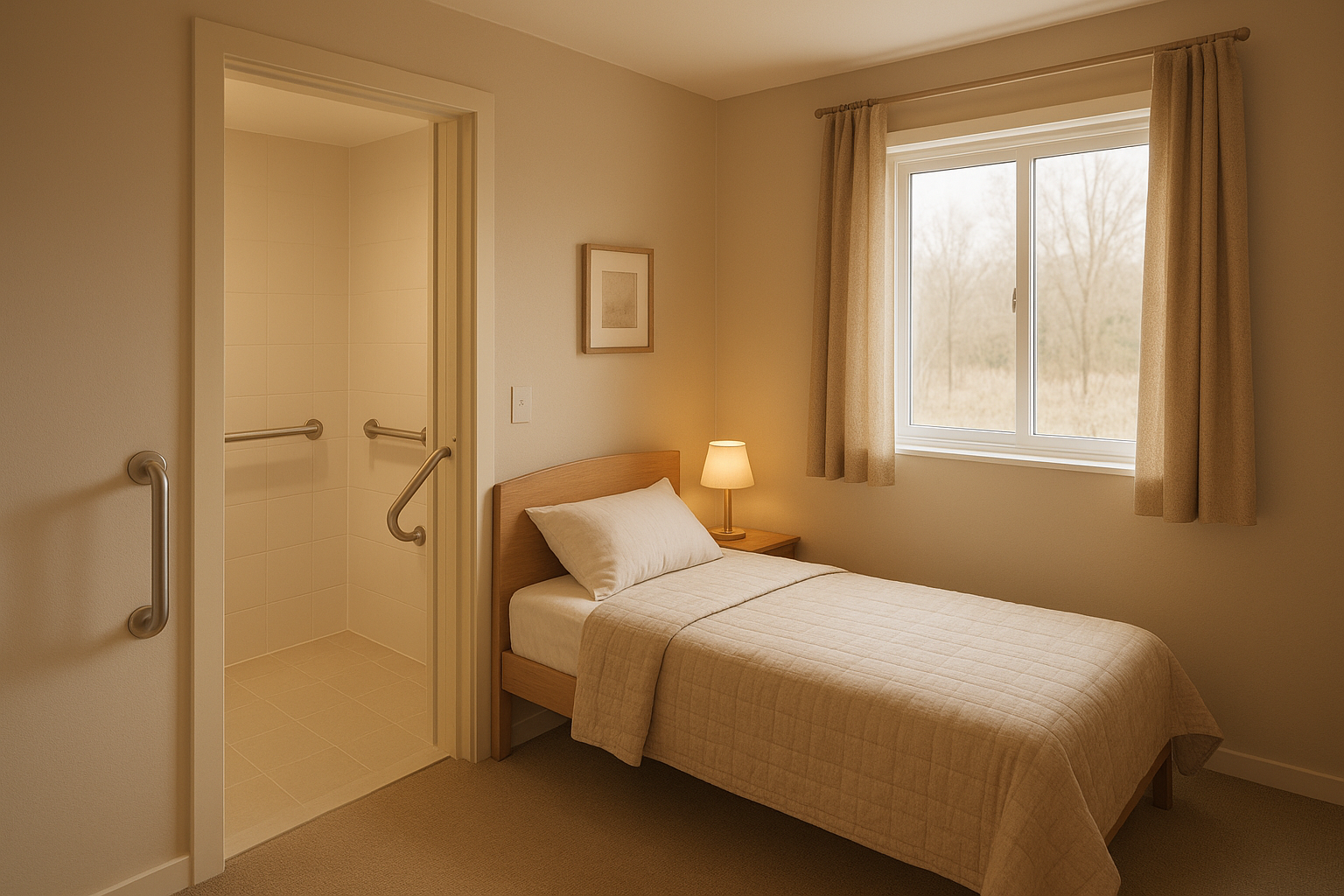
Accessible interior features are a defining characteristic of most granny pod designs.
California Granny Pod Rules and Permitting Requirements
Because a granny pod counts as an ADU under California law, it benefits from statewide regulations that limit how much cities can restrict these units. Specifically, state law generally prevents local jurisdictions from requiring excessive parking, oversized lot minimums, or lengthy discretionary review for qualifying ADUs. That said, each city still enforces its own setback, height, and design standards, so confirming local rules before finalizing a floor plan is essential.
Homeowners in cities such as Brea, Cypress, and Orange should confirm local requirements before finalizing plans. For instance, reviewing ADU plans for Brea or ADU plans for Cypress can clarify what design standards apply in those specific communities. Similarly, families near Orange may benefit from local ADU plans tailored to Orange before submitting for permits. For broader background on how secondary units are treated nationally, this general ADU background information is a useful reference point.
Setbacks, Utilities, and Inspections
In addition to zoning rules, granny pods must meet building code requirements for plumbing, electrical systems, and structural safety. Consequently, most projects require multiple inspections throughout construction, culminating in a final inspection before the unit can legally be occupied. Skipping any of these steps — even for a small, prefabricated pod — can create major problems if the property is ever sold or refinanced.
Steps to Building a Granny Pod
Although every project has unique details, the general process for adding a granny pod follows a predictable sequence. Below is the typical path homeowners in Southern California can expect.
- Assess your property. Have a qualified contractor evaluate your lot size, setbacks, utility access, and existing structures to determine where a granny pod can legally and practically be placed.
- Design the unit. Work with a designer or architect to create floor plans that meet your family’s caregiving needs while complying with local building and accessibility codes. See best ADU designs for family-focused layouts and accessibility ideas.
- Secure permits. Submit architectural drawings, site plans, and structural details to your local building department for plan check and approval before any construction begins. Learn how to start your ADU project and navigate permitting step by step.
- Complete construction. Coordinate foundation work, framing, plumbing, electrical, and finishing with licensed tradespeople while scheduling required inspections at each construction milestone.
- Pass final inspection. Schedule the final building inspection so the local jurisdiction can confirm the granny pod meets code before it is legally ready for occupancy.
Most granny pod projects take between four and nine months from permitting to completion. Timelines vary based on city review speed, design complexity, and site accessibility, so building in a buffer for inspection scheduling is wise.
Benefits of Adding a Granny Pod for Multigenerational Living
Beyond caregiving convenience, a granny pod offers several practical advantages. First, it allows aging parents to maintain independence while staying close enough for daily support. In addition, families often find that shared caregiving reduces the cost and stress associated with assisted living facilities discussed earlier in this guide.
Furthermore, a granny pod can increase overall property value. Once caregiving needs change, many homeowners convert the unit into a rental space, generating ongoing income. For a deeper look at long-term value and rental conversion options, see the ADU homes guide for Southern California.
Granny Pods and Aging in Place: What the Research Shows
According to the National Institute on Aging, most older adults strongly prefer to remain near family and familiar surroundings rather than relocate to institutional care. A granny pod directly supports this preference by combining proximity with privacy — something a shared bedroom in the main house or an assisted living facility cannot fully replicate. As a result, families increasingly view a granny pod not as a downgrade from assisted living, but as an upgrade in comfort, dignity, and cost control.
Choosing the Right Granny Pod Contractor in Southern California
Selecting an experienced contractor matters just as much as the design itself. A contractor familiar with local ADU ordinances can help avoid delays caused by incomplete applications or code misunderstandings. TheADUPro, a Southern California ADU construction and contracting firm, guides homeowners through design, permitting, and construction for granny pods, detached ADUs, garage conversions, and junior ADUs across Orange County, Los Angeles County, and Riverside County. Add an author byline and a clear “Last updated” date near the article title, plus a brief author bio with credentials, to strengthen E‑E‑A‑T.
Homeowners near Covina, for example, can review a dedicated ADU contractor resource for Covina to see how local projects are typically handled from start to finish. Families in the Inland Empire may also find it useful to compare an ADU contractor serving Temecula or an ADU contractor serving Perris before requesting quotes. For a broader overview of services, visiting theadupro.com provides additional detail on the full ADU development process.
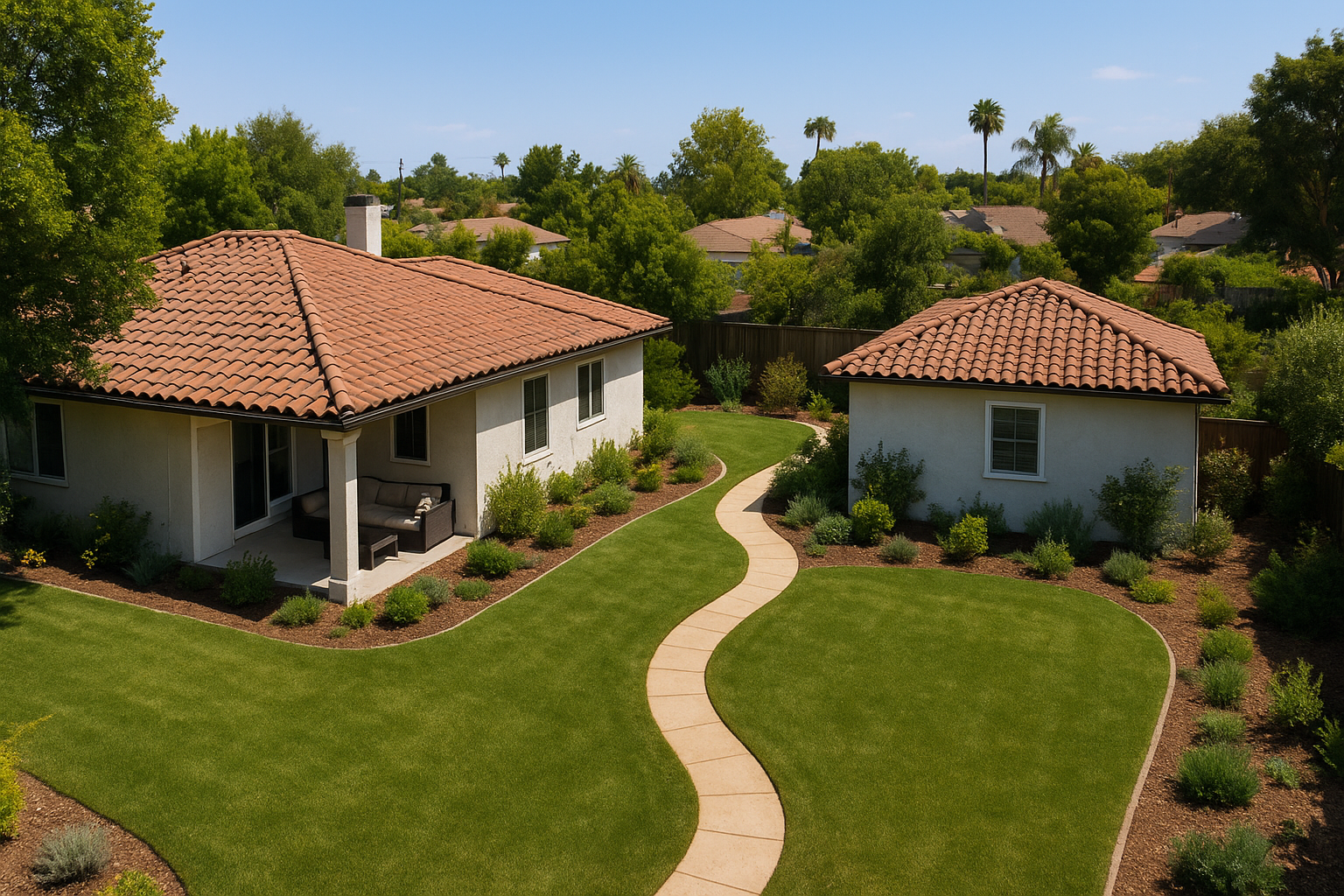
Placement and setback compliance are key considerations before construction begins.
Frequently Asked Questions About Granny Pods
What is a granny pod?
A granny pod is a small, detached living structure built on a residential property, typically designed to house an aging parent or family member. It is a type of accessory dwelling unit that includes a bedroom, bathroom, and kitchenette.
How much does a granny pod cost to build?
In Southern California, a granny pod typically costs between $120,000 and $250,000 depending on size, finishes, and site conditions. Prefabricated units can sometimes cost less, though site prep and utility hookups often add to the total.
How does a granny pod compare to assisted living in cost?
Assisted living typically costs $4,000 to $6,000 per month per resident with no equity return, while a granny pod is a one-time construction cost that adds long-term value to the property. Over five to ten years, a granny pod usually costs less than continuous assisted living fees.
Is a “MedCottage” the same thing as a granny pod?
MedCottage is a specific branded prefab product that popularized the granny pod concept, but a granny pod is not limited to any single brand. Most homeowners today build a custom granny pod through a licensed contractor rather than purchasing a trademarked prefab unit.
How is a granny pod different from a traditional granny flat?
A granny pod is usually a smaller, purpose-built unit focused on aging-in-place features, while a granny flat can refer to any secondary living unit, including larger ADUs. Both fall under California’s broader ADU regulations.
Are granny pods legal in California?
Yes, granny pods are legal throughout California as long as they comply with state and local ADU ordinances. Cities across Orange County, Los Angeles County, and Riverside County have adopted streamlined permitting for these units.
How long does it take to build a granny pod?
Most granny pod projects take between four and nine months from permitting to completion. Timelines vary based on city review speed, design complexity, and site accessibility.
Do I need a permit to build a granny pod?
Yes, a building permit is required for any granny pod because it is a permanent structure with plumbing and electrical systems. Skipping permits can lead to fines and problems when selling the property later.
Can I rent out a granny pod for income?
In many Southern California jurisdictions, homeowners can rent out a granny pod once it is no longer needed for family caregiving, subject to local rental rules. Some cities restrict short-term rentals on ADUs, so checking local ordinances first is wise.
What is the average size of a granny pod?
Granny pods typically range from 300 to 800 square feet, making them smaller than many standalone ADUs. This compact footprint helps them qualify for simplified permitting in several California cities.
What’s the difference between a granny pod and a JADU?
A junior accessory dwelling unit is built within the existing footprint of the main home, while a granny pod is a separate, detached structure. JADUs are generally smaller and share at least one wall with the primary residence.
Do granny pods require a foundation?
Most granny pods require a permanent foundation to meet California building code requirements. Some prefabricated models use engineered pier or slab foundations approved by local building departments.
What are common mistakes when building a granny pod?
Common mistakes include underestimating utility connection costs, skipping accessibility features, and failing to confirm setback requirements before design. Working with an experienced ADU contractor helps homeowners avoid these costly errors.
Can a granny pod be moved, or is it permanent?
Most granny pods built to California ADU standards are permanent structures attached to a foundation. A small number of modular units can be relocated, though this typically requires special engineering and permitting.
Does a granny pod add value to my home?
Yes, a well-built granny pod can increase property value by adding usable living space and rental potential. Appraisers in Southern California increasingly recognize ADUs as a meaningful value-add feature.
Is a granny pod covered by insurance or Medicare?
Medicare generally does not cover construction costs for a granny pod, since it is considered a home improvement rather than medical care. However, some long-term care insurance policies may reimburse certain accessibility features, so checking policy details with the insurer is recommended.
What financing options exist for a granny pod?
Homeowners commonly finance a granny pod through home equity loans, cash-out refinances, construction loans, or dedicated ADU financing programs. Comparing options with a lender familiar with ADU projects can help identify the best fit.
Which cities in Southern California allow granny pods?
Most cities across Orange County, Los Angeles County, and Riverside County permit granny pods under California’s statewide ADU law. Local requirements still vary, so checking specific city guidelines before designing is important.
Final Thoughts on Building a Granny Pod
Ultimately, a granny pod offers a practical way to keep aging family members close while preserving everyone’s independence and privacy, and it often costs less over time than an assisted living facility. From understanding costs to navigating California’s permitting rules, careful planning makes the difference between a smooth project and a stressful one. Homeowners considering this option should start by assessing their property, reviewing local zoning requirements, and speaking with an experienced ADU contractor who understands the nuances of granny pod construction. With the right team and a clear plan, a granny pod can become a lasting, functional addition that supports the whole family for years to come.