
The ADU guidelines Southern California homeowners must follow today are dramatically more permissive than they were even five years ago. Thanks to a wave of state legislation, cities across Los Angeles County, Orange County, Riverside County, and San Diego County can no longer bury homeowners in red tape when they want to add an accessory dwelling unit (ADU) — a self-contained secondary home built on the same lot as an existing house. Whether you’re picturing a detached backyard cottage, a garage conversion, an attached addition, or a compact Junior ADU (JADU), this guide breaks down every rule, deadline, fee, and local nuance you need to know before you break ground.
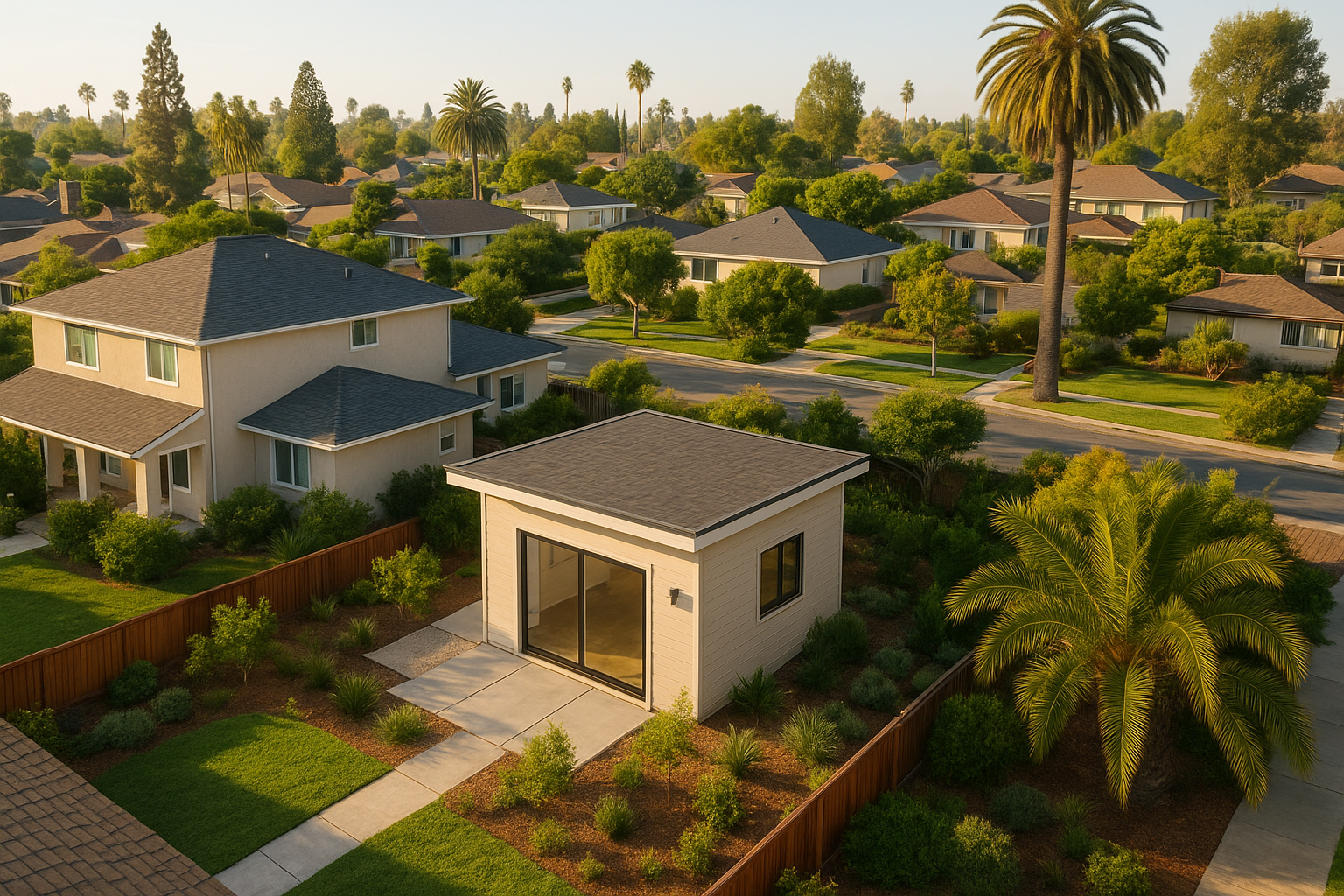
New ADU guidelines in Southern California have made backyard ADU construction more accessible than ever for homeowners.
What Are the ADU Guidelines in Southern California Right Now?
The current ADU guidelines in Southern California are shaped by a stack of state laws — AB 68, AB 881, SB 13, AB 2221, and more recently AB 2533 and SB 1211 — that took effect between 2020 and 2025. In short, these statutes override restrictive local ordinances that once made ADU construction slow, expensive, or outright impossible in many neighborhoods. As a result, homeowners today have far more freedom to build, and cities have far less discretion to say no.
According to the California Department of Housing and Community Development (HCD), ADU permit applications statewide grew by more than 200% between 2017 and 2022 — clear evidence that these reforms unlocked demand that red tape had long suppressed. For a broader look at how these laws apply specifically in Southern California’s major metros, our companion piece on the legal requirements for ADUs in Southern California’s top cities is a helpful next read.
If you’d like an even wider view of accessory dwelling unit policy nationally, the Wikipedia overview of accessory dwelling units offers helpful background on how ADUs fit into housing policy across the country.
ADU Size Limits, Setbacks, and Height Rules in California
Size and setback rules sit at the heart of every ADU project. Under current state law, detached ADUs can reach up to 1,200 square feet. Attached ADUs, in contrast, may reach up to 50% of the primary home’s square footage — also capped at 1,200 square feet. Together, these limits give homeowners genuine room to build a fully functional living unit rather than a glorified shed.
Furthermore, setback requirements have shrunk considerably. ADUs now need only 4 feet of clearance from rear and side property lines. Previously, many cities demanded 5 to 10 feet, which made smaller lots impractical for ADU development. Front setbacks, however, still follow whatever local zoning code already applies to the primary residence.
| ADU Type | Max Size | Setback (Rear/Side) | Height Limit |
|---|---|---|---|
| Detached ADU | 1,200 sq ft | 4 ft | 16 ft (18 ft near transit) |
| Attached ADU | 50% of primary home, up to 1,200 sq ft | 4 ft | Matches primary structure |
| Junior ADU (JADU) | 500 sq ft | No new setback (within existing footprint) | Not applicable |
| Garage Conversion | Existing footprint | Existing footprint honored | Existing structure height |
In addition, height limits for detached ADUs were raised to 16 feet in most cases, with properties located within half a mile of a major transit stop qualifying for up to 18 feet. Consequently, two-story ADU designs — once off-limits in many jurisdictions — are now realistic options for many Southern California lots. If you’re unsure what your specific property qualifies for, our detailed breakdown of typical size requirements for an ADU walks through the math step by step.
Junior ADU Rules: A Separate Category Entirely
A Junior ADU (JADU) is capped at 500 square feet and built entirely within the existing footprint of the primary home. Unlike a standard ADU, a JADU must share a bathroom with the main residence, and the property owner is required to live on-site. That said, JADUs are especially cost-effective because they typically require no new foundation, roofline, or exterior construction — making them a smart entry point for budget-conscious homeowners.
Permit Timelines and Fee Reductions Under Current ADU Regulations
Slow permit approvals used to be one of the most frustrating barriers to ADU construction. Consequently, California now mandates that local agencies approve or deny a complete ADU permit application within 60 days. If the application is incomplete, the agency has 30 days to notify the applicant of any deficiencies, keeping the process on a predictable schedule.
Impact fees — charges local governments levy to offset the infrastructure cost of new development — have also been reformed. Specifically, ADUs under 750 square feet are now exempt from impact fees entirely. For ADUs 750 square feet or larger, fees must be proportional to those charged on the primary dwelling, which keeps overall costs reasonable and predictable for homeowners.
For a detailed breakdown of the planning and permitting process, the team at ADU planning services provides a complete guide tailored to Southern California homeowners. For a deeper walkthrough, see our Everything to KnowBefore You Build an ADU in Southern California.
Garage Conversions and Parking Exemptions
Garage conversions remain among the most popular ADU types in Southern California, largely because they’re generally less expensive than ground-up construction — the structure already exists. Under updated rules, local agencies cannot require replacement parking when an existing garage is converted into an ADU. This is a significant win for homeowners in dense urban areas where space is already tight.
Similarly, ADUs located within half a mile of a public transit stop are exempt from parking requirements altogether. This exemption applies throughout much of Los Angeles County, Orange County, and Riverside County, where transit corridors run through many residential neighborhoods.
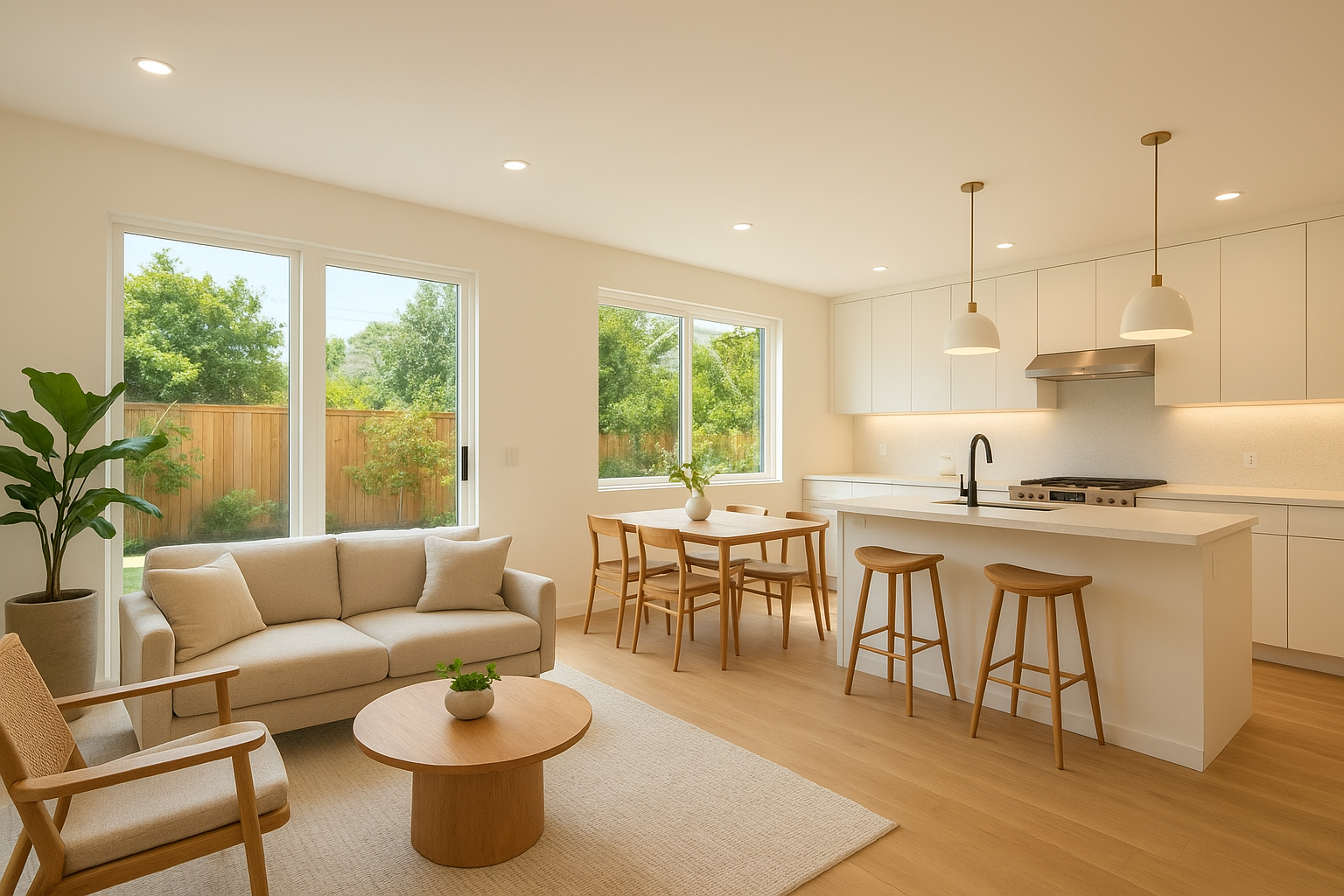
Garage conversions are a cost-effective ADU option that benefit from California’s updated parking exemption rules. For a deeper walkthrough, see our ADU Housing Guide: Costs, Rules & Benefits in California.
How to Build a Compliant ADU: The Step-by-Step Process
Building a code-compliant ADU follows a clear, repeatable sequence. Following the steps in order — rather than skipping ahead — reduces delays and avoids costly mistakes down the line.
- Confirm property eligibility. Verify that your lot is zoned residential and meets the minimum lot size or other threshold requirements set by your city or county planning department.
- Choose your ADU type. Decide between a detached ADU, attached addition, garage conversion, or JADU based on your budget, timeline, and available yard space.
- Hire a licensed ADU contractor. Partner with a builder who has deep, current knowledge of California’s ADU regulations and your specific city’s municipal requirements. See how to choose the right ADU contractor in Southern California for guidance.
- Confirm code compliance early. Before finalizing design plans, review how to ensure your project meets fire, utility, and structural code requirements so nothing gets flagged mid-review. Our guide on how to ensure my ADU complies with local codes covers this in depth.
- Submit a complete permit application. Prepare architectural plans, site plans, and supporting documents, then submit everything at once to avoid triggering the 30-day deficiency clock.
- Begin construction after approval. Your contractor starts building according to the approved plans, following every inspection milestone required by the local building department.
- Pass final inspection. Schedule all required inspections and receive your Certificate of Occupancy before legally occupying or renting out the finished ADU.
If you want to accelerate this timeline, learn more about how to create your ADU faster than you think with the right team in place from day one.
Owner-Occupancy and Rental Rules for ADUs
California suspended the owner-occupancy requirement for standard ADUs through January 1, 2025. In other words, during this window, property owners have not been required to live on-site to build or rent out an ADU. However, after that date, individual local agencies may choose to reinstate the requirement — so it’s important to confirm your specific city’s current stance before finalizing plans.
Rental income from ADUs can be substantial. According to Zillow Research, median rents in Los Angeles County regularly exceed $2,000 per month for one-bedroom units, making ADU rentals a compelling financial investment for homeowners looking to offset a mortgage or generate retirement income.
Short-term rentals under 30 days may be restricted depending on local ordinances. For example, many cities in Orange County enforce strict short-term rental rules. As a result, most ADU owners across Southern California opt for stable, long-term leases instead.
How Many ADUs Can You Build on One Property?
Most single-family residential lots in California can support one ADU plus one JADU. Multifamily properties, on the other hand, may qualify for additional units — up to two detached ADUs, plus conversions of existing non-livable space such as storage rooms or unused hallways. This flexibility makes ADU development viable for a much wider range of property types than most homeowners realize.
City-by-City ADU Rules Across Southern California
While state law sets the baseline, individual cities can still layer on specific requirements — which is exactly where many homeowners get tripped up. For instance, some cities in Los Angeles County require design review for ADUs above a certain size. Similarly, several municipalities in Riverside County have adopted pre-approved ADU plan programs specifically to speed up permitting.
In Orange County, cities like Anaheim and Irvine have developed their own ADU ordinances that align with state law but layer on additional design standards. San Diego County cities, meanwhile, have their own quirks around coastal zone review and hillside overlay districts that can add extra steps to the permitting timeline. Working with a contractor who understands these local nuances is therefore critical to a smooth, on-schedule project. Our full breakdown of legal requirements for ADUs in Southern California’s top cities covers each jurisdiction in more detail.
For a comprehensive look at permitted ADU designs, plans, and build tips specific to Southern California, visit the resource on permitted ADU designs, plans, permits, and build tips. The California HCD ADU handbook is also a valuable reference for understanding how state law interacts with local ordinances across every county.
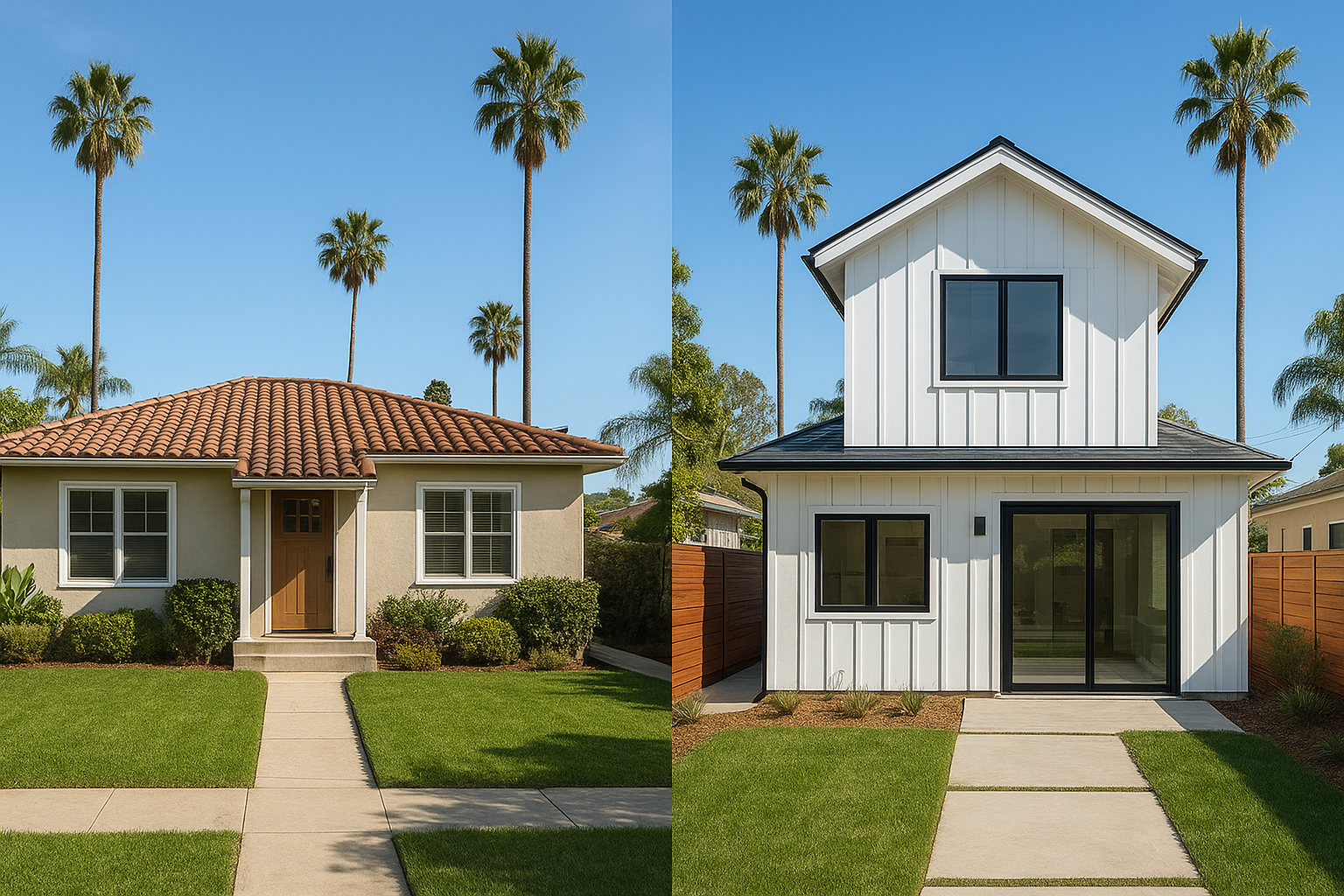
Adding a detached ADU can significantly increase property value and rental income potential for Southern California homeowners. See creative examples in our ADU designs Southern California gallery to plan your project.
Utilities, Financing, and Compliance Details Homeowners Overlook
Beyond size and setback rules, several compliance details trip up first-time ADU builders. Most jurisdictions do not require a separate utility meter for a standard ADU, though a separate meter is often smart if you plan to rent the unit long-term, since it simplifies billing. Additionally, ADUs generally must meet California’s energy code (Title 24) and, depending on size, may need fire sprinklers if the primary residence already has them installed.
On the financing side, homeowners typically fund ADU construction through a cash-out refinance, a home equity line of credit (HELOC), a renovation loan, or increasingly through specialized ADU construction loan products. Because financing decisions directly affect design scope, it’s worth locking in your budget before finalizing architectural plans. For a step-by-step walkthrough of how to keep your project aligned with every applicable rule, see how to ensure my ADU complies with local codes.
What Does an ADU Typically Cost in Southern California?
| ADU Type | Typical Cost Range |
|---|---|
| Garage Conversion | $100,000 – $180,000 |
| Junior ADU (JADU) | $60,000 – $150,000 |
| Attached ADU | $150,000 – $300,000 |
| Detached New Construction | $200,000 – $400,000+ |
These figures vary by finish level, site conditions, and county. Above all, getting an accurate quote requires a site visit from an experienced builder — not a generic online calculator.
Why Work With a Specialized Southern California ADU Contractor?
Navigating the ADU guidelines Southern California enforces requires more than construction skill alone. It demands a thorough, current understanding of state law, local ordinances, utility connection requirements, and design standards. An experienced ADU contractor manages all of this on your behalf, which reduces delays and prevents costly errors before they happen.
SoCal ADU Pros is a top-rated contractor serving homeowners across Orange County, Los Angeles County, and Riverside County. Their team manages every phase of ADU development — from initial design and permitting through full construction and final inspection — providing a streamlined, stress-free experience. Visit theadupro.com to explore their services and request a consultation, or compare options in our roundup of Southern California ADU builders — top picks for 2025.
Additionally, working with a contractor who stays current on California legislative updates ensures your project won’t be derailed by a mid-construction regulation change. If you’d like to browse every ADU resource on our site in one place, our full ADU article library is a good starting point.
Frequently Asked Questions About ADU Guidelines in Southern California
What are the current ADU guidelines in Southern California for 2025?
The current ADU guidelines in Southern California allow homeowners to build ADUs up to 1,200 square feet, with reduced setbacks of just 4 feet from rear and side property lines. Local agencies must approve or deny permits within 60 days, which has streamlined the process significantly compared to a decade ago.
How large can an ADU be under California law?
A detached ADU in California can reach up to 1,200 square feet. Attached ADUs may reach up to 50% of the primary dwelling’s square footage, also capped at 1,200 square feet.
Do I need a permit to build an ADU in Southern California?
Yes, a building permit is required for every ADU in Southern California. However, state law mandates that local agencies process a complete ADU permit application within 60 days. For a deeper walkthrough, see our ADUs Homes: A Complete Guide for Southern California.
What is a Junior ADU (JADU) and how does it differ from a standard ADU?
A Junior ADU (JADU) is a smaller unit of up to 500 square feet created within the existing footprint of a primary residence. Unlike a standard ADU, a JADU must share a bathroom with the main home and requires the owner to live on-site.
What are the setback requirements for ADUs in California?
Under current California law, ADUs must maintain at least 4 feet from rear and side property lines. Front setback rules still follow local zoning codes, which vary by city and county.
Can I convert my garage into an ADU in Southern California?
Yes, garage conversions are one of the most popular ADU types in Southern California. State law prohibits local agencies from requiring replacement parking when a garage is converted to an ADU.
How much does it cost to build an ADU in Southern California?
ADU construction costs in Southern California typically range from $100,000 to $400,000 or more, depending on size, type, and finishes. Garage conversions and JADUs tend to be the most affordable, while detached new-construction ADUs cost the most.
Can I rent out my ADU in California?
Yes, homeowners can rent out their ADU in California. However, short-term rentals under 30 days may be restricted depending on local city ordinances, so checking local rules first is important.
Are impact fees waived for ADUs in California?
Impact fees are waived entirely for ADUs under 750 square feet. For ADUs 750 square feet or larger, fees must be proportional to the impact of the primary dwelling unit, keeping costs more manageable.
How many ADUs can I build on my property in Southern California?
Most single-family properties in California can have one ADU plus one Junior ADU. Multifamily properties may qualify for additional ADUs depending on the number of existing units and local regulations.
What is the owner-occupancy requirement for ADUs in California?
California suspended the owner-occupancy requirement for standard ADUs through January 1, 2025. After that date, local agencies may reinstate it. JADUs, however, always require owner-occupancy regardless of the date.
How long does it take to get an ADU permit approved in Southern California?
State law requires local agencies to approve or deny a complete ADU permit application within 60 days. If the application is incomplete, agencies have 30 days to notify the applicant of what is missing.
Do ADU guidelines differ between Los Angeles, Orange, Riverside, and San Diego counties?
State law sets the same baseline everywhere, but individual cities can add design review, pre-approved plan programs, or coastal zone requirements. Always confirm your specific city’s supplemental rules before finalizing plans.
Do I need a separate utility meter for my ADU?
Most jurisdictions do not require a separate meter for a standard ADU, though many landlords choose to install one anyway to simplify utility billing for long-term tenants.
Conclusion: Making the Most of Today’s ADU Guidelines in Southern California
The current ADU guidelines Southern California homeowners now benefit from have created a genuine opportunity to add value, generate rental income, and create flexible living space on an existing property. With streamlined permitting, reduced setbacks, waived impact fees, and eliminated parking requirements, the barriers to ADU construction have never been lower. Therefore, now is an ideal time to explore your options — whether you’re picturing a detached guest house, a garage conversion, or a Junior ADU. Above all, working with a knowledgeable, experienced contractor who understands both California state law and your specific local jurisdiction’s requirements will ensure your project is completed on time, on budget, and fully compliant from permit to final inspection.