Permitted ADU designs are architectural plans for accessory dwelling units (ADUs) — secondary living spaces built on a residential property — that have been reviewed and officially approved by a local building department before construction begins. Getting your ADU design permitted is not just a legal requirement in California; it is the single most important step in protecting your investment and unlocking the full value of your property. Learn more about contractor options from SoCal ADU Pros.
In Southern California, demand for ADUs has surged dramatically. According to the California Department of Housing and Community Development, ADU permit applications across the state increased by more than 700% between 2017 and 2022. Homeowners in Orange County, Los Angeles County, and Riverside County are leading this trend — and for good reason. A well-designed, fully permitted ADU can generate rental income, house family members, and add significant resale value. Consider expanding this article with city-specific checklists, financing options, and case studies to better serve local searchers.
What Are Permitted ADU Designs?
Permitted ADU designs are more than just floor plans. They represent a complete, code-compliant package that satisfies the technical requirements of your city or county building department. Specifically, a permitted design includes architectural drawings, structural engineering calculations, a Title 24 energy compliance report, and site plans showing setbacks and utility connections.
Without this approval, any structure you build is considered unpermitted. Consequently, unpermitted ADUs can result in stop-work orders, fines, required demolition, and serious complications when you try to sell or refinance your home. Furthermore, unpermitted units cannot be legally rented, eliminating one of the primary financial benefits of building an ADU.
Types of ADU Designs That Can Be Permitted
California law recognizes four main categories of ADUs, each with distinct design requirements and size limits. Understanding which type fits your property is the first step toward a successful permit application. Learn more in our complete ADU guide.
- Detached ADUs: Freestanding structures separate from the main home, up to 1,200 sq ft. See best ADU designs.
- Attached ADUs: Additions connected to the primary residence, limited to 50% of the main home’s square footage.
- Garage Conversions: Existing garages converted into living space — one of the most cost-effective options.
- Junior ADUs (JADUs): Units of up to 500 sq ft created within the existing walls of the primary home.
For detailed guidance on attached options, explore our resource on attached ADU designs, smart plans, costs, and permits. Each type has its own design considerations and permitting pathway.
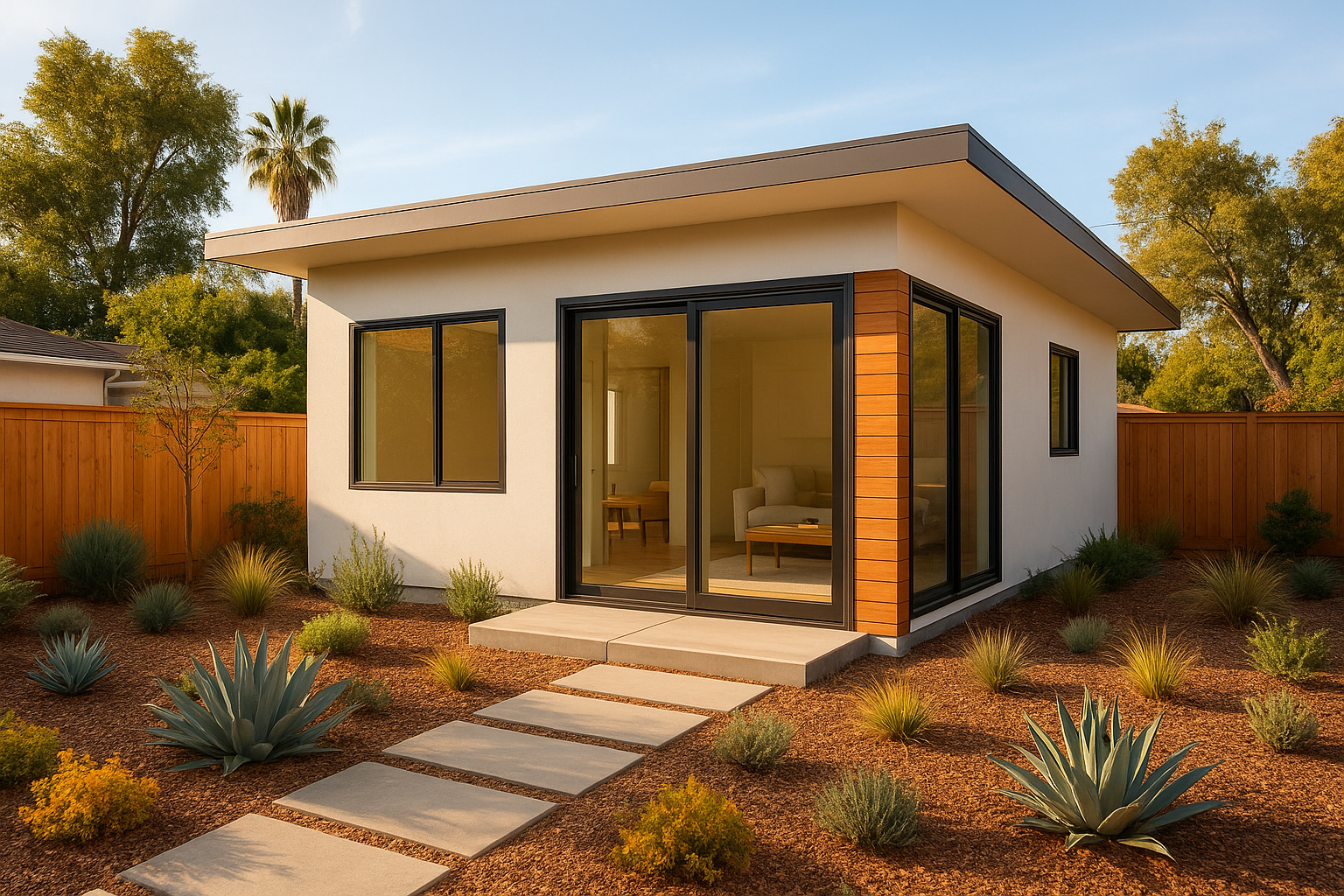
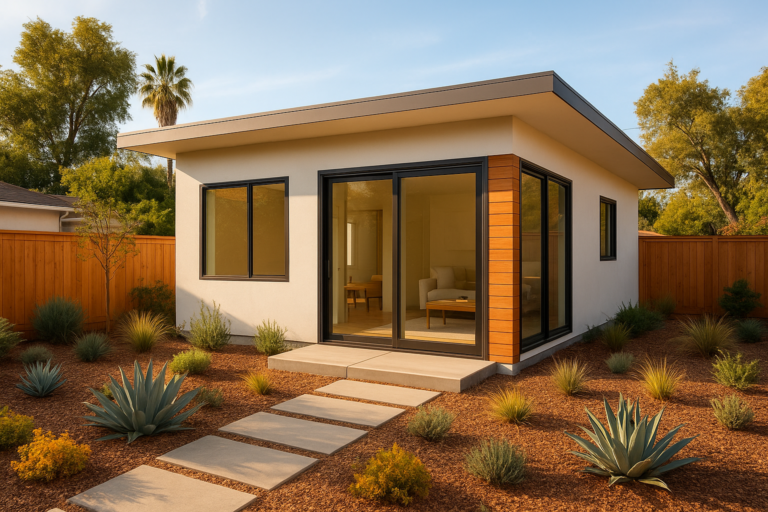
A detached permitted ADU design maximizes privacy and rental potential on a Southern California residential lot.
How to Get Your ADU Design Permitted: Step-by-Step
The permitting process can feel overwhelming, but breaking it into clear stages makes it manageable. See our ADU projects guide for a comprehensive timeline. Below is the process followed by experienced ADU contractors in Southern California.
- Evaluate Your Property and Zoning: Review your lot size, existing structures, setback requirements, and local zoning rules. Confirm which ADU types are allowed and whether any deed restrictions apply; see our Residential ADU solutions for examples of typical site constraints and solutions.
- Choose and Develop Your ADU Design: Partner with a licensed ADU designer or architect to create permit-ready plans. These must address California building codes, Title 24 energy standards, fire safety, and structural requirements. For a full walkthrough of construction expectations, see our ADU construction process guide.
- Submit Plans to Your Local Building Department: File your complete plan set, structural calculations, energy report, and application forms. Most Southern California cities now accept digital submissions.
- Respond to Plan Check Corrections: The plan checker may issue corrections. Address these promptly and resubmit revised drawings to avoid unnecessary delays.
- Pull the Permit and Begin Construction: Once approved, pay all required fees, pull the permit card, and begin construction with licensed contractors who coordinate required inspections at each phase.
For a deeper look at creating plans that sail through plan check, visit our guide on custom ADU design services for permit-ready plans. Having an expert prepare your drawings from the start significantly reduces back-and-forth with the building department.
Key Design Factors That Affect Permit Approval
Not all ADU designs are equal when it comes to permitting. Several specific design choices directly influence how quickly and smoothly your plans move through the approval process. See our best ADU designs for Southern California homes to compare permit-friendly layouts.
Setbacks and Lot Coverage
California state law sets minimum setback requirements for ADUs at 4 feet from rear and side property lines for detached units. However, local jurisdictions may impose stricter standards. Additionally, your ADU and all existing structures combined cannot exceed your city’s maximum lot coverage percentage — typically 40% to 50% of the lot area. See ADU regulations for a full breakdown of state and local rules.
Height Limits and Neighbor Impact
Detached ADUs in most Southern California cities are limited to 16 feet in height, though some jurisdictions allow up to 25 feet when located within a half-mile of transit. Design choices like roofline pitch and second-story ADU design can therefore affect whether your plans are approved as submitted.
Energy Efficiency and Title 24 Compliance
All new ADU construction in California must comply with Title 24 energy efficiency standards. This affects insulation levels, window glazing, HVAC systems, and lighting. Incorporating these requirements early in the design phase prevents costly revisions during plan check.
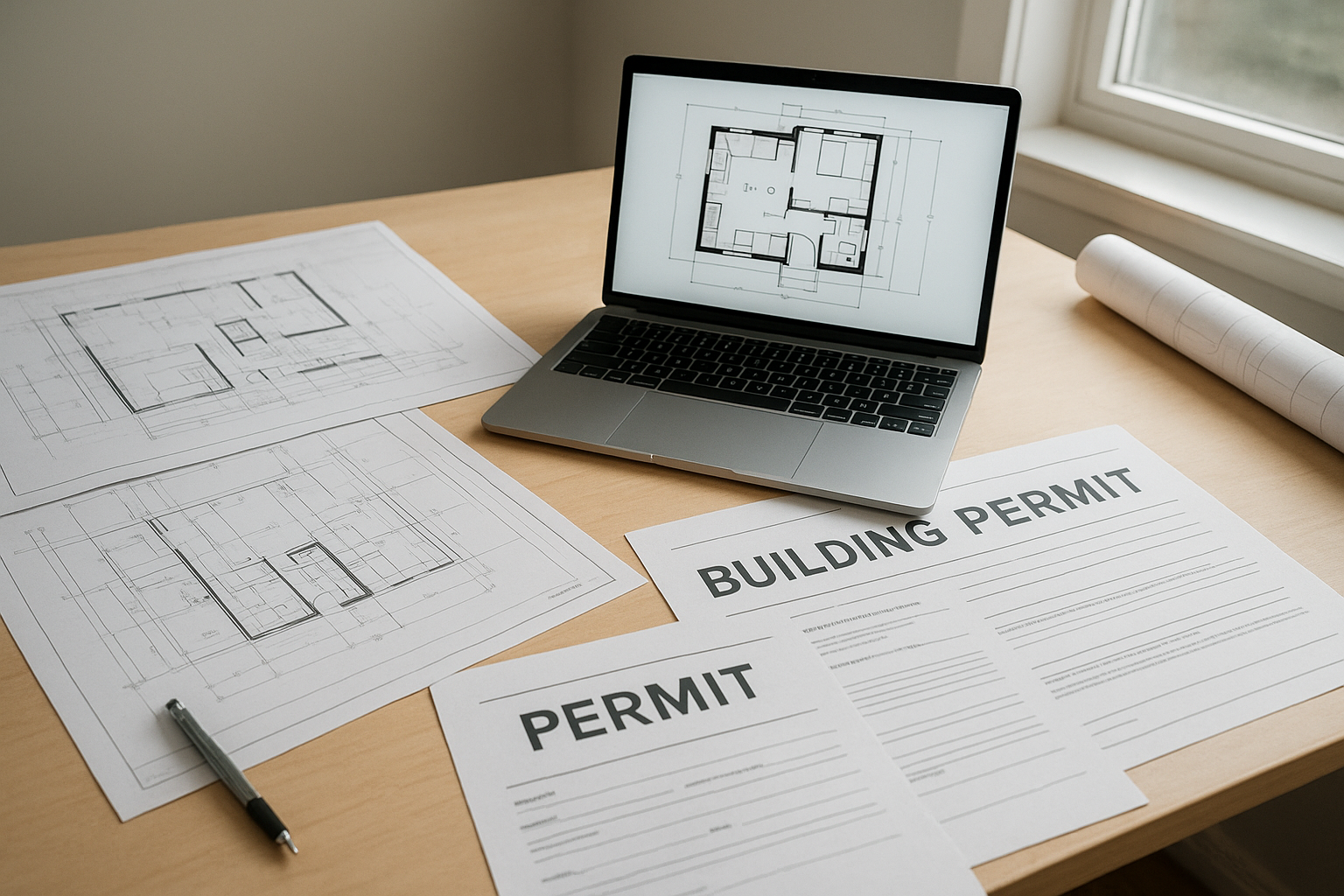
permit-ready ADU plans include detailed architectural drawings, structural calculations, and energy compliance reports.
Pre-Approved ADU Plans: A Faster Path to Permits
California’s state government introduced a statewide ADU Standard Plan Program that allows homeowners to select pre-reviewed designs and bypass the standard plan check timeline. In addition, many Southern California cities — including Los Angeles — maintain their own libraries of pre-approved ADU plans.
Pre-approved plans can reduce permitting time from several months to just a few weeks. However, they offer less flexibility in terms of layout, finishes, and site-specific customization. For homeowners with unique lots or specific design goals, a custom permit-ready design is often the better long-term investment.
Explore creative layout options in our article on ADU design ideas for maximizing space and style. Thoughtful design choices make a significant difference in both livability and long-term rental appeal.
Permitting Costs and Financial Benefits in Southern California
Permitting fees in Southern California typically range from $3,000 to $15,000, depending on the city and the size of the ADU. Notably, California law prohibits local agencies from charging impact fees on ADUs under 750 square feet, which substantially reduces upfront costs for smaller units. For budgeting details and permit fee breakdowns, see our ADU plan guide.
The financial return, however, is compelling. Research by the Terner Center for Housing Innovation at UC Berkeley found that ADUs can increase property values by $50,000 to over $200,000 depending on location and unit quality. Furthermore, median rental rates for ADUs in Los Angeles County exceed $1,800 per month, offering a strong return on investment for homeowners who build permitted units.
Why Working With an Expert Matters
Navigating California’s ADU regulations requires deep local knowledge. Each city in Orange County, Los Angeles County, and Riverside County has its own interpretation of state law, its own fee schedules, and its own plan check timelines. Consequently, working with a contractor who specializes in permitted ADU designs can save months of delays and thousands of dollars in correction costs. Consult SoCal ADU Pros for localized services and permit support.
The team at theadupro.com handles every phase of the ADU process — from initial design and permit submission to final construction and inspection — making the experience as streamlined as possible for Southern California homeowners. Their full-service approach is detailed further in their plan, permit, and build service overview. Author: The ADUPro team (licensed ADU designers). Last updated: 2026-07-26.
City-Specific Considerations Across Southern California
While California state law sets a baseline for ADU rights, local jurisdictions retain authority over specific design standards. For example, some cities require owner-occupancy for JADUs, while others have unique architectural compatibility requirements that affect exterior finishes and rooflines.
In cities like Stanton in Orange County, local design guidelines may influence setback interpretations and utility connection requirements. For homeowners in that area, our dedicated resource on ADU design in Stanton provides city-specific guidance tailored to local code requirements.
Therefore, always verify local ordinances before finalizing your design. A plan that passes easily in one city may require significant revisions in a neighboring jurisdiction.
Frequently Asked Questions About Permitted ADU Designs
What are permitted ADU designs?
Permitted ADU designs are architectural plans for accessory dwelling units that have been reviewed and approved by a local building department. They confirm the structure meets zoning, safety, and building code requirements before construction begins.
Do I always need a permit to build an ADU in California?
Yes. California state law requires all ADUs to receive a building permit before construction. Unpermitted ADUs can result in fines, required demolition, and complications when selling your home.
How long does ADU permitting take in Southern California?
ADU permitting typically takes 4 to 12 weeks, depending on the city and complexity of the design. Some jurisdictions offer expedited review for pre-approved standard plans, which can reduce this timeline considerably.
What types of ADU designs can be permitted?
Permitted ADU designs include detached guest houses, attached additions, garage conversion ADU, and junior ADUs (JADUs). Each type has specific size limits and setback requirements under California law.
How much does it cost to get ADU plans permitted in California?
Permitting costs typically range from $3,000 to $15,000 in Southern California, including plan check fees and impact fees. Importantly, California law waives impact fees for ADUs under 750 square feet, reducing costs for smaller units.
What is a pre-approved ADU plan?
A pre-approved ADU plan is a standard design vetted by a local jurisdiction that homeowners can select to speed up the permitting process. California’s HCD maintains a statewide ADU standard plan program to streamline approvals and reduce plan check timelines.
Can I convert my garage into a permitted ADU?
Yes. Garage conversions are one of the most popular permitted ADU designs in California. The conversion must meet insulation, ceiling height, egress, and plumbing requirements to receive a permit.
What is the maximum size for a permitted ADU in California?
Detached ADUs can be up to 1,200 square feet. Attached ADUs are limited to 50% of the primary dwelling’s square footage, up to 1,200 square feet. Junior ADUs are capped at 500 square feet under current state law.
What common mistakes delay ADU permit approval?
Common mistakes include incomplete drawings, missing structural calculations, setback violations, and failing to address fire sprinkler requirements. Working with an experienced ADU designer significantly reduces these delays.
Does a permitted ADU increase my property value?
Yes. Research by the Terner Center for Housing Innovation at UC Berkeley found that ADUs can add $50,000 to over $200,000 to a property’s value depending on location and size. Permitted ADUs also qualify for legal rental income, further enhancing their financial value.
Can I use a permitted ADU as a rental unit?
Yes. A permitted ADU can legally be rented to long-term tenants. California law also allows short-term rentals in some jurisdictions, though local ordinances vary and should be verified before listing.
What is the difference between an ADU and a JADU?
A Junior ADU (JADU) is a smaller unit of up to 500 square feet created within the walls of an existing primary residence. A standard ADU can be larger and may be detached or attached, offering more design flexibility and rental potential.
Conclusion — Last updated: 2026-06-26
Investing in permitted ADU designs is the smartest way to add lasting value, generate income, and expand your home’s functionality in Southern California. The permitting process protects your investment, ensures structural safety, and gives you the legal right to rent your unit. Whether you are exploring a detached guesthouse, a garage conversion, or a junior ADU, starting with a code-compliant, permit-ready design is essential. Above all, partnering with experienced local professionals — like the team at theadupro.com — ensures your project moves through design, permitting, and construction efficiently and without costly surprises. Author: Daniel Messina, Licensed General Building Contractor (CSLB #1128679). Last updated: 2025-07-14.